Math Tuition in Singapore: Which Is More Effective – Small Group or One-to-One?
Whenever a child's math grades fluctuate, many parents instinctively start looking for math tuition in Singapore. Yet, when they stand at the tuition centre's door or open a search engine, a practical question immediately arises: with so many formats available, which one is actually the right choice? Small group classes are more affordable, but there is concern that the child might be overlooked. One-to-one tutoring seems to offer the best results, but the cost can be prohibitive.
This is indeed a difficult decision. Both models have their advocates and their own appropriate use cases. As an observer who has been following the local education market for a long time, I have noticed that many parents overlook a key question when making their decision: Does the child's learning style and personality suit one teaching environment better than the other?
Small Group Classes: Progressing Together Through Interaction and Competition
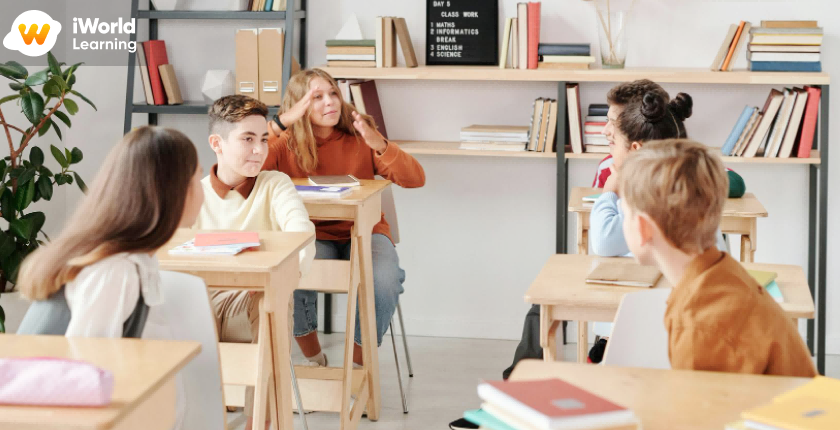
Small group classes are the most common form of math tuition in Singapore, typically consisting of 4 to 12 students. Its advantage is not only in the more affordable pricing.
A positive peer effect is the most unique value of small group classes. When a child sees classmates actively raising their hands or solving the same problem with a clever alternative approach, the inspiration from peers is often more effective than one-way instruction from the teacher. Driven by a sense of healthy competition, some children become more focused and reluctant to fall behind.
At the same time, small group classes still retain sufficient space for interaction. Experienced teachers use questioning, group discussions, and board demonstrations to ensure every child participates in the lesson. For outgoing children who enjoy expressing themselves, this environment can greatly stimulate their learning motivation.
However, the limitations of small group classes are equally evident. The teacher cannot adjust the pace for each individual child. If one child is stuck on the topic of "ratios" while the rest of the class has already understood it, the lesson will not stop for that child. This is why many parents find that after months of attending small group classes, their child still struggles with a particular concept, and their grades remain stagnant within a certain range.
One-to-One Tutoring: Precisely Targeting Every Knowledge Gap
If small group classes are like a buffet, one-to-one private tutoring is a bespoke, customised experience. The core philosophy of this math tuition in Singapore model is that all teaching revolves around that single student.
The biggest advantage is efficiency. An experienced one-to-one tutor will quickly diagnose the child's actual level within the first two lessons. For instance, a child may appear to be "losing marks on application problems," but the root cause might actually be an unsteady grasp of the "multiples concept" from Primary 3. In a small group class, the teacher would not revisit Primary 3 material, but in a private session, the tutor can pause anytime and re-explain the concept from the very basics.
This model is also highly suitable for students in the intensive revision phase. In the three months leading up to the PSLE, a one-to-one tutor can design highly targeted practice modules based on the child's weak areas, ensuring no time is wasted on content that has already been mastered.
However, one-to-one tutoring is not without its drawbacks. First, the cost is typically two to three times that of small group classes. Second, the child may become overly dependent on the tutor, lacking opportunities for independent thinking and self-directed exploration. Most importantly, finding a truly experienced, responsible, and effective tutor requires considerable luck and time for screening.
How to Make the Best Choice for Your Child?
Instead of fixating on "which is better," ask yourself three questions:
First, how strong is the child's self-directed learning ability? If the child is already disciplined and only needs help with a particular topic, a small group class—or even an online course—might suffice. If the child lacks motivation and struggles to concentrate, the close supervision and immediate feedback of a one-to-one tutor may be more valuable.
Second, what are the family's budget and time constraints? This is a very practical factor. One-to-one tutoring requires a higher financial commitment, along with the logistical time costs of transport and fixed scheduling.
Third, what is the goal of the tuition? Is it to build a solid long-term foundation, or to achieve a short-term score boost? For the former, the pace and breadth of a small group class are more suitable; for the latter, the precision of one-to-one tutoring is irreplaceable.
Frequently Asked Questions About Math Tuition in Singapore
Q1: At what grade level is it best to start math tuition?
It is generally recommended to start paying attention around Primary 3 (P3). This is a significant milestone in Singapore Math, as application problems and multi-step calculations become more frequent. If you notice your child struggling at this stage, early intervention can effectively prevent a decline in subsequent years.
Q2: How can I tell if my child is better suited for small group classes or one-to-one tutoring?
A good approach is to start with a short holiday programme or a diagnostic test to observe the child's performance. If the child participates actively in a group setting and keeps up with the pace, then small group classes are sufficient. If the child often gets distracted, has few opportunities to ask questions, or shows little improvement over time, one-to-one tutoring may be more effective.
Q3: Is online math tuition less effective than offline tuition?
Not necessarily. It depends on the child's learning style. Visual learners may prefer the animated demonstrations offered by online platforms, while children who need close supervision tend to benefit more from face-to-face instruction. Many institutions now offer flexible combination plans, such as models that integrate online resources with small-group offline tutoring, to create more suitable learning environments for different types of students.
Q4: How much time per week should be allocated to tuition?
A general recommendation is at least 2 hours of class time per week, supplemented by 1–2 hours of practice at home. For students in the intensive preparation phase, this may need to increase to 3–4 hours per week. The key is consistency—sporadic, irregular sessions tend to produce unsatisfactory results.
相关文章
Recommended Reading
Popular Articles
-
English Teacher Salary in Singapore: A Complete 2026 Guide
-
The Ultimate english learning apps Bank: Categorized & Explained
-
British Council IELTS in 2026: What Changed, What It Costs, and How to Prepare
-
The Complete 2026 Blueprint for O Level English Oral Topics 2026 Format & Strategy
-
IELTS Price in 2026: What Test-Takers Actually Pay (And How to Spend Less)
-
IELTS Test Format, Scoring, and Key Changes for 2026 Explained
-
IELTS Exam Fee 2026: Complete Guide to Costs, Payment & Savings
-
PSLE 2026: Complete Guide to Exam Dates, Scoring System, and Preparation Strategies
-
IELTS Test Dates 2026: Monthly Schedule, Booking Strategy, and Prep Timeline
-
The Top 10 Tuition Centres in Singapore (2025) – A Curated Review for Parents & Students
latest articles
-
How to Read a Marked English Script
-
Write a P3 Why-Answer with a Clue and Because
-
Should You Continue Primary 6 English Tuition After One Term?
-
Comparing PSLE English Tuition - 12 Questions for Parents
-
IELTS General Training for Singapore PR Plans - Check the Requirement First
-
IELTS Speaking Part 3 - Build Answers Beyond One Opinion
-
O-Level English Exam Strategy - Match Revision to the Weakest Process
-
Build a Primary-School Reading Habit That Improves Understanding
-
PSLE Grammar and Vocabulary Tuition - Diagnose the Error Before Choosing
-
Build the Reasoning Skills PSLE English Questions Actually Need