Looking for the Best English Tuition for Secondary? Here’s What Actually Helps
Introduction
You have probably seen the ads. “A1 guaranteed.” “Top O-Level scores.” “Former MOE teachers.” Every tuition centre in Singapore claims to be the best. But when you are a parent or a secondary student searching for the best English tuition for secondary levels, how do you separate real help from marketing hype?
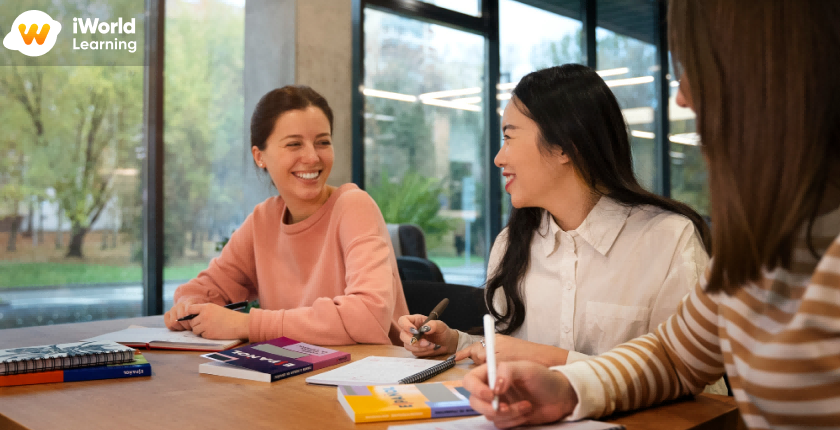
Here is the truth. English is not like math or science. You cannot memorise formulas or drill the same question type until it clicks. English requires reading, thinking, and writing practice over time. And not every tuition centre knows how to teach that process effectively.
This article walks you through what secondary English tuition should actually look like, where to find quality options in Singapore, and how to avoid wasting months on classes that do not move the needle.
Step 1 – Understand What Your Child Actually Needs
Before you search for the best English tuition for secondary students, stop and diagnose the problem. Many parents sign up for general English classes when their child needs something far more specific.
Ask these three questions:
What section is losing the most marks?Is it Paper 1 continuous writing? Paper 2 comprehension? Or the editing section that seems simple but keeps going wrong?
Is it a skill problem or a habit problem?Some students know how to write well but rush through planning. Others have weak grammar foundations from primary school that never got fixed.
How does your child feel about English?If they hate the subject, a strict tutor with heavy homework will make things worse. If they are neutral but underperforming, structured guidance works well.
Once you have clear answers, you can look for tuition that targets those specific gaps. General classes rarely fix specific problems.
Step 2 – Explore Available English Tuition Options in Singapore
Singapore has four main types of English tuition for secondary students. Each has pros and cons. The best English tuition for secondary for one student may be the wrong fit for another.
Option 1 – MOE-Aligned Tuition Centres
These centres follow the school syllabus closely. They use past-year papers, teach exam techniques, and focus on helping students score. Class sizes range from 8 to 20 students.
Good for: Students who need structured exam preparation and are comfortable learning in a group.
Not good for: Students who need one-on-one attention or feel shy asking questions in large groups.
Option 2 – Small-Group Specialist Tutors
Some tutors run their own small classes from HDB void decks, community centres, or small office spaces. Class sizes are usually 3 to 6 students. These tutors often give more personalised feedback on essays.
Good for: Students who need detailed writing feedback but still benefit from peer discussion.
Not good for: Families who prefer a branded centre with polished materials and a fixed curriculum.
Option 3 – Private One-to-One Tutors
Private tutoring offers complete personalisation. The tutor works only on your child’s weak areas. Rates are higher, typically $70 to $150 per hour depending on the tutor’s experience.
Good for: Students with significant gaps, learning difficulties, or very tight schedules.
Not good for: Budget-conscious families or students who can learn well in a small group setting.
Option 4 – Online English Tuition Platforms
Online tuition has become more common since 2020. Some platforms offer recorded video lessons plus live Q&A sessions. Others provide one-to-one online coaching.
Good for: Self-motivated students who prefer learning from home.
Not good for: Students who struggle with screen fatigue or need in-person accountability.
Step 3 – Compare Quality Markers Before You Pay
Not all tuition is equal. Here are four quality markers to look for when evaluating the best English tuition for secondary options.
Teacher Experience with Secondary Syllabus
A primary school English teacher cannot simply switch to secondary level. The marking schemes are different. The question types are more complex. Ask directly: has this tutor taught secondary 3 or 4 students before? Do they know the difference between expository and argumentative essay requirements?
Essay Feedback Depth
This is the most overlooked factor. Many tutors mark essays by circling errors and writing a grade. That is not teaching. Good tutors write comments explaining why a paragraph is weak, how to restructure an argument, or where to add evidence. Ask to see a sample of marked work before signing up.
Class Size Policy
Some centres advertise small classes but fill them to 12 students anyway. Get a clear number. For secondary English, anything above 8 students reduces individual attention significantly.
Trial Lesson Availability
Any centre that refuses a paid trial lesson is a red flag. A trial lets your child experience the teaching style, class pace, and environment. If the centre locks you into a full term without a trial, walk away.
Step 4 – Realistic Expectations for Improvement
Even with the best English tuition for secondary, improvement takes time. English skills do not jump from a C5 to an A1 in one month. Here is a realistic timeline:
-
First 4 to 6 weeks: Students learn new techniques for comprehension and essay planning. Small improvements appear in specific sections.
-
3 months: Writing becomes more structured. Fewer grammar errors. Comprehension answers show better inference skills.
-
6 months: Consistent practice leads to visible grade improvement, provided the student attends regularly and completes homework.
If a centre promises dramatic results in four weeks, be skeptical. Real learning does not work that way.
Where to Find Quality English Tuition in Singapore
You can find English tuition through several channels:
-
Referrals from other parents – Often the most reliable source. Ask friends whose children have improved.
-
Agency matching services – Companies that match tutors to students. Quality varies, but you can request trial lessons.
-
Community centre programmes – Some CCs offer affordable small-group English classes for secondary students.
-
Specialised language schools – A few language schools in Singapore run English programmes specifically for secondary exam preparation rather than general English.
Take time to visit at least two or three options. Do not rush the decision based on a flashy website or a sales call.
Common Questions About Best English Tuition for Secondary
How much does secondary English tuition cost in Singapore?
Small-group tuition typically costs $40 to $70 per hour. Private one-to-one tutors charge $70 to $150 per hour. Large centres charge $50 to $90 per hour but often require term packages of 10 to 12 sessions.
Can English tuition help if my child is already scoring B3?
Yes. B3 students often have inconsistent performance. They write well sometimes but lose marks on specific question types. A good tutor identifies those inconsistent areas and drills them systematically. Many B3 students reach A2 within one school term with targeted help.
How many hours of tuition per week is ideal for secondary English?
Two hours per week is usually sufficient, plus one hour of homework or self-practice. More than four hours per week leads to burnout without proportional benefits. Consistency matters more than volume.
Should I choose a centre or a private tutor for secondary English?
It depends on your child’s personality. Private tutors work well for shy students or those with specific weak areas. Centres work well for students who learn from peers and need structured exam exposure. If unsure, try a small-group class first. It is the middle ground with lower risk.
相关文章
Recommended Reading
Popular Articles
-
English Teacher Salary in Singapore: A Complete 2026 Guide
-
The Ultimate english learning apps Bank: Categorized & Explained
-
British Council IELTS in 2026: What Changed, What It Costs, and How to Prepare
-
The Complete 2026 Blueprint for O Level English Oral Topics 2026 Format & Strategy
-
IELTS Price in 2026: What Test-Takers Actually Pay (And How to Spend Less)
-
IELTS Test Format, Scoring, and Key Changes for 2026 Explained
-
IELTS Exam Fee 2026: Complete Guide to Costs, Payment & Savings
-
PSLE 2026: Complete Guide to Exam Dates, Scoring System, and Preparation Strategies
-
IELTS Test Dates 2026: Monthly Schedule, Booking Strategy, and Prep Timeline
-
The Top 10 Tuition Centres in Singapore (2025) – A Curated Review for Parents & Students
latest articles
-
Limited Synonyms: Restricted, Finite, or Scarce?
-
From Many to One: Formal Alternatives for a Latin Motto
-
Domestic Partner Meaning: Relationship and Legal Context
-
English Tuition Near an MRT: Look Beyond Location
-
Arachnid Meaning: A Dictionary Guide With Examples
-
Seldom Meaning: Position, Tone, and Examples
-
Hosanna Meaning: Praise, Prayer, and Context
-
Sophocles Meaning: Name, Context, and Pronunciation
-
Primary Composition at Home: A Practical Writing Routine
-
Ares Meaning: The Greek God and Modern Proper Name