IB SG: A Practical Guide to International Baccalaureate Schools in Singapore
Introduction
If you have typed “IB SG” into a search engine, chances are you are trying to understand how the International Baccalaureate (IB) programme works in Singapore. Maybe you are a parent relocating to Singapore. Perhaps you are a student wondering whether IB is the right path for you. Or you could be an education professional researching the local IB landscape.
Singapore has become one of the world’s strongest markets for IB education. Year after year, schools in Singapore produce some of the highest average IB Diploma scores globally. But what does that actually mean for someone looking for “IB SG” information? This guide breaks down everything you need to know about finding and choosing an IB school in Singapore.
What “IB SG” Really Means
When people search for “IB SG,” they are typically looking for one of three things. First, they want a list of IB schools in Singapore. Second, they need to understand entry requirements for these schools. Third, they are curious about how IB compares to other curricula like the Singapore-Cambridge GCE A-Level.
The International Baccalaureate is not a single programme. It offers four different educational frameworks. The most common in Singapore are the Primary Years Programme (PYP), Middle Years Programme (MYP), and Diploma Programme (DP). Some schools also offer the Career-related Programme (CP). Most searches for “IB SG” focus on the DP, which is the pre-university qualification taken in Grades 11 and 12.
Why So Many Parents and Students Search for IB Options in Singapore
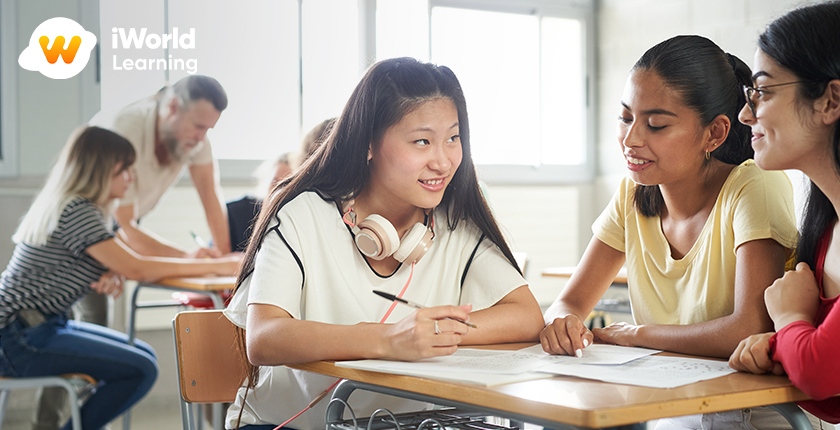
Singapore attracts a large international community. Expatriate families often prefer IB because it transfers easily across countries. If a family moves from Singapore to Switzerland or Hong Kong, an IB education keeps the student on a consistent academic path.
Local families also show growing interest in IB. Some Singaporean students find the IB Diploma’s emphasis on critical thinking, research, and extended writing a good fit. The curriculum requires students to study six subjects across different groups, including languages, sciences, mathematics, and the arts. Students must also complete three core components: Theory of Knowledge (TOK), the Extended Essay (EE), and Creativity, Activity, Service (CAS).
Available IB Schools and Courses in Singapore
International Schools Offering Full IB Programmes
Singapore has a wide range of international schools that offer the complete IB pathway from PYP to DP. Here are some well-regarded examples:
Australian International School (AIS) runs the full IB continuum. Students can move from the PYP through MYP and into the DP. AIS also offers the Australian HSC as an alternative, giving families flexibility.
ISS International School holds the distinction of being one of Singapore’s oldest IB schools. It takes a non-selective admissions approach. This means the school accepts students across a range of academic abilities rather than only top performers. ISS recently reported that 88 percent of its 2025 IB graduates earned a bilingual diploma.
Canadian International School (CIS) offers both PYP and DP programmes. Its IB results consistently rank among the highest in Singapore.
Tanglin Trust School provides the IB DP alongside British A-Levels. The school has a strong reputation for academic rigour.
Local Schools with IB Programmes
Several government-funded schools in Singapore also offer the IB DP. These include:
School of the Arts (SOTA) offers a specialised arts-focused IB programme.
Singapore Sports School provides an IB pathway for student-athletes.
Anglo-Chinese School (Independent) runs an established IB programme alongside its O-Level track.
St Joseph’s Institution International offers the IB DP to both local and international students.
How to Find the Right Fit
Searching for “IB SG” will show you many options. But not every school suits every student. Consider these factors before applying.
Curriculum continuity. If your child is already in IB at another school, look for schools that align with the same programme level.
Admissions selectivity. Some IB schools in Singapore have highly competitive admissions. Others, like ISS International School, welcome a broader range of students.
Cost and location. IB schools vary significantly in fees. International school fees typically range from S$25,000 to S$50,000 annually. Location matters too. Singapore has IB schools in both central areas like Orchard Road and suburban locations like Bukit Timah.
Language support. Many IB schools offer bilingual programmes or English language support for non-native speakers. If English is not your child’s first language, check what language resources the school provides.
How to Apply to an IB School in Singapore
The application process varies by school, but most follow a similar pattern. Here is what you can expect.
Submit an online application. You will need your child’s past school reports, passport information, and sometimes recommendation letters.
Pay an application fee. This ranges from S$500 to S$2,000 depending on the school.
Attend an assessment or interview. Many IB schools require an entrance test in English and mathematics. Some also conduct interviews with parents and students.
Receive an offer. If accepted, you will need to pay a registration fee and possibly a building levy to secure the place.
Complete student pass formalities. International students will need a valid Student’s Pass from the Immigration and Checkpoints Authority (ICA).
What to Do If Your IB Results Do Not Meet University Requirements
Not every student achieves their target IB score. If your IB results fall short of university entry requirements, you have options.
Consider alternative universities. Some universities accept lower IB scores for certain programmes. You can also look at foundation programmes that lead into degree courses.
Retake individual subjects. The IB allows students to retake exams in November of the same year. This gives you a few months to focus on weaker subjects.
Explore private retake programmes. Some learning centres offer IB retake preparation courses. For students looking to strengthen their English in particular, language schools in Singapore provide targeted support. For example, iWorld Learning offers small-group English courses designed to improve academic writing and communication skills, which can be helpful if English was a barrier in your IB assessments.
Consider polytechnic or work-study programmes. In Singapore, polytechnic diplomas offer an alternate pathway to university. Some students complete a diploma and then enter university with advanced standing.
Common Questions About IB SG
Is the IB harder than the A-Level in Singapore?
The IB and A-Level emphasise different skills. The A-Level focuses deeply on three or four subjects. The IB requires six subjects plus core components like the Extended Essay. Many students find the IB more demanding in terms of workload management, but neither is objectively harder overall.
Can a Singaporean student attend an IB international school without giving up local citizenship?
Yes. Singaporean students can attend international schools offering the IB. However, male Singaporean students must still complete National Service. Parents should also check if the school has approval from the Ministry of Education to enrol local students.
What IB score do I need for NUS or NTU?
Admission requirements change yearly. For competitive courses at the National University of Singapore (NUS) or Nanyang Technological University (NTU), successful applicants typically score between 36 and 42 points. Less competitive courses may accept scores in the low 30s. Always check the latest requirements on each university’s website.
Do I need to take an English test to join an IB school in Singapore?
If English is not your first language and you have not studied at an English-medium school, most IB schools will require an English proficiency test. Common tests include IELTS, TOEFL, or the school’s own assessment. Some schools offer English language support programmes for students who need additional help.
相关文章
Recommended Reading
Popular Articles
-
English Teacher Salary in Singapore: A Complete 2026 Guide
-
The Ultimate english learning apps Bank: Categorized & Explained
-
British Council IELTS in 2026: What Changed, What It Costs, and How to Prepare
-
IELTS Price in 2026: What Test-Takers Actually Pay (And How to Spend Less)
-
The Complete 2026 Blueprint for O Level English Oral Topics 2026 Format & Strategy
-
IELTS Test Format, Scoring, and Key Changes for 2026 Explained
-
IELTS Exam Fee 2026: Complete Guide to Costs, Payment & Savings
-
PSLE 2026: Complete Guide to Exam Dates, Scoring System, and Preparation Strategies
-
IELTS Test Dates 2026: Monthly Schedule, Booking Strategy, and Prep Timeline
-
The Top 10 Tuition Centres in Singapore (2025) – A Curated Review for Parents & Students
latest articles
-
Is It Normal to Mix Singlish and English?
-
How to Use the Ten-Year Series for English
-
PSLE Year English Study Hours: A Realistic Guide
-
How Many Practice Papers Does Your Child Need?
-
Primary 5 Composition: Planning from Three Pictures
-
How to Discuss Dream Symbolism Without Overclaiming
-
Secondary English Assessments: The New Rules
-
What to Do Each Day for TOEFL Preparation
-
How to Pronounce 'Myanmar' Clearly
-
WTM Meaning: Use Context Before You Reply