How to Help Your Child with Primary 4 English Oral Practice at Home
Preparing for the Primary 4 English oral examination can feel challenging for both parents and children. Many students in Singapore struggle with reading aloud clearly, expressing their thoughts during stimulus-based conversation, or managing nervousness on the day of the test. The good news is that consistent, low-pressure practice at home can make a real difference. This guide explains what Primary 4 English oral practice involves, why it matters, and how you can support your child without adding stress.
What Primary 4 English Oral Practice Actually Involves
The Primary 4 English oral examination in Singapore typically has two parts: reading aloud and stimulus-based conversation. During the reading passage, your child needs to pronounce words clearly, pause at punctuation marks, and use appropriate expression. The conversation section requires them to look at an image or short text, then answer questions about it. They might describe what they see, explain what is happening, or share their own experiences related to the topic.
Many parents assume oral practice is just about reading more books. But effective practice also builds confidence, teaches thinking routines, and helps children learn to organise their answers quickly. For example, when asked “What would you do if you were in this situation?” a prepared child knows to give two or three specific reasons instead of a one-word answer.
Why Structured Oral Practice Matters at Primary 4
Primary 4 is a key transition year in Singapore schools. Your child is moving from foundational English to more analytical work. The oral examination becomes more demanding compared to lower primary levels. Examiners expect longer answers, better pronunciation, and clearer reasoning.
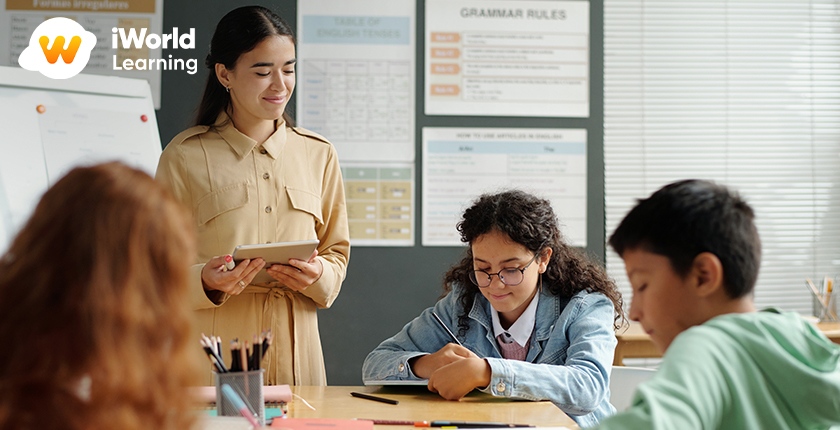
Without regular Primary 4 English oral practice, children may freeze during the conversation section. They might understand the picture but not know how to start their answer. Others rush through the reading passage without pausing, making it hard for the examiner to follow. Structured practice helps your child develop automatic habits: scanning the picture for details, using sentence starters like “I think this because…”, and reading punctuation naturally.
Step 1 Create a Simple Oral Practice Routine at Home
You do not need hours of practice each week. Fifteen minutes three times a week is more effective than one long session. Here is a simple routine many Singapore parents use.
Start with reading aloud. Use your child’s school English reader or any short passage from a children’s newspaper like Little Red Dot. Ask your child to read one paragraph. Listen for pronunciation of common tricky words (for example, “vegetables” or “Wednesday”). Then read the same paragraph yourself as a model. Ask your child to try again. Do not correct every mistake at once. Focus on one thing, such as pausing at full stops.
Next, move to picture conversation. Find a picture from a children’s magazine or an online resource. Ask three standard questions: “What do you see?” “What is happening?” “What might happen next?” Let your child take time to think. Silence is okay. If they struggle, give a sentence starter: “I notice that the boy is…”
Step 2 Use Real Exam Formats and Past Topics
The most effective Primary 4 English oral practice uses materials similar to the actual examination. Many assessment books sold in Popular Bookstore contain sample oral passages and pictures with suggested answers. School teachers sometimes share past oral topics during parent-teacher meetings. You can also create your own by finding pictures of everyday Singapore scenes: a hawker centre, a school canteen, a playground, or a library.
Time your child occasionally to build exam readiness. Give them one minute to look at a picture before you start asking questions. This simulates the real preparation time. Keep the atmosphere relaxed. Say “This is just practice. We are learning together” instead of “You must get this right.”
Step 3 Build Vocabulary and Thinking Skills Together
Weak vocabulary is a common reason children give short answers during the conversation section. If your child does not know words like “crowded,” “spacious,” or “thoughtful,” they cannot express their observations fully.
Build vocabulary naturally during daily activities. On the way to school, describe what you see. “Look at the bus stop. It is crowded this morning. Many people are standing close together.” Ask your child to describe the same scene using different words. Keep a small notebook for new words. Review three words each week.
Thinking skills matter just as much. Teach your child a simple framework for picture conversation: Describe, Explain, Relate. First, describe what you see. Second, explain what might be happening. Third, relate it to your own life. For example, a picture of children playing in a park: “I see three children on a slide. They look happy because it is a sunny day. I remember playing at the playground near my block last weekend.” This framework gives your child a clear structure even under pressure.
Step 4 Address Common Oral Difficulties
Many children in Singapore face similar challenges during Primary 4 English oral practice. Recognising these helps you target your support.
Pronunciation of local place names and English words with silent letters is a common issue. Words like “enough,” “through,” and “neighbourhood” often trip children up. Make a list of ten frequently mispronounced words. Practise them for two minutes before each oral session.
Another difficulty is speaking too fast when nervous. Teach your child to take a small breath before each sentence. Practise reading a passage in a slow, relaxed voice. Record them on your phone. Let them hear the difference between rushing and pausing.
Some children give very short answers because they worry about making mistakes. Reassure them that examiners want to hear their ideas, not perfect English. At home, praise any answer that has two sentences. Gradually build up to three or four sentences.
Where to Find Additional Support in Singapore
If you feel your child needs more structured guidance, several tuition centres in Singapore offer specialised oral practice classes. Group sessions can be helpful because children learn from listening to their peers answer questions. Some language schools in Singapore, such as iWorld Learning, provide small-group English courses that include regular oral practice as part of their curriculum. These classes often simulate exam conditions and give children immediate feedback on pronunciation and answer structure.
You can also check whether your child’s school offers remedial or oral booster sessions closer to the examination period. Community centres sometimes run affordable holiday programmes focused on English communication skills.
Common Questions About Primary 4 English Oral Practice
How often should my child practise for the Primary 4 English oral exam?Aim for three short sessions of 15 minutes each per week. Consistent, low-pressure practice works better than long, stressful sessions. Even reading aloud for five minutes daily builds fluency over time.
What if my child refuses to practise because they feel embarrassed?Start with very short activities, like reading just two sentences aloud while you close your eyes. Praise specific things they did well, such as “You paused at the comma.” Remove any pressure by practising without a timer or scoring system at first.
Are assessment books useful for Primary 4 English oral practice?Yes, quality assessment books with sample passages and pictures are helpful. Look for books that include suggested answers and common examiner questions. Popular Bookstore and major online retailers have a good selection for Singapore’s syllabus.
Can I use English cartoons or videos for oral practice?Watching age-appropriate English shows can help with listening and pronunciation, but active practice requires your child to speak. After watching a short video, ask your child to retell one scene in their own words. That turns passive watching into active oral practice.
相关文章
Recommended Reading
Popular Articles
-
English Teacher Salary in Singapore: A Complete 2026 Guide
-
The Ultimate english learning apps Bank: Categorized & Explained
-
British Council IELTS in 2026: What Changed, What It Costs, and How to Prepare
-
The Complete 2026 Blueprint for O Level English Oral Topics 2026 Format & Strategy
-
IELTS Price in 2026: What Test-Takers Actually Pay (And How to Spend Less)
-
IELTS Test Format, Scoring, and Key Changes for 2026 Explained
-
IELTS Exam Fee 2026: Complete Guide to Costs, Payment & Savings
-
PSLE 2026: Complete Guide to Exam Dates, Scoring System, and Preparation Strategies
-
IELTS Test Dates 2026: Monthly Schedule, Booking Strategy, and Prep Timeline
-
The Top 10 Tuition Centres in Singapore (2025) – A Curated Review for Parents & Students
latest articles
-
Limited Synonyms: Restricted, Finite, or Scarce?
-
From Many to One: Formal Alternatives for a Latin Motto
-
Domestic Partner Meaning: Relationship and Legal Context
-
English Tuition Near an MRT: Look Beyond Location
-
Arachnid Meaning: A Dictionary Guide With Examples
-
Seldom Meaning: Position, Tone, and Examples
-
Hosanna Meaning: Praise, Prayer, and Context
-
Sophocles Meaning: Name, Context, and Pronunciation
-
Primary Composition at Home: A Practical Writing Routine
-
Ares Meaning: The Greek God and Modern Proper Name