Transition from K2 to P1 English SG: A Parent’s Guide
Introduction
Watching your child finish Kindergarten 2 is a proud moment. But for many parents in Singapore, it also brings a new question: how do you help them handle the transition from K2 to P1 English SG?
Primary 1 English is different from K2. The jump is not tiny. In K2, children learn letters, sounds, and simple words. In P1, they start reading short passages, writing sentences, and answering comprehension questions.
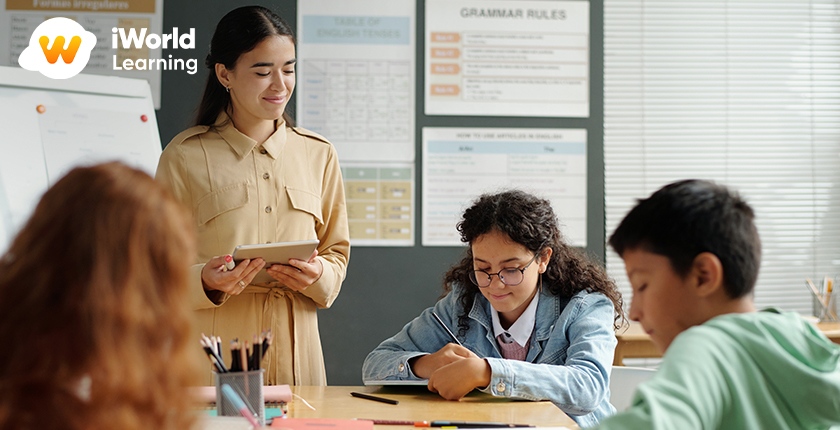
This article explains what changes during this transition. It also gives practical steps to help your child feel ready for Primary 1 English.
What Changes During the Transition from K2 to P1 English SG?
The transition from K2 to P1 English SG involves three main shifts.
Shift one: from play-based to structured learning. In K2, English activities feel like games. Children sing phonics songs and trace letters. In P1, English becomes a formal subject. There are worksheets, spelling tests, and graded assessments.
Shift two: from recognition to production. K2 children recognise letters and maybe a few sight words. P1 expects them to write complete sentences. They need to spell common words correctly. They also need to answer questions like “What is the main idea of this story?”
Shift three: from listening to reading independently. K2 teachers read aloud most of the time. P1 children read short passages on their own. They learn to follow instructions in written form.
These shifts can feel sudden. But with preparation, most children adjust within the first few months of P1.
Why This Transition Matters for Your Child
Many parents underestimate the transition from K2 to P1 English SG. They assume their child will simply adapt. But the first few months of P1 set the tone for the rest of primary school.
If a child struggles with English early, they may lose confidence. They might avoid reading. They could feel anxious about school.
On the other hand, children who handle this transition well often develop stronger reading habits. They participate more in class. They enjoy learning new words.
This is not about being “ahead”. It is about being ready. A child who understands basic sentence structure and can write three simple sentences is better prepared than a child who still struggles with letter sounds.
Common Challenges Parents Notice
During the transition from K2 to P1 English SG, parents often report three problems.
Problem one: writing stamina. K2 writing activities last five to ten minutes. P1 writing tasks can take twenty minutes. Some children’s hands get tired. Their letters become messy. They rush to finish.
Problem two: following multi-step instructions. A P1 teacher might say: “Take out your English file, turn to page five, read the passage, and answer the three questions below.” That is four instructions in one sentence. Children who are not used to this get lost.
Problem three: spelling under pressure. K2 encourages invented spelling (writing “kat” for “cat”). P1 expects correct spelling for common words. Weekly spelling tests can feel stressful for children who never practiced this in K2.
These challenges are normal. They do not mean your child is behind. They mean your child needs targeted practice.
Step 1: Build Writing Stamina Before P1 Starts
The best preparation for the transition from K2 to P1 English SG is daily short writing practice.
Start with five minutes. Ask your child to write two sentences about their day. “I ate noodles. I played with my dog.”
After one week, increase to seven minutes. After two weeks, ten minutes.
Focus on three things:
-
Leaving spaces between words
-
Starting sentences with capital letters
-
Ending sentences with a full stop or question mark
Do not correct every spelling mistake. Choose one or two words to fix. Too many corrections frustrate young children.
Step 2: Practise Multi-Step Listening
P1 expects children to follow spoken instructions. You can practise this at home.
Give two-step instructions first. “Please take your water bottle and put it on the table.”
Move to three-step instructions. “Open your English book, point to the first picture, and tell me what you see.”
Move to four-step instructions. “Take out your pencil, write your name at the top, draw a circle around today’s date, and put your pencil down.”
This sounds simple. But many children enter P1 unable to hold four instructions in their working memory. Regular practice changes that.
Step 3: Introduce Simple Spelling Routines
Spelling tests are common in P1. You can reduce the stress by introducing a gentle spelling routine in K2.
Choose five common words each week. Use words from books your child already knows. “the”, “and”, “to”, “said”, “was”.
Practise for five minutes each day. Say the word. Use it in a sentence. Ask your child to write it. Check together.
Do not punish mistakes. Instead, show the correct spelling. Ask your child to write it correctly once. That is enough for young learners.
Available English Support in Singapore
If you feel your child needs extra help during the transition from K2 to P1 English SG, Singapore has many options.
Option one: school-based support. Most primary schools offer learning support programmes for English. These programmes help children who need extra practice with reading or writing. Speak to the P1 form teacher early.
Option two: enrichment centres. Many centres offer K2 to P1 bridging programmes. These programmes run during the year-end holidays. They focus on writing, reading comprehension, and spelling.
Option three: private tutors. Some parents hire tutors specifically for P1 preparation. Tutors can focus on your child’s exact weak points, like sentence formation or phonics.
Option four: structured small-group courses. Some language schools in Singapore, such as iWorld Learning, offer English courses designed for young learners making the jump from kindergarten to primary school. These courses balance writing practice, reading activities, and confidence building.
How to Choose the Right Support
Not every child needs outside help. But if you decide to enrol your child in a bridging programme or course, ask these questions:
-
Is the class size small? Young children need individual attention.
-
Does the teacher understand the P1 syllabus? Familiarity with MOE standards matters.
-
Is there a balance of writing, reading, and listening? Avoid programmes that only focus on one skill.
-
Are parents given feedback? You need to know what to practise at home.
Trust your gut. A good programme will not promise “genius” results. It will promise practical progress.
What P1 English Looks Like in Singapore Schools
Understanding the P1 English syllabus helps you prepare better.
The MOE P1 English syllabus covers four main areas:
-
Listening and viewing – following instructions, understanding short stories
-
Reading and viewing – reading simple passages, recognising high-frequency words
-
Speaking and representing – sharing ideas clearly, describing pictures
-
Writing and representing – writing sentences, using basic punctuation
In Term 1 of P1, most schools focus on getting children comfortable. Teachers read aloud often. Writing tasks are short. Spelling tests start with three to five words.
By Term 2, expectations increase. Children write four to five sentences about a picture. They answer simple comprehension questions. They learn to check their own spelling.
Knowing this timeline reduces panic. Your child does not need to be perfect on day one. They need to be willing to try.
A Note on Confidence
The transition from K2 to P1 English SG is not only about skills. It is also about confidence.
A child who believes “I can write” will try harder than a child who believes “I am bad at writing”.
Praise effort, not just results. “You worked so hard on that sentence” is better than “That sentence is perfect.”
Celebrate small wins. Writing one good sentence is a win. Remembering to use a capital letter is a win. Reading a whole page without stopping is a big win.
When children feel capable, they learn faster. That is true for P1 English. And it is true for everything else.
Common Questions About Transition from K2 to P1 English SG
When should I start preparing my child for P1 English?
Start about three to six months before P1 begins. The June holidays of K2 year is a good time. This gives you enough time to build writing stamina and spelling routines without rushing.
Is phonics still important in P1?
Yes. Phonics helps children decode new words. But P1 also introduces more sight words and comprehension skills. A child with strong phonics but weak comprehension will still struggle. Balance both areas.
What if my child cries during P1 English lessons?
This happens more often than parents think. Speak to the teacher. Ask for observations. Often, the child is tired or overwhelmed, not “bad at English”. A short break or a different seating arrangement can help. Most children settle within four to six weeks.
How much should my child read at home during K2?
Aim for ten to fifteen minutes of shared reading daily. You read one page. Your child reads one sentence. This builds reading confidence without pressure. Increase the child’s reading time slowly over the months before P1.
Final Thoughts
The transition from K2 to P1 English SG is a big step. But it does not have to be a stressful one.
Focus on small, consistent habits. Five minutes of writing. Two-step instructions. Gentle spelling practice. Shared reading.
Pay attention to your child’s confidence. Praise the effort. Celebrate the small wins.
And remember: most children adjust by Term 2. The child who struggles in January is often writing full sentences by April. Your job is not to make them perfect. Your job is to make them ready to try.
相关文章
Recommended Reading
Popular Articles
-
English Teacher Salary in Singapore: A Complete 2026 Guide
-
The Ultimate english learning apps Bank: Categorized & Explained
-
British Council IELTS in 2026: What Changed, What It Costs, and How to Prepare
-
IELTS Price in 2026: What Test-Takers Actually Pay (And How to Spend Less)
-
The Complete 2026 Blueprint for O Level English Oral Topics 2026 Format & Strategy
-
IELTS Test Format, Scoring, and Key Changes for 2026 Explained
-
IELTS Exam Fee 2026: Complete Guide to Costs, Payment & Savings
-
PSLE 2026: Complete Guide to Exam Dates, Scoring System, and Preparation Strategies
-
IELTS Test Dates 2026: Monthly Schedule, Booking Strategy, and Prep Timeline
-
The Top 10 Tuition Centres in Singapore (2025) – A Curated Review for Parents & Students
latest articles
-
Internship Request Email: Student's Template
-
Counter-Offer From Your Employer: Responding
-
Award Nomination Email: Nominate a Peer
-
How to Pronounce 'Frites' in English and French Contexts
-
Lucidity: Meaning, Context and Natural Examples
-
Salvation: Meaning in Religious and Everyday Contexts
-
Mitigate Meaning in English: Usage, Grammar and Examples
-
Exit Interview Email: HR Templates
-
Empathic Synonyms: Differences in Meaning and Tone
-
Spelling Practice at Home: What Works