English Enrichment Class for Primary: What Parents Should Know
Quick Answer: English enrichment classes for primary students in Singapore build language skills beyond the school syllabus — through creative writing, drama, public speaking, phonics, and reading programmes — and are best chosen when the goal is to develop language confidence and interest rather than to improve exam scores on specific MOE components.
An English enrichment class for primary students is a supplementary language programme, typically activity-based and designed to build English fluency, creativity, and confidence through methods such as storytelling, creative writing, drama, debate, and phonics games — complementing rather than replacing the MOE English syllabus.
The distinction between English tuition and English enrichment is one of the most important — and most commonly misunderstood — choices parents face. Tuition targets the MOE syllabus and aims to improve performance on specific exam components: comprehension, composition, synthesis, and oral. Enrichment targets broader language development and aims to build a child's relationship with English: confidence in speaking, enjoyment of reading, willingness to experiment with writing, and comfort expressing ideas. Both have value, but they serve different goals, and enrolling a child in the wrong one for their needs wastes time and money.
English Enrichment vs English Tuition: Knowing the Difference
| Dimension | English Enrichment | English Tuition |
|---|---|---|
| Primary goal | Build language confidence, creativity, and enjoyment | Improve performance on MOE syllabus exam components |
| Teaching approach | Activity-based: drama, storytelling, creative projects, games | Structured: worksheets, timed practice, component-specific drills |
| Alignment with MOE syllabus | Partial or indirect; may not cover all exam components | Direct; designed around Paper 1–4 assessment formats |
| Assessment | Qualitative: teacher observation, portfolios, informal feedback | Quantitative: mock exams, component scores, progress against AL bands |
| Best for | Children who need to build speaking confidence, reading interest, or creative expression | Children who need to close specific skill gaps in comprehension, composition, grammar, or oral exam technique |
| Typical cost per hour | S$35–65 | S$25–80 (varies widely by format) |
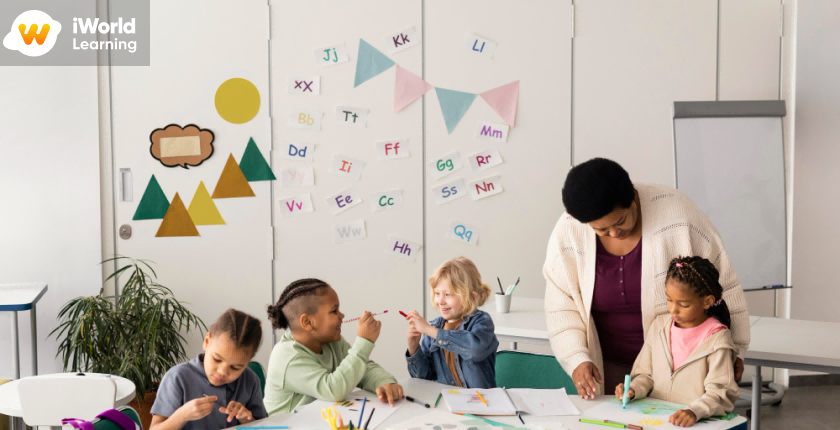
The choice between enrichment and tuition is not about which is "better" — it is about which matches the child's current need. A Primary 2 student who dislikes reading and freezes when asked to speak in English will benefit more from an enrichment programme that makes English enjoyable and builds speaking confidence through drama or storytelling than from a tuition programme drilling comprehension worksheets. A Primary 5 student whose English grades are below the Express-stream threshold and who specifically struggles with comprehension inference and composition structure needs tuition — enrichment will not close exam-ready skill gaps in the time available.
Types of English Enrichment Programmes for Primary Students
English enrichment in Singapore spans a wide range of programme types, each targeting a different aspect of language development:
Phonics and Early Reading Enrichment (P1–P2)
For lower primary students, phonics enrichment programmes teach the relationship between letters and sounds using multi-sensory methods — songs, games, manipulatives, and guided reading. These programmes are most valuable for children who entered Primary 1 with weak decoding skills and need systematic phonics instruction to build reading fluency. A well-designed phonics enrichment programme teaches not just letter-sound correspondence but blending, segmenting, and sight-word recognition — the building blocks of independent reading.
Creative Writing Enrichment (P1–P6)
Creative writing enrichment programmes focus on developing imagination, narrative structure, descriptive vocabulary, and a child's personal writing voice. Unlike tuition composition classes, which teach exam formats (situational writing, picture-based composition, PEEL structure), creative writing enrichment emphasises free expression, experimentation with genres (stories, poems, journal entries, scripts), and the joy of creating with language. For a child who can write a technically competent composition but whose writing is flat, predictable, or formulaic, creative writing enrichment can unlock the expressive range that makes writing engaging.
Speech and Drama Enrichment (P1–P6)
Speech and drama programmes use role-play, improvisation, reader's theatre, and performance to build speaking confidence, vocal expression, body language awareness, and collaborative communication. These skills are directly relevant to the PSLE Oral Communication component (reading aloud and stimulus-based conversation) but are taught through the experiential medium of drama rather than through exam simulation. For a child who speaks in a monotone or who struggles to elaborate beyond single-sentence answers, drama enrichment can build the vocal expressiveness and ideational fluency that oral examination requires.
Public Speaking and Debate Enrichment (P3–P6)
For upper primary students, public speaking and debate programmes teach structured argumentation, impromptu speaking, audience engagement, and critical listening. These skills transfer to the stimulus-based conversation component of the PSLE Oral Communication paper, where students must express and justify opinions — but they also build the kind of confident, articulate self-expression that serves a child well beyond the examination hall. Debate programmes, in particular, develop the ability to consider multiple perspectives on a topic and to structure a reasoned argument — skills that also support composition writing and comprehension analysis.
Reading and Literature Enrichment (P1–P6)
Reading enrichment programmes use guided reading of age-appropriate books — from picture books in P1 to chapter books and short novels in P5 and P6 — to build vocabulary, comprehension inference, and literary appreciation. These programmes are essentially structured versions of the single most powerful English-improvement activity: reading widely and discussing what was read. For a child who reads only for school assignments and does not read for pleasure, a reading enrichment programme can open the door to the kind of extensive reading that builds the vocabulary breadth and inferential comprehension that PSLE Paper 2 rewards.
When to Choose Enrichment, When to Choose Tuition, and When to Choose Both
The decision framework is straightforward when parents identify the specific need first and the programme type second:
- Choose enrichment when: The child's English grades are at or above expected levels, but the child lacks confidence in speaking, shows little interest in reading, writes competent but unimaginative compositions, or needs to develop the broader language skills (creativity, expressiveness, critical thinking) that exams do not directly test but that support long-term language development.
- Choose tuition when: The child's English grades are below expected levels, school feedback identifies specific component weaknesses (comprehension inference, composition structure, grammar accuracy, oral exam technique), and the immediate goal is to improve school and PSLE performance within a defined time frame.
- Choose both when: The child needs exam-focused support (tuition) to close skill gaps but would also benefit from enrichment to build the language enjoyment and confidence that sustain long-term motivation. In this scenario, one weekly enrichment session (e.g., creative writing or drama) plus one weekly tuition session provides complementary support — enrichment builds the spark, tuition builds the engine.
How iWorld Learning's Primary English Programme Combines Enrichment and Syllabus Alignment
iWorld Learning's primary school English programme occupies a middle ground between enrichment and tuition — structured enough to align with the MOE syllabus and build exam-relevant skills, but delivered through small-group, interactive classes that provide the individual attention and peer discussion that make language learning engaging rather than mechanical.
The programme uses CEFR-aligned learning pathways to ensure that each student progresses through a structured sequence of skills — reading comprehension, writing, grammar, listening, and speaking — while the small-group format (4–8 students) allows each child to participate actively in discussion, receive individual feedback on writing, and practise oral communication in a supportive environment. Internationally certified teachers (TESOL/TEFL) with experience in primary English pedagogy deliver the programme at iWorld Learning's two CBD campuses — Tanjong Pagar MRT and Somerset — making it accessible for families across central Singapore.
For parents who want a programme that builds both language proficiency and language confidence — the exam skills and the spark — this integrated approach can be more efficient and more enjoyable for the child than juggling separate enrichment and tuition programmes on different days.
FAQ
What is the difference between English enrichment and English tuition for primary students?
English enrichment builds broad language skills — speaking confidence, creative writing, reading enjoyment — through activity-based methods such as drama, storytelling, and games. English tuition targets MOE syllabus components — comprehension, composition, grammar, oral exam technique — through structured practice and component-specific drills aimed at improving school exam performance.
How much do English enrichment classes cost in Singapore?
English enrichment classes for primary students in Singapore typically cost S$35 to S$65 per hour, depending on the programme type, class size, and teacher qualifications. Holiday programmes and short-term workshops may have different pricing structures. Exact fees should be confirmed with the specific enrichment provider.
At what age should my child start English enrichment?
English enrichment can start as early as Nursery or Kindergarten for phonics and early literacy programmes. For primary-level enrichment (creative writing, drama, public speaking, reading programmes), Primary 1 or Primary 2 is a natural starting point, when children have basic literacy and can participate in group activities. The key is matching the programme type to the child's developmental stage and interest.
Will English enrichment improve my child's PSLE English score?
English enrichment may improve PSLE performance indirectly — by building reading fluency, vocabulary breadth, speaking confidence, and writing expressiveness — but it does not directly target the specific component types and assessment formats tested in the PSLE English paper. For direct PSLE score improvement, tuition aligned with the MOE syllabus is the more targeted choice. Enrichment supports long-term language development; tuition supports short-to-medium-term exam readiness.
Can my child take both English enrichment and English tuition?
Yes, many parents combine both: one weekly enrichment session to build language enjoyment and confidence (e.g., creative writing or drama), and one weekly tuition session to address exam-specific skill gaps. The key is not over-scheduling — a child who spends six to eight hours per week on English alone may burn out. Two to three hours total (one enrichment plus one tuition session) is a sustainable load for most primary students.
Summary
English enrichment classes for primary students build the broader language skills — speaking confidence, creative expression, reading enjoyment, and critical thinking — that the MOE syllabus values but does not always have time to nurture in the classroom. Choosing enrichment means prioritising long-term language development and motivation over short-term exam performance. It is the right choice for children who are performing at or above expected levels and need to build language confidence, interest, and expressiveness. For children who are below expected levels and need to close specific exam-component gaps, tuition is the more targeted tool — and for some children, a combination of both provides the most complete language support. iWorld Learning's primary English programme integrates syllabus-aligned instruction with small-group, interactive teaching — offering a middle ground that builds both the exam skills and the language confidence that primary students need. Parents interested in the programme can contact iWorld Learning to discuss their child's needs at its Tanjong Pagar and Somerset campuses.
Next step: Speak with iWorld Learning about English enrichment and tuition options for your child →
相关文章
Recommended Reading
Popular Articles
-
English Teacher Salary in Singapore: A Complete 2026 Guide
-
The Ultimate english learning apps Bank: Categorized & Explained
-
British Council IELTS in 2026: What Changed, What It Costs, and How to Prepare
-
IELTS Price in 2026: What Test-Takers Actually Pay (And How to Spend Less)
-
The Complete 2026 Blueprint for O Level English Oral Topics 2026 Format & Strategy
-
IELTS Test Format, Scoring, and Key Changes for 2026 Explained
-
IELTS Exam Fee 2026: Complete Guide to Costs, Payment & Savings
-
PSLE 2026: Complete Guide to Exam Dates, Scoring System, and Preparation Strategies
-
IELTS Test Dates 2026: Monthly Schedule, Booking Strategy, and Prep Timeline
-
The Top 10 Tuition Centres in Singapore (2025) – A Curated Review for Parents & Students
latest articles
-
Internship Request Email: Student's Template
-
Counter-Offer From Your Employer: Responding
-
Award Nomination Email: Nominate a Peer
-
How to Pronounce 'Frites' in English and French Contexts
-
Lucidity: Meaning, Context and Natural Examples
-
Salvation: Meaning in Religious and Everyday Contexts
-
Mitigate Meaning in English: Usage, Grammar and Examples
-
Exit Interview Email: HR Templates
-
Empathic Synonyms: Differences in Meaning and Tone
-
Spelling Practice at Home: What Works