IGCSE and GCSE: Which Qualification Is Right for Your Child?
What Are IGCSE and GCSE?
The General Certificate of Secondary Education (GCSE) and the International General Certificate of Secondary Education (IGCSE) are two of the most widely recognised secondary school qualifications in the world. Both are typically taken by students aged 14 to 16 and serve as the standard pathway to further academic study such as A-Levels or the International Baccalaureate (IB).
The GCSE was introduced in 1986 as the primary secondary school qualification in the United Kingdom, replacing the earlier O-Level and CSE examinations. Two years later, in 1988, the IGCSE was developed by the University of Cambridge to serve students learning outside the UK context. The "I" in IGCSE stands for "International," reflecting its design as a globally portable qualification. Despite their different origins, both qualifications are now accepted as academically equivalent by universities around the world, including prestigious Russell Group institutions in the UK.
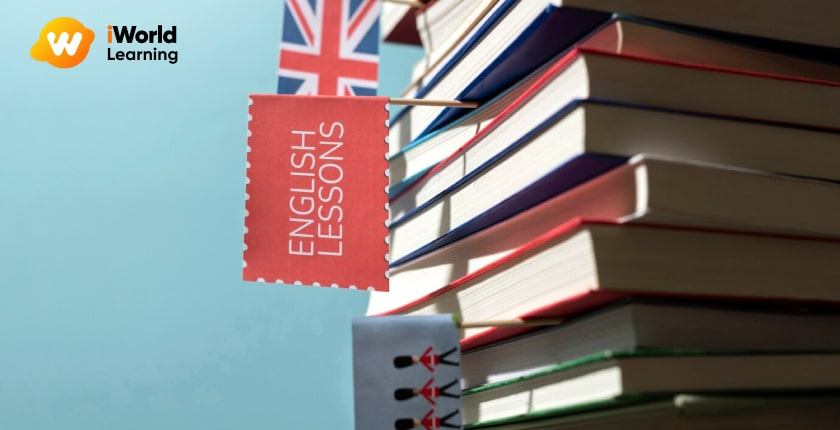
Neither qualification has an age restriction, meaning they have been taken by students both younger and older than the typical 14–16 age range. Both IGCSEs and GCSEs serve as the precursor to sixth-form study — Years 12 and 13 in the UK system — where students progress to A-Levels, the International Baccalaureate, or other pre-university qualifications.
Key Differences Between IGCSE and GCSE
While IGCSE and GCSE are broadly equivalent in academic rigour, several practical differences affect which one a student might choose.
Target Audience and Availability
GCSEs are primarily designed for students in the United Kingdom and are taught at most British secondary schools. The IGCSE, as the name suggests, is an international qualification available in over 150 countries. It is particularly popular at international schools and British schools overseas, though some independent schools in the UK also offer it.
Curriculum Focus
The GCSE curriculum is developed with British students in mind. For example, Shakespeare is compulsory in GCSE English Literature, and History and Geography topics tend to have a UK-centred focus. The IGCSE, by contrast, is designed to avoid cultural bias and to be accessible to students whose first language may not be English. It offers over 70 subjects, including around 30 language options, giving schools greater flexibility to tailor their programme.
Assessment and Grading
Historically, one of the biggest differences was that GCSEs relied heavily on coursework while IGCSEs were assessed almost entirely through final exams. However, since the 2017 GCSE reforms in England, coursework has been significantly reduced. Today, both qualifications are predominantly exam-based, and both now use the 9–1 grading scale, where 9 is the highest grade and 4 is considered a standard pass.
This convergence in assessment methods means that the practical experience of taking an IGCSE or GCSE is now more similar than ever. Students sitting either qualification will face structured written examinations that test recall, analysis, and application of knowledge. The shift away from coursework has been welcomed by some educators for reducing the risk of plagiarism and teacher-assessment inconsistency, though others argue it places additional pressure on a single exam performance.
| Aspect | GCSE | IGCSE |
|---|---|---|
| Origin | UK, 1986 | Cambridge, 1988 |
| Availability | Primarily UK schools | 150+ countries worldwide |
| Curriculum Focus | UK-centric content | International, culturally neutral |
| Subjects Available | Varies by exam board | 70+ subjects, 30+ languages |
| Assessment | Mostly exam-based (since 2017) | Mostly exam-based |
| Grading Scale | 9–1 | 9–1 |
| University Recognition | Widely accepted | Widely accepted (equivalent) |
Which Schools Offer IGCSE and GCSE?
In the UK, most state-maintained (government-run) schools offer GCSEs, and many have phased out IGCSEs entirely following government policy changes that removed IGCSEs from school performance league tables. Independent schools, however, retain the flexibility to offer both qualifications. Some leading independent schools continue to favour IGCSEs in certain subjects, particularly Mathematics and Sciences, where they value the emphasis on problem-solving and critical thinking over coursework.
Outside the UK, international schools typically offer IGCSEs, though some may also provide GCSE options. For families relocating internationally, the IGCSE's global portability is a significant advantage. Students can begin an IGCSE course in one country and complete it in another, as the curriculum and exam structure are standardised worldwide through examining bodies such as Cambridge Assessment International Education and Pearson Edexcel.
In Singapore, for instance, many international and private schools offer IGCSE programmes, while local government schools follow the Singapore-Cambridge GCE O-Level track. This means families in Singapore who prefer a UK-style curriculum often choose between IGCSE (at international schools) and O-Levels (at local schools), rather than between IGCSE and GCSE specifically.
Are IGCSE and GCSE Equivalent for University Admission?
Yes. Universities in the UK, including top-tier Russell Group institutions, do not generally distinguish between IGCSE and GCSE results when evaluating applications. Both qualifications are viewed as evidence of academic ability at the secondary school level.
That said, universities are typically more interested in a student's performance at the next stage — A-Levels, IB, or equivalent pre-university qualifications. Strong IGCSE or GCSE results demonstrate academic potential, but it is the student's post-16 qualifications that carry the most weight in admissions decisions.
For students applying to universities outside the UK, IGCSEs are often more widely recognised simply because they are a familiar international qualification. Admissions offices in the United States, Australia, Singapore, and elsewhere frequently evaluate IGCSE results as part of their assessment of international applicants.
How to Choose Between IGCSE and GCSE
The right choice depends on the student's circumstances. Here are the key factors to consider:
- Location: If you are studying at a UK state school, GCSE is the default. If you are at an international school, IGCSE is more commonly available.
- Future Plans: Both qualifications are equivalent for university admission, so neither gives a built-in advantage. Focus instead on choosing the one offered by the best school for your situation.
- Subject Choice: IGCSE offers a wider range of languages and culturally neutral subjects. If you need a specific language or subject not available at GCSE, IGCSE may be the better option.
- Learning Style: Students who prefer exam-based assessment may find IGCSE a natural fit, although the gap has narrowed since GCSE reforms reduced coursework.
- School Quality: The quality of teaching matters far more than the qualification itself. A well-taught GCSE programme at a strong school will always outperform a poorly delivered IGCSE.
The Role of English Language Skills in IGCSE and GCSE Success
Regardless of which qualification a student pursues, strong English language skills are fundamental to achieving good results. Both IGCSE and GCSE require students to demonstrate comprehension, critical analysis, and clear written communication — skills that are especially tested in English Language, Literature, History, and the Sciences.
For international students or those whose first language is not English, building academic English proficiency before starting an IGCSE or GCSE course can make a significant difference to outcomes. This includes not only general fluency but also the specific vocabulary, essay structure, and analytical writing conventions expected in UK-style examinations.
In Singapore, for example, many students prepare for IGCSE or equivalent qualifications while simultaneously strengthening their academic English. Specialist English language centres like iWorld Learning offer tailored programmes that align with international curriculum standards, using small class sizes and CEFR-based assessments to customise instruction. With a focus on real-world application rather than rote memorisation, iWorld Learning helps students build the academic English skills — from essay writing to critical analysis — that are essential for IGCSE and GCSE success. Their experienced ESL instructors hold international certifications (TESOL/TEFL) and understand the specific challenges Asian learners face when preparing for UK-style examinations.
Making the Right Decision for Your Child
Ultimately, the IGCSE and GCSE comparison is less about which qualification is "better" and more about which is the right fit for the student's educational context and goals. Both qualifications are rigorous, internationally recognised, and capable of opening doors to top universities worldwide.
Parents and students should focus on finding a school with strong teaching, a supportive learning environment, and a curriculum that matches the student's needs. Whether that means GCSE or IGCSE, the qualification itself is just one piece of a much larger educational puzzle.
Before making a final decision, consider visiting the schools you are considering, speaking with teachers about their approach to the chosen qualification, and asking about the support available for students who may need extra help with English language skills. The best choice is the one that aligns with the student's learning style, academic goals, and long-term plans — whether that leads through GCSE, IGCSE, or both.
相关文章
Recommended Reading
Popular Articles
-
English Teacher Salary in Singapore: A Complete 2026 Guide
-
The Ultimate english learning apps Bank: Categorized & Explained
-
British Council IELTS in 2026: What Changed, What It Costs, and How to Prepare
-
IELTS Price in 2026: What Test-Takers Actually Pay (And How to Spend Less)
-
The Complete 2026 Blueprint for O Level English Oral Topics 2026 Format & Strategy
-
IELTS Test Format, Scoring, and Key Changes for 2026 Explained
-
IELTS Exam Fee 2026: Complete Guide to Costs, Payment & Savings
-
PSLE 2026: Complete Guide to Exam Dates, Scoring System, and Preparation Strategies
-
IELTS Test Dates 2026: Monthly Schedule, Booking Strategy, and Prep Timeline
-
The Top 10 Tuition Centres in Singapore (2025) – A Curated Review for Parents & Students
latest articles
-
Internship Request Email: Student's Template
-
Counter-Offer From Your Employer: Responding
-
Award Nomination Email: Nominate a Peer
-
How to Pronounce 'Frites' in English and French Contexts
-
Lucidity: Meaning, Context and Natural Examples
-
Salvation: Meaning in Religious and Everyday Contexts
-
Mitigate Meaning in English: Usage, Grammar and Examples
-
Exit Interview Email: HR Templates
-
Empathic Synonyms: Differences in Meaning and Tone
-
Spelling Practice at Home: What Works