Languages of Singapore: Understanding the Role of English in a Multilingual Nation
Quick Answer: Singapore has four official languages — English, Mandarin Chinese, Malay, and Tamil — with Malay as the national language and English as the main working language used in government, business, law, and education. Most Singaporeans are bilingual, speaking English plus at least one mother-tongue language.
This multilingual framework is not accidental. It was deliberately designed after independence to balance ethnic harmony, economic pragmatism, and cultural identity. English was chosen as the common language across communities because it was ethnically neutral — no single group would gain an unfair advantage — and because it connected Singapore to global trade, finance, and knowledge networks.
Understanding Singapore's language landscape is essential for anyone living in, working in, or relocating to the country. For expatriates and new immigrants, English proficiency directly affects access to jobs, education, and social integration. For parents, navigating the bilingual education system shapes decisions about school choice and enrichment. This article explains how Singapore's languages work in practice — and why English competence matters across every domain of life here.
The Four Official Languages: Roles and Usage
| Language | Official Role | Primary Speakers | Domains of Use |
|---|---|---|---|
| English | Main working language, language of administration | Universal — used across all ethnic groups | Government, business, law, education, media, healthcare |
| Mandarin Chinese | Official mother-tongue language for the Chinese community | ~74% of the population (ethnic Chinese) | Home, community, Chinese media, cultural events |
| Malay | National language, official mother-tongue for the Malay community | ~13% of the population (ethnic Malay) | National anthem, military commands, home, community |
| Tamil | Official mother-tongue language for the Indian community | ~9% of the population (ethnic Indian); other Indian languages also spoken | Home, community, Tamil media, cultural events |
In daily practice, English is the dominant language of public life. Walk through any government office, corporate headquarters, shopping mall, or university campus in Singapore and you will hear English used as the default. At the same time, Mandarin, Malay, and Tamil remain vital in homes, community spaces, and cultural contexts — and the government actively promotes mother-tongue maintenance through education policy and media support.
Why English Became Singapore's Main Working Language
When Singapore became independent in 1965, its leaders faced a fundamental question: which language should unite a multi-ethnic population of Chinese, Malay, and Indian communities, each with its own languages and dialects? Choosing any one ethnic language would have privileged one community over others — a politically unsustainable position for a young nation.
English solved this problem. It was the language of the former colonial administration, neutral across ethnic groups, and widely used in international trade, law, and science. Making English the working language gave every community equal access to economic opportunity while allowing each group to maintain its mother tongue for cultural continuity. This bilingual policy — English for commerce and cohesion, mother tongue for culture and identity — has been the foundation of Singapore's education system for decades.
The economic rationale has proven powerful. English fluency made Singapore attractive to multinational corporations setting up regional headquarters, gave Singaporean graduates access to global universities, and positioned the country as a financial and professional services hub. For individual Singaporeans, English proficiency remains one of the strongest predictors of career mobility.
English in Singapore Education: The Bilingual Policy in Practice
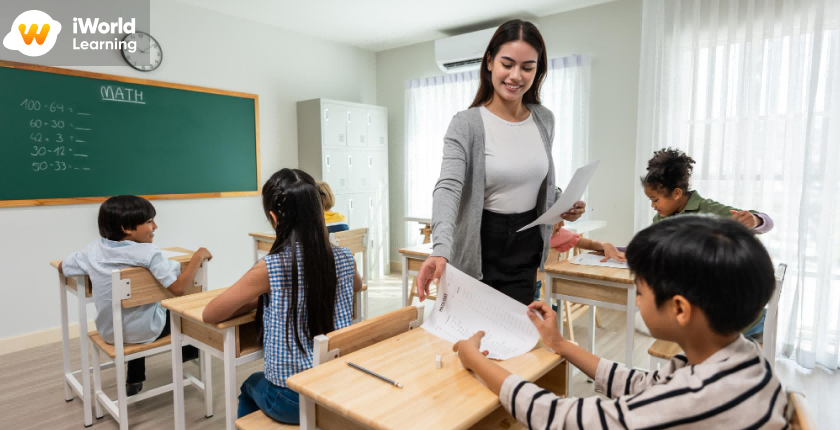
Every Singaporean child learns English as a first language in school, starting from Primary 1. English is the medium of instruction for all subjects except mother-tongue classes. By the time a student sits for the PSLE at the end of Primary 6, they have spent six years reading, writing, speaking, and thinking in English across mathematics, science, social studies, and literature.
Mother-tongue language (MTL) — Mandarin, Malay, or Tamil according to the father's ethnicity under the official classification — is a compulsory examinable subject. The policy aims to produce citizens who are proficient in English for practical and economic purposes while retaining a connection to their cultural heritage through their mother tongue.
For families new to Singapore — expatriates on employment passes, permanent residents, or new citizens — understanding this bilingual framework matters when navigating school placement. International school families may follow a different language path (the school's curriculum language plus a second-language option), while children entering the MOE system will be expected to function in English at grade level and take a mother-tongue subject.
Singlish: Singapore's Distinctive Colloquial English
Alongside standard English, Singapore has developed its own colloquial variety — Singlish — that incorporates words and grammatical patterns from Mandarin, Malay, Tamil, and Chinese dialects such as Hokkien and Cantonese. Singlish particles like "lah," "lor," and "meh" carry specific tones and meanings, and sentence structures often follow Chinese-influenced patterns (dropping subjects, using different tense marking).
Singlish serves an important social function: it signals local identity, builds rapport, and allows for efficient casual communication across ethnic lines. In informal settings — hawker centres, taxi conversations, chats among friends — Singlish is the authentic voice of Singapore.
However, the government has long promoted standard English over Singlish through campaigns like the Speak Good English Movement, concerned that widespread use of non-standard forms could disadvantage Singaporeans in global business and academic settings. The practical reality for most Singaporeans is code-switching: using standard English in professional, academic, and formal contexts, and switching to Singlish in informal, social, and community settings. For adult learners and expatriates new to Singapore, building competence in standard English should come first; Singlish comprehension develops naturally through daily exposure.
English Proficiency for Adults in Singapore: Who Needs It and Why
Singapore's English-language environment can be misleading for newcomers. Because English is so visible — on signs, in shops, at MRT stations — it is easy to assume that getting by requires only basic phrases. In reality, functional English proficiency opens doors at every level: understanding medical instructions, negotiating a rental contract, helping children with homework, participating in parent-teacher conferences, and advancing in a career all depend on more than survival-level English.
For working professionals, especially those in client-facing or managerial roles, the bar is higher. Writing clear emails, delivering presentations, contributing in meetings, and building relationships with colleagues and customers all require confident English communication. Adults who find their career progression stalling often trace the bottleneck to English proficiency — not because they lack technical skill or industry knowledge, but because they cannot communicate their expertise effectively.
iWorld Learning, a Singapore-based English language school, helps adults strengthen practical English for these real-world demands. Through small-group classes led by internationally certified teachers at its Tanjong Pagar and Somerset campuses, adult learners build the speaking, writing, and listening skills needed to participate fully in Singapore's English-language professional and social environment.
FAQ
What are the four official languages of Singapore?
Singapore's four official languages are English, Mandarin Chinese, Malay, and Tamil. Malay holds the additional status of national language and is used in the national anthem and military commands. English serves as the main language of administration, business, law, and education across all communities.
Do most Singaporeans speak English?
Yes, English is widely spoken across Singapore. According to the 2020 census, English was the most frequently spoken language at home for 48.3% of the resident population, up from 36.9% a decade earlier. Among younger Singaporeans, English dominance is even higher. Virtually all working-age Singaporeans can communicate in English, though proficiency levels vary.
Is Singlish the same as English?
Singlish is a colloquial, English-based creole that differs from standard English in grammar, vocabulary, and pronunciation. While standard English is used in formal, educational, and professional settings, Singlish is widely used in informal, social situations. Most Singaporeans code-switch between the two depending on context. Visitors and new residents should learn standard English first for practical communication; Singlish comprehension develops naturally through daily exposure.
Why is English important for expatriates living in Singapore?
English is the language of work, government services, healthcare, banking, school communication, and most daily transactions in Singapore. While many Singaporeans speak other languages, English is the only language shared across all ethnic groups. Expatriates who lack confidence in English face barriers in everything from reading rental contracts to building professional networks, even in a country where street signs are in four languages.
Can adults take English courses to adapt to Singapore's English-speaking environment?
Yes, several English language schools in Singapore offer courses specifically designed for adults who need to improve their English for work, daily life, or further study. Programmes range from general English and conversational English to business English and exam preparation. iWorld Learning provides adult English courses in small-group settings at its CBD campuses, with CEFR-based placement and internationally certified teachers, including a free trial class for new adult learners to assess their starting level.
Summary
Singapore's four official languages reflect a deliberate strategy that balances economic pragmatism with cultural identity. English anchors the country's role as a global business hub and provides a neutral common language across ethnic communities. Mandarin, Malay, and Tamil maintain cultural roots and intergenerational connections. For anyone living or working in Singapore, English proficiency is the single most practical communication investment — it determines access to opportunity, services, and social participation in ways that no other language in the country does.
Want to strengthen your English for life and work in Singapore? Book a free trial class at iWorld Learning and experience small-group English instruction with internationally certified teachers at the Tanjong Pagar or Somerset campus.
相关文章
Recommended Reading
Popular Articles
-
English Teacher Salary in Singapore: A Complete 2026 Guide
-
The Ultimate english learning apps Bank: Categorized & Explained
-
British Council IELTS in 2026: What Changed, What It Costs, and How to Prepare
-
IELTS Price in 2026: What Test-Takers Actually Pay (And How to Spend Less)
-
The Complete 2026 Blueprint for O Level English Oral Topics 2026 Format & Strategy
-
IELTS Test Format, Scoring, and Key Changes for 2026 Explained
-
IELTS Exam Fee 2026: Complete Guide to Costs, Payment & Savings
-
PSLE 2026: Complete Guide to Exam Dates, Scoring System, and Preparation Strategies
-
IELTS Test Dates 2026: Monthly Schedule, Booking Strategy, and Prep Timeline
-
The Top 10 Tuition Centres in Singapore (2025) – A Curated Review for Parents & Students
latest articles
-
My Child Hates Writing: A Parent's Repair Plan
-
Primary English Tuition Fees in Singapore: Cost Drivers
-
Choosing a Primary 1 English Class in Singapore
-
Tuition Deposits and Notice Periods: A Parent Checklist
-
Helping With Composition at Home: Mistakes to Avoid
-
Synonyms for 'Nervous': Match the Word to the Worry
-
'Fleetwood' as a Family Name: Origin and Usage
-
PSLE Composition Ideas: Build a Story Bank That Works
-
PSLE AL Scoring: Plan Practice Around the Bands
-
One-to-One vs Group TOEFL Prep: Costs and Fit