Primary 3 English Tuition Singapore – Build Reading and Writing Confidence Before Upper Primary
Primary 3 is widely regarded as the year when English expectations take a meaningful step up in Singapore's primary schools. By this stage, students are expected to move from simple picture-based comprehension to longer passages with inferential questions, and from guided writing to short compositions with a clear beginning, middle, and end. For many families, Primary 3 is the point at which tuition shifts from being optional enrichment to a practical support strategy.
Primary 3 English tuition is a structured supplementary programme designed to help P3 students strengthen reading comprehension, composition writing, grammar accuracy, and oral communication skills in alignment with the MOE Primary 3 English syllabus. Unlike P1 and P2 tuition, which tends to focus on phonics and reading readiness, P3 tuition addresses the widening gap between what is taught in a class of thirty and what an individual child needs to practise in order to keep pace.
Why Primary 3 Is a Pivotal Year for English
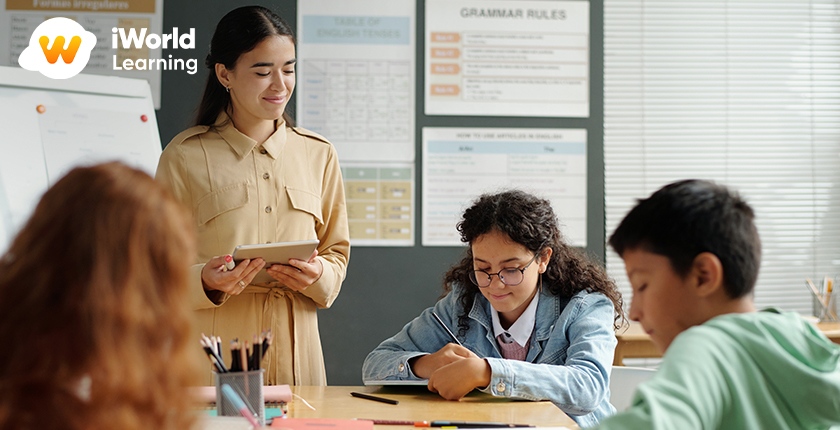
The MOE English syllabus introduces several new demands at the Primary 3 level that catch families off guard. Comprehension passages grow longer — often 200 to 300 words — and the questions shift from straightforward fact retrieval to inference, vocabulary-in-context, and sequencing. Writing tasks move from picture-description exercises to compositions that require a simple plot, character description, and a resolution, all within a single sitting. Grammar topics expand to include tenses like the present perfect, comparative and superlative forms, and more complex sentence structures such as relative clauses.
At the same time, class sizes in MOE schools remain at thirty or more, which means a teacher can give each child only a few minutes of individual writing feedback per week. A child who misunderstands a grammar rule in Term 1 may carry that confusion into Term 3 without anyone noticing. Tuition bridges this gap by providing the individual attention and targeted correction that the classroom cannot offer at scale.
The upper primary years — P4, P5, and P6 — build directly on the foundation laid in P3. A student who enters P4 with weak comprehension strategies or disorganised writing will find the PSLE preparation years significantly harder. Investing in P3 tuition is ultimately an investment in upper primary readiness.
What Effective Primary 3 English Tuition Covers
Not all P3 English tuition programmes are built around the same priorities. The most effective ones structure their curriculum around the four key components of the MOE English assessment framework, adapted to the P3 level.
Reading comprehension: Students learn to identify main ideas, make inferences, understand vocabulary from context, and answer open-ended questions with precision. Effective programmes use a mix of narrative and non-narrative passages — stories, news articles, and factual reports — to build versatility. Teachers should model how to locate evidence in the text rather than relying on guessing.
Composition writing: P3 composition tuition should teach story structure (introduction, build-up, problem, resolution, conclusion), descriptive language (show-don't-tell techniques), and basic editing habits. The goal is not perfect writing at this stage, but consistent, organised pieces that a child can produce independently. Teachers should mark compositions with specific, actionable feedback — not just a grade — so students know exactly what to improve next time.
Grammar and vocabulary: P3 grammar tuition covers tenses, subject-verb agreement, prepositions, connectors, and sentence types. Vocabulary work should go beyond memorising word lists — it should include using new words in context, understanding synonyms and antonyms, and recognising word forms (e.g., "beauty," "beautiful," "beautifully"). Cloze passages and editing exercises give students structured practice with these elements in exam-style formats.
Oral communication: The P3 oral component includes reading aloud and stimulus-based conversation. Tuition should give students regular practice reading with expression, pronouncing words clearly, and organising spoken responses. Small-group settings are particularly valuable here because each child gets multiple turns to speak and receive feedback per session.
Class Size, Teacher Qualifications, and Programme Design
When evaluating Primary 3 English tuition options in Singapore, three structural factors matter as much as the curriculum content itself.
Class size: For P3 students, a class size of four to eight students offers the best balance. In a group of four to six, each child can read aloud, share writing, and receive individual feedback multiple times per lesson. In a group larger than ten, shy students may complete an entire term without the teacher hearing them read a full paragraph. One-to-one tuition offers maximum attention, but it removes the peer interaction that helps children learn from each other's mistakes and successes.
Teacher qualifications: Look for teachers with recognised English teaching certifications — TESOL, TEFL, CELTA, or a relevant degree in English or Education. Experience with the MOE primary syllabus is equally important, as it ensures the teacher understands assessment formats and can align lessons with what the child faces at school. At iWorld Learning, teachers hold internationally recognised certifications and bring an average of over twenty years of teaching experience to the classroom.
Programme structure: A well-designed P3 English tuition programme should have a clear term-by-term progression, not a collection of random worksheets. It should include diagnostic assessments at the start to identify each child's specific gaps, regular progress updates for parents, and homework that reinforces rather than overwhelms. Programmes that track improvement across terms — rather than just reporting attendance — give families a clearer picture of whether the tuition is working.
How Much Does Primary 3 English Tuition Cost in Singapore
The cost of Primary 3 English tuition in Singapore varies primarily with class size, teacher experience, and centre location. Small-group P3 English classes at established language centres and tuition schools typically range from SGD 30 to SGD 55 per hour. One-to-one home tutoring ranges from SGD 40 to SGD 80 per hour, with experienced MOE-trained tutors at the higher end of the spectrum. Centres located in the CBD or Orchard Road corridor may price toward the upper end of the group-class range due to higher operating costs.
These figures are market reference points and actual fees depend on programme duration, included materials, and any term-based packages. Many centres offer a trial class or a pro-rated first month so families can assess teacher fit, class dynamics, and curriculum relevance before committing to a full term. Always ask the course consultant whether fees cover learning materials, assessment reports, and make-up class policies.
How to Know If Your P3 Child Needs English Tuition
Not every Primary 3 child needs tuition. Here are the signals that suggest tuition may be worth considering.
First, look at the gap between the child's oral English and written English. A child who speaks confidently but produces short, disorganised compositions with frequent grammar errors may benefit from structured writing practice that the classroom cannot provide in sufficient depth. Second, check whether comprehension scores are dropping relative to earlier years. A decline at P3 is common because of the inferential demands, but if the child consistently scores below expectations despite trying, targeted tuition can teach specific comprehension strategies that reverse the trend. Third, pay attention to the child's attitude. A student who says "I am bad at English" or avoids reading at home may be struggling in silence. A small, supportive tuition group can rebuild confidence before negative self-beliefs harden.
Conversely, a child who reads widely for pleasure, writes willingly at home, and receives positive feedback from the school teacher may not need tuition at this stage. The decision should be based on the individual child's needs, not on what classmates are doing.
FAQ
When should my child start Primary 3 English tuition?
The most common starting points are the December holiday before the P3 academic year or within the first term itself. Starting before the school year gives the child a head start on the new syllabus demands in a low-pressure environment. Starting within Term 1 allows the tuition to address specific challenges as they arise in school. Either approach works; the key is consistency once tuition begins.
What is the difference between P3 English tuition and P3 English enrichment?
Tuition is typically aligned to the MOE syllabus and assessment formats — comprehension passages, composition topics, grammar exercises, and oral practice mirroring what the child encounters at school. Enrichment programmes tend to focus on broader language exposure through creative writing, drama, or general reading. Both have value, but families seeking measurable improvement in school English results generally benefit more from syllabus-aligned tuition.
How long does it take to see results from Primary 3 English tuition?
Most students show noticeable improvement in one or two specific areas — such as grammar accuracy or comprehension scores — within one term (about ten to twelve weeks) of consistent weekly tuition. Broader improvement in writing quality and oral confidence typically takes two to three terms. Results depend on the child's starting level, the frequency of tuition, and whether learning is reinforced through daily reading and practice at home.
Is online or in-person P3 English tuition more effective?
For most Primary 3 students, in-person tuition tends to be more effective because it allows the teacher to observe writing posture and handwriting habits, engage the child with physical learning materials, and manage attention more directly. Online tuition can work well for self-motivated learners with strong attention spans, but younger children often benefit from the structure and social warmth of a physical classroom. Many centres, including iWorld Learning, operate campuses near MRT stations for convenient access.
Can Primary 3 English tuition help with other subjects?
Yes, indirectly. English is the medium of instruction for Mathematics, Science, and other subjects in Singapore's schools. A child who reads with stronger comprehension and writes with greater clarity will also perform better on Mathematics word problems, Science open-ended questions, and project work across subjects. Strengthening English at P3 has a multiplier effect that reaches beyond the English paper itself.
How do I choose between group and one-to-one Primary 3 English tuition?
Small-group tuition (four to six students) works well for most P3 children because peer interaction builds speaking confidence and gives students the chance to learn from each other's contributions. One-to-one tuition is better when a child has a specific, significant gap — such as weak phonics or very low writing confidence — that needs intensive, undivided attention over a shorter period. Many families start with small-group tuition and switch to one-to-one only if the child needs more targeted support.
Summary
Primary 3 English tuition is about bridging the gap between what the MOE Primary 3 syllabus demands and what a child can practise and master in a large classroom setting. The right tuition programme combines small class sizes, MOE-aligned curriculum, qualified teachers, and consistent progress feedback — all delivered in a supportive environment that builds confidence alongside competence. Whether your child needs help with comprehension strategies, composition structure, grammar accuracy, or oral fluency, the P3 year is the right window to strengthen foundations before upper primary begins.
To explore Primary 3 English tuition options or book a trial class, contact iWorld Learning — a Singapore-based English language school offering small-group primary school English courses at its Tanjong Pagar and Somerset campuses. Learn more about the teaching approach that has helped students across Singapore build reading, writing, and oral confidence from Primary 1 through PSLE.
相关文章
Recommended Reading
Popular Articles
-
English Teacher Salary in Singapore: A Complete 2026 Guide
-
The Ultimate english learning apps Bank: Categorized & Explained
-
British Council IELTS in 2026: What Changed, What It Costs, and How to Prepare
-
IELTS Price in 2026: What Test-Takers Actually Pay (And How to Spend Less)
-
The Complete 2026 Blueprint for O Level English Oral Topics 2026 Format & Strategy
-
IELTS Test Format, Scoring, and Key Changes for 2026 Explained
-
IELTS Exam Fee 2026: Complete Guide to Costs, Payment & Savings
-
PSLE 2026: Complete Guide to Exam Dates, Scoring System, and Preparation Strategies
-
IELTS Test Dates 2026: Monthly Schedule, Booking Strategy, and Prep Timeline
-
The Top 10 Tuition Centres in Singapore (2025) – A Curated Review for Parents & Students
latest articles
-
My Child Hates Writing: A Parent's Repair Plan
-
Primary English Tuition Fees in Singapore: Cost Drivers
-
Choosing a Primary 1 English Class in Singapore
-
Tuition Deposits and Notice Periods: A Parent Checklist
-
Helping With Composition at Home: Mistakes to Avoid
-
Synonyms for 'Nervous': Match the Word to the Worry
-
'Fleetwood' as a Family Name: Origin and Usage
-
PSLE Composition Ideas: Build a Story Bank That Works
-
PSLE AL Scoring: Plan Practice Around the Bands
-
One-to-One vs Group TOEFL Prep: Costs and Fit