Primary School English Syllabus in Singapore: What Parents Need to Know from P1 to P6
Quick Answer: The MOE primary school English syllabus in Singapore develops language skills progressively across six years, organised around four core areas: Listening and Viewing, Reading and Viewing, Speaking and Representing, and Writing and Representing. The syllabus is designed as a spiral — each year revisits the same skill areas at increasing levels of complexity, from learning to decode simple words in Primary 1 to producing structured compositions and inferential comprehension responses by Primary 6.
Understanding what the syllabus expects at each primary level helps parents support their child's English development at the right moments. The two biggest jumps in the primary English syllabus occur at Primary 3 (when comprehension texts lengthen and composition expectations shift from guided to independent writing) and Primary 5 (when PSLE preparation becomes explicit and the pace accelerates). Parents who are aware of these inflection points can provide support before a gap widens into a confidence problem.
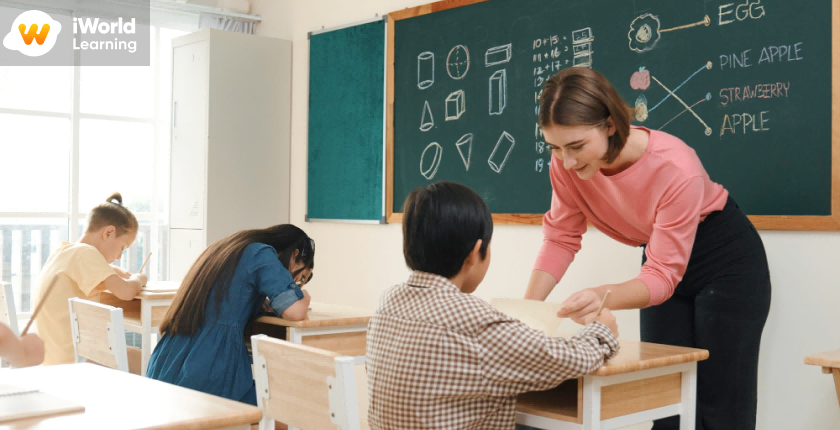
This guide outlines the MOE primary English learning outcomes at each stage — lower primary (P1–P2), middle primary (P3–P4), and upper primary (P5–P6) — and suggests what parents can do at home to support each phase.
Lower Primary (P1–P2): Building the Foundations
Primary 1 English Learning Outcomes
In P1, the English syllabus focuses on establishing the core skills that all later learning depends on. By the end of P1, students are expected to read aloud with reasonable fluency and expression, demonstrating understanding of what they read; write simple sentences and short paragraphs with correct punctuation and reasonably accurate spelling; listen attentively and follow simple instructions; and speak clearly, participate in show-and-tell, and express personal opinions in simple terms.
The P1 syllabus introduces phonics systematically — students learn letter-sound relationships, blending, and segmenting as the foundation for both reading and spelling. Grammar instruction covers basic sentence structures, subject-verb agreement, tenses (simple present, present continuous, simple past), and punctuation (full stops, capital letters, question marks).
At home, the most powerful support for P1 English is daily reading aloud together — 15 minutes, with the parent reading to the child and the child reading to the parent in roughly equal measure. Discuss the story after reading: "Why did the character do that?" "What do you think happens next?" This builds the comprehension habit before written comprehension questions appear in P3.
Primary 2 English Learning Outcomes
P2 consolidates and extends P1 skills. By the end of P2, students read longer passages with increased fluency and can answer simple comprehension questions — both literal ("what happened?") and inferential ("how did the character feel?"). Writing progresses from single sentences to short connected texts — a paragraph of three to five sentences describing an experience or a picture. They expand vocabulary through reading and explicit word study. Grammar instruction extends to include a wider range of sentence structures, conjunctions, and more complex punctuation (commas in lists, apostrophes for possession).
Middle Primary (P3–P4): The Transition to Independent Learning
Primary 3 English Skills
P3 is widely recognised as the most significant jump in primary English demands. Comprehension passages become longer and introduce inferential questions that require reading between the lines. Composition moves from guided picture-based writing (with helping words and prompts) to more open-ended prompts that expect a clear narrative structure — introduction, conflict, climax, and resolution. Students are introduced to the Show, Not Tell technique. Formal oral assessment begins, typically through show-and-tell presentations and structured class discussions.
At home, P3 is when parents should watch for signs of a gap opening — a child who consistently loses marks on "in your own words" or "why do you think" comprehension questions, or whose compositions receive low marks for content despite correct grammar, may need support to develop inferential thinking and narrative structure. These are skills that tuition or enrichment can target specifically, rather than broad English practice.
Primary 4 English Skills
P4 consolidates the P3 jump and prepares for the upper primary acceleration. Students write longer compositions with more developed plots, expanded vocabulary, and more complex sentence structures. They handle a wider range of text types in reading — narratives, information reports, explanations, and simple argumentative texts. Oral communication involves more structured speaking tasks — individual presentations and group discussions. By the end of P4, students should be working at a level where the transition to PSLE-focused P5 instruction will be manageable rather than a shock.
Upper Primary (P5–P6): PSLE Preparation
Primary 5 English Curriculum
P5 shifts explicitly toward PSLE preparation. The four PSLE English papers — Writing, Language Use and Comprehension, Listening Comprehension, and Oral Communication — become the organising framework for instruction. Students write compositions under timed conditions and learn the specific task requirements for PSLE situational writing (email, letter, note) and continuous writing (narrative based on a picture prompt). Comprehension instruction focuses on the question types that appear in the PSLE format, including the comprehension cloze and synthesis and transformation sections that carry significant weight in Paper 2. Oral practice mirrors the PSLE format: reading aloud and stimulus-based conversation.
P5 is a heavy year — the syllabus volume increases, and the expectations for writing and comprehension rise noticeably from P4. Students who were comfortably at grade level in P4 may find P5 challenging. Consistent, moderate effort throughout the year is more effective than reacting to a disappointing result at the end of the year.
Primary 6 English Curriculum
P6 is the PSLE year. The English syllabus covers all four papers comprehensively, with an emphasis on timed practice, exam technique, and targeted revision. The key skills assessed at PSLE are reading comprehension — literal and inferential — across a variety of text types; writing — situational and continuous — under timed conditions with correct grammar, appropriate vocabulary, and clear organisation; listening comprehension — understanding spoken texts and answering multiple-choice questions; and oral communication — reading aloud with fluency and expressiveness, and engaging in a stimulus-based conversation.
At home, P6 support is about managing the revision load, not adding to it. Help your child build a revision schedule that allocates time by paper weightage (Paper 2 first, Paper 1 second, Oral and Listening after). Encourage regular, moderate study sessions rather than weekend cramming. And pay attention to emotional wellbeing — a calm, rested child performs better than an exhausted one, regardless of how many extra practice papers were completed.
When to Consider English Enrichment or Tuition at Each Stage
| Stage | Signs Enrichment or Tuition May Help | Type of Programme to Consider |
|---|---|---|
| P1–P2 | Struggles to decode unfamiliar words; avoids reading; cannot write a complete sentence independently | Phonics-focused literacy programme or small-group reading and writing support |
| P3–P4 | Comprehension scores drop noticeably from P2; compositions lack plot structure; child says he or she hates English | Enrichment for comprehension and creative writing; tuition if school results are the primary concern |
| P5 | Grades decline from P4; child cannot complete compositions within the time limit; specific Paper 2 components consistently weak | PSLE-focused tuition with targeted component practice and individual feedback on writing |
| P6 | Close to an AL band boundary and needs targeted improvement on the highest-weightage components | Focused PSLE preparation with diagnostic assessment and component-specific instruction |
Summary
The MOE primary English syllabus is a carefully sequenced progression from foundational literacy in P1–P2 through independent learning in P3–P4 to PSLE mastery in P5–P6. The two critical transition points are P3 (when comprehension and composition demands rise sharply) and P5 (when PSLE preparation becomes explicit and the pace accelerates). Parents can support each stage by matching home activities to syllabus expectations — daily reading aloud and conversation in lower primary, guided writing and comprehension discussion in middle primary, and structured revision planning in upper primary. Enrichment or tuition is best introduced at the point of need, not by default, and the type of programme should match the child's specific gap rather than a general desire for more English exposure.
FAQ
What does the MOE primary English syllabus cover?
The MOE primary English syllabus covers four core skill areas — Listening and Viewing, Reading and Viewing, Speaking and Representing, and Writing and Representing — taught in a spiral progression from P1 to P6. Each year revisits the same areas at higher complexity. The syllabus also includes explicit instruction in grammar, vocabulary, and phonics (P1–P3). For the full syllabus document, visit the MOE website.
When does the primary English syllabus become harder?
The two recognised difficulty jumps are at Primary 3 (longer comprehension texts, inferential questions, and independent composition writing) and Primary 5 (PSLE-aligned instruction, faster pace, and higher expectations for writing and comprehension). Parents should monitor their child's adjustment to each of these transitions.
How can iWorld Learning support my child through the primary English syllabus?
iWorld Learning's Primary School English programme supports children at every stage of the MOE syllabus — from phonics and reading fluency in lower primary to PSLE-focused writing and comprehension in upper primary. Small classes with CEFR-informed learning paths ensure each child receives instruction at the right level. Internationally certified teachers give individual feedback on the skills that matter most at each stage: decoding and fluency in P1–P2, comprehension inference and composition structure in P3–P4, and PSLE component-specific technique in P5–P6. Contact iWorld Learning to discuss your child's current stage and arrange a trial class at the Tanjong Pagar or Somerset campus.
相关文章
Recommended Reading
Popular Articles
-
English Teacher Salary in Singapore: A Complete 2026 Guide
-
The Ultimate english learning apps Bank: Categorized & Explained
-
British Council IELTS in 2026: What Changed, What It Costs, and How to Prepare
-
IELTS Price in 2026: What Test-Takers Actually Pay (And How to Spend Less)
-
The Complete 2026 Blueprint for O Level English Oral Topics 2026 Format & Strategy
-
IELTS Test Format, Scoring, and Key Changes for 2026 Explained
-
IELTS Exam Fee 2026: Complete Guide to Costs, Payment & Savings
-
PSLE 2026: Complete Guide to Exam Dates, Scoring System, and Preparation Strategies
-
IELTS Test Dates 2026: Monthly Schedule, Booking Strategy, and Prep Timeline
-
The Top 10 Tuition Centres in Singapore (2025) – A Curated Review for Parents & Students
latest articles
-
My Child Hates Writing: A Parent's Repair Plan
-
Primary English Tuition Fees in Singapore: Cost Drivers
-
Choosing a Primary 1 English Class in Singapore
-
Tuition Deposits and Notice Periods: A Parent Checklist
-
Helping With Composition at Home: Mistakes to Avoid
-
Synonyms for 'Nervous': Match the Word to the Worry
-
'Fleetwood' as a Family Name: Origin and Usage
-
PSLE Composition Ideas: Build a Story Bank That Works
-
PSLE AL Scoring: Plan Practice Around the Bands
-
One-to-One vs Group TOEFL Prep: Costs and Fit