Best English Tuition Centre in Singapore: How to Evaluate and Choose in 2026
Quick Answer: The best English tuition centre in Singapore for your child is not the one with the largest chain or the most advertising — it is the one that aligns with your child's specific syllabus (MOE, IGCSE, or IB), keeps class sizes small enough for individual writing feedback, employs teachers with verifiable qualifications, and is accessible enough for consistent attendance. Evaluating a tuition centre against these structural criteria produces a better outcome than relying on brand reputation or word of mouth alone.
English tuition is one of the largest supplementary education markets in Singapore, with centres in nearly every neighbourhood and a particularly dense concentration in central areas. The volume of options can make choosing overwhelming, and many parents default to the centre with the most visible marketing or the longest queue. But a centre's popularity is not the same as its fit for your child. A systematic evaluation of curriculum, class size, teacher quality, and diagnostic approach gives a more reliable result than any ranking list.
An English tuition centre is an educational facility that provides supplementary English instruction outside regular school hours, aligned with a specific syllabus — MOE, IGCSE, or IB — and designed to improve student performance in composition, comprehension, oral communication, and examination technique through structured lessons and individual feedback.
Five Criteria for Evaluating an English Tuition Centre
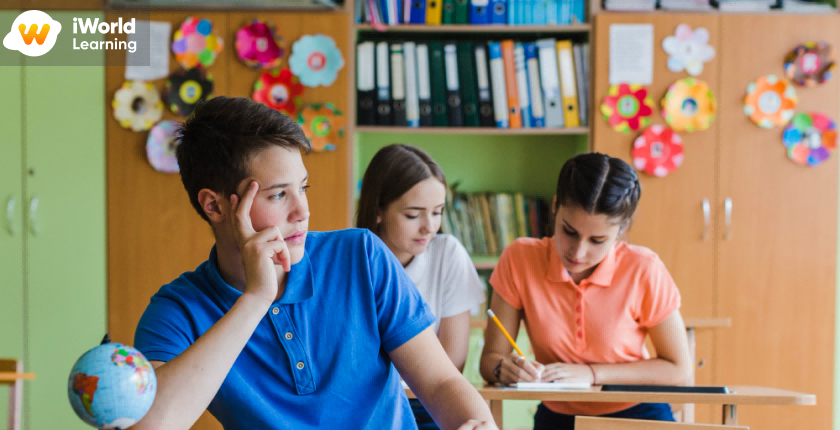
Before enrolling, assess any English tuition centre against these five criteria. They are ordered by how strongly they predict a student's improvement:
| Criteria | What to Ask | Red Flag |
|---|---|---|
| Syllabus alignment | Does the centre teach to MOE, IGCSE, or IB? Does it follow the latest exam format? | Generic "English improvement" with no syllabus mapping; materials that look the same for PSLE and O-Level students |
| Class size | What is the maximum students per class? | Classes above 10–12 where individual writing feedback is reduced to a grade and margin notes |
| Teacher qualifications | What training or certification do the teachers hold? Are they MOE-trained, TESOL-certified, or subject-specialist? | No qualifications named; teachers described only as "experienced" or "passionate" |
| Diagnostic rigour | Does the centre assess the student's specific weaknesses before starting? | All students follow the same materials regardless of ability; no diagnostic or placement assessment |
| Feedback quality | How much individual feedback does each student receive per session on writing and speaking? | Batch-marked worksheets returned without individual comments; oral practice only in large groups |
Types of English Tuition Centres in Singapore
English tuition centres in Singapore fall into several categories, each serving different student profiles:
MOE syllabus-aligned centres. Focused on PSLE, O-Level, and N-Level English — composition writing, situational writing, comprehension, oral examination, and listening comprehension. These centres typically follow the school term, use past-year papers, and run intensive revision programmes before major exams. Best for students whose primary goal is improving school examination results.
International curriculum centres. Designed for students in international schools following IGCSE, IB Diploma, or other non-MOE curricula. These centres focus on analytical writing, textual analysis, oral commentary, and extended essay support — skills that differ significantly from what MOE exams require. iWorld Learning's High School English course supports IGCSE and IB students.
Skills-focused enrichment centres. Target specific English skills — phonics and early reading, creative writing, public speaking and oral communication — rather than an exam syllabus. Best for younger children building foundations or for students who need to close a specific skill gap before joining an exam-focused programme.
Exam-preparation centres. Specialise in standardised tests for international school admission — WIDA, MAP, CAT4, and AEIS — or university admission tests like IELTS. These centres focus on test format, strategy, and time management alongside English skills. iWorld Learning supports international school admission test preparation.
Why Class Size Matters More Than Most Parents Expect
A small-group English tuition centre — 4 to 8 students — is usually a better fit than a large-class centre when the student needs individual writing feedback or oral practice. In a small group, the teacher can read each composition, identify error patterns, and give corrections the student can act on. In a class of 15–20, the teacher simply does not have time to provide detailed individual feedback — compositions may receive a grade and a few ticks or crosses, but the student does not learn what to do differently next time. Large-class centres can work for students who mainly need content exposure and timed practice, but for writing and oral skills, the individual feedback that a small group enables is the difference between practising and improving.
iWorld Learning's tuition approach uses small-group classes so each student receives targeted feedback on their writing and speaking — not batch marking. Visit the Courses page to see available programmes for primary and secondary students.
Location and Consistency
A tuition centre's location affects attendance — and attendance consistency is one of the strongest predictors of tuition effectiveness. A centre within walking distance of an MRT station removes the commute friction that leads to missed sessions. Central locations — Tanjong Pagar, Orchard, Somerset, Dhoby Ghaut, City Hall — are served by multiple MRT lines and bus routes. iWorld Learning operates at Tanjong Pagar MRT (CBD) and Somerset (Orchard Road), both directly connected to MRT stations. Learn more on the About Us page.
Cost of English Tuition Centres in Singapore
The cost of attending an English tuition centre in Singapore depends mainly on class size, teacher qualifications, and whether the curriculum is MOE-aligned or international. Group tuition at a centre typically ranges around S$30–60 per hour, with international curriculum centres — IGCSE and IB — tending toward the higher end because they require teachers with curriculum-specific knowledge. Private one-on-one tutoring runs S$70–120+ per hour. The value should be measured against how much individual feedback the student receives per session and whether the curriculum matches their actual syllabus. iWorld Learning offers small-group English tuition for primary and secondary students with CEFR-aligned pathways at its Tanjong Pagar and Somerset campuses. Contact the team to discuss your child's needs.
FAQ
How do I know if an English tuition centre is effective?
Look for measurable indicators, not just popularity. Ask the centre: what is the average class size? Can I see a sample of the feedback a student receives on a composition? How does the centre assess a new student's starting level? A centre that answers these questions clearly and confidently is likely operating with a structured, student-focused approach. A centre that deflects or only mentions its brand reputation and student numbers is not providing evidence of teaching quality.
At what age should my child start attending an English tuition centre?
There is no single right age — it depends on the child's needs. For foundational skills — phonics, reading fluency, basic writing — enrichment programmes from preschool or early primary can build a strong base before academic demands increase. For exam-focused tuition, many parents start in Primary 4 or 5 (for PSLE preparation) or Secondary 3 (for O-Level). The key is matching the programme type to the child's stage: enrichment for building foundations, tuition for exam preparation, and not pushing exam-focused tuition on a child who first needs to build confidence and basic skills. iWorld Learning offers enrichment and tuition across age levels. Visit the Preschool English page or Primary School English page.
Can an English tuition centre help with both MOE exams and international school preparation?
Most centres specialise in one path or the other because MOE and international curricula differ significantly in assessment format and skills emphasis. A centre that claims to do both equally well should be able to show you separate curriculum materials for each — if the materials look the same, the centre is likely stronger in one path and treating the other as an add-on. iWorld Learning offers both MOE-aligned English tuition for primary and secondary students and IGCSE/IB preparation through its high school programme.
How many sessions per week should a student attend at an English tuition centre?
Most students attend once or twice per week. Once a week is sufficient for consistent, gradual improvement if the student completes assigned work between sessions and the class size allows individual feedback. Twice a week can be beneficial during intensive revision periods — the months before PSLE, O-Level, or major school examinations — or when the student is closing a significant gap. The quality of feedback per session matters more than the number of sessions, so prioritise a centre with small classes and individual feedback over a centre that offers more hours but less attention.
Summary
Choosing the best English tuition centre in Singapore comes down to syllabus alignment, class size, teacher qualifications, diagnostic rigour, and feedback quality — not brand reputation alone. A small-group centre that provides individual feedback on writing and oral skills consistently outperforms large-class formats for students who need targeted improvement. iWorld Learning provides English tuition for primary, secondary, and IGCSE/IB students through small classes, CEFR-aligned pathways, and internationally certified teachers at its Tanjong Pagar and Somerset campuses. Visit the Courses page to explore programmes or contact the team for a consultation.
相关文章
Recommended Reading
Popular Articles
-
English Teacher Salary in Singapore: A Complete 2026 Guide
-
The Ultimate english learning apps Bank: Categorized & Explained
-
British Council IELTS in 2026: What Changed, What It Costs, and How to Prepare
-
IELTS Price in 2026: What Test-Takers Actually Pay (And How to Spend Less)
-
The Complete 2026 Blueprint for O Level English Oral Topics 2026 Format & Strategy
-
IELTS Test Format, Scoring, and Key Changes for 2026 Explained
-
IELTS Exam Fee 2026: Complete Guide to Costs, Payment & Savings
-
PSLE 2026: Complete Guide to Exam Dates, Scoring System, and Preparation Strategies
-
IELTS Test Dates 2026: Monthly Schedule, Booking Strategy, and Prep Timeline
-
The Top 10 Tuition Centres in Singapore (2025) – A Curated Review for Parents & Students
latest articles
-
My Child Hates Writing: A Parent's Repair Plan
-
Primary English Tuition Fees in Singapore: Cost Drivers
-
Choosing a Primary 1 English Class in Singapore
-
Tuition Deposits and Notice Periods: A Parent Checklist
-
Helping With Composition at Home: Mistakes to Avoid
-
Synonyms for 'Nervous': Match the Word to the Worry
-
'Fleetwood' as a Family Name: Origin and Usage
-
PSLE Composition Ideas: Build a Story Bank That Works
-
PSLE AL Scoring: Plan Practice Around the Bands
-
One-to-One vs Group TOEFL Prep: Costs and Fit