Comprehension Cloze vs Grammar Cloze: The Context Clue Protocol
In the Singapore primary English curriculum across Primary 4, 5, and 6, few assessment formats create as much score variation as the two distinct cloze passage components: Grammar Cloze and Comprehension Cloze. Evaluated within Paper 2 of school examinations and the national Primary School Leaving Examination (PSLE), these tasks assess fundamentally different linguistic capabilities. Grammar Cloze tests structural fluency through closed-class function words—such as prepositions, pronouns, auxiliary verbs, and conjunctions—usually supported by a designated word bank of options. In contrast, Comprehension Cloze presents an open-ended, 15-blank challenge with zero given vocabulary options, carrying a substantial 15-mark weightage. It evaluates global reading comprehension, contextual reasoning, and lexical breadth. Students who approach both exercises using identical casual reading habits frequently drop crucial marks, turning this section into a significant obstacle to achieving Achievement Level 1 (AL1).
Foundational Distinctions: Grammar Cloze versus Comprehension Cloze
To excel across both cloze formats, primary students must adopt a clue-driven reading methodology that replaces intuitive guesswork with systematic evidence tracking. By learning how context clues function across paragraph boundaries, students can locate the textual proof required for each blank with confidence.
Anatomy of the Two Cloze Disciplines
Recognizing the distinct operational rules of each cloze exercise ensures students apply the appropriate analytical framework during examinations.
Grammar Cloze: Closed-Class Function Words and Syntactic Concord
Grammar Cloze typically consists of two short passages totaling 10 marks, positioned across Booklet A (multiple-choice format) and Booklet B (fill-in-the-blank with a supporting word bank). The blanks in Grammar Cloze focus almost exclusively on grammatical mechanics rather than descriptive vocabulary. Examiners test mastery of structural function words:
- Prepositions: Selecting the correct dependent preposition to complete prepositional phrases (e.g., "rely on", "accustomed to").
- Pronouns: Ensuring correct personal, relative, or possessive pronoun agreement with preceding antecedent nouns (e.g., "who" versus "whom", "its" versus "their").
- Conjunctions: Identifying appropriate subordinating or coordinating conjunctions to establish logical relationships between clauses (e.g., "although", "unless", "since").
- Auxiliary Verbs: Matching auxiliary forms to subject number and main verb tenses (e.g., "has", "have", "had").
Comprehension Cloze: Open-Ended Lexical Integration and Contextual Retrieval
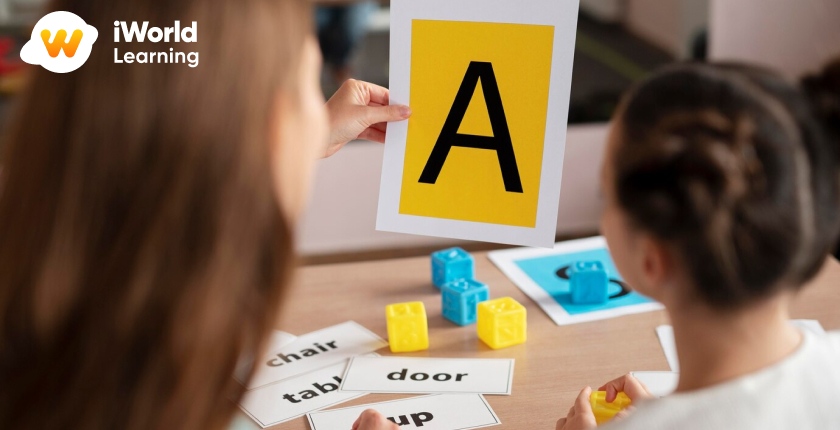
Positioned prominently in Booklet B, Comprehension Cloze spans 15 blanks distributed across a 250-to-300-word narrative, expository, or biographical passage. No word bank is provided. Candidates must supply exactly one suitable English word for each blank. Unlike Grammar Cloze, these blanks frequently target open-class lexical items—including descriptive adjectives, dynamic action verbs, abstract nouns, and figurative adverbs—alongside idiomatic collocations. Finding the correct word requires reading beyond the immediate sentence to trace thematic developments across the wider text.
The Cognitive Architecture of Comprehension Cloze: Five Context Clue Protocols
Every blank in a valid Comprehension Cloze passage is supported by verifiable textual clues within the passage. Mastering these five context clue protocols enables students to locate the evidence needed for each blank.
Protocol 1: Backward Context Clues (Prior Sentence Evidence)
Often, the evidence required to fill a blank is established in the sentence or paragraph immediately preceding it. If an earlier sentence describes how a mountaineer struggled against freezing temperatures and gale-force blizzards, a subsequent blank in "...he shivered uncontrollably in the ________ cold" is directly resolved by the prior environmental context (yielding "bitter", "extreme", or "freezing"). Students must actively search preceding lines for these descriptive anchors.
Protocol 2: Forward Context Clues (Subsequent Clause Reveal)
A frequent error among primary candidates is filling a blank immediately without reading the rest of the sentence. Often, the decisive clue appears several words or clauses later. For example, in the sentence "The young inventor was ________ to receive the prestigious award, weeping tears of joy as the audience applauded," the emotion is only clarified in the trailing participial clause ("weeping tears of joy"). Reading ahead reveals the required answer (e.g., "overjoyed", "thrilled", or "delighted").
Protocol 3: Synonymous and Antonymous Echoes
Examiners frequently design passages where key thematic ideas echo across paragraphs using synonyms or antonyms. A concept introduced in paragraph one may reappear in paragraph three in a slightly different form. Identifying contrast markers like "however," "on the contrary," or "unlike" provides an immediate mathematical clue: the required word is the semantic opposite of an idea mentioned nearby.
Protocol 4: Collocational and Prepositional Pairing
Many blanks assess natural word partnerships (collocations) or fixed idiomatic expressions. The word immediately following the blank often dictates the required answer. In the phrase "She took great ________ in her daughter's achievements," the combination with "in" and "her achievements" strongly signals the noun "pride." Building familiarity with common English collocations is essential for recognizing these natural pairings.
Protocol 5: Global Theme and Tone Alignment
Certain blanks can only be solved by understanding the passage's overall communicative tone and thematic subject matter. Whether a text explores historical wildlife conservation, space exploration breakthroughs, or personal moral dilemmas sets boundaries for appropriate word choices. Selecting words that match the formal, narrative, or technical register of the passage preserves stylistic consistency.
Comprehensive Comparative Matrix: Cloze Task Dimensions
This comparison matrix highlights the key operational differences between Grammar Cloze and Comprehension Cloze.
| Operational Dimension | Grammar Cloze | Comprehension Cloze |
|---|---|---|
| Total Mark Weightage | 10 Marks (Booklet A & B combined). | 15 Marks (Booklet B continuous passage). |
| Vocabulary Bank Support | Provided (selection from 10 to 12 helping words). | None (open-ended lexical generation). |
| Targeted Word Classes | Closed-class function words (prepositions, pronouns, conjunctions). | Open-class lexical words (nouns, verbs, adjectives) and collocations. |
| Primary Clue Scope | Immediate clause syntax and local word pairings. | Global narrative development across multiple paragraphs. |
| Common Student Pitfall | Misidentifying singular versus plural pronoun antecedents. | Single-sentence tunnel vision and guessing without reading ahead. |
Common Failure Modes Among Upper Primary Candidates
Understanding why marks are lost allows students to implement practical safeguards during exam revision.
Tunnel Vision: The Single-Sentence Trap
The most pervasive error in Comprehension Cloze is reading the passage as a series of isolated sentences rather than a connected narrative. When faced with a blank, students often stop reading and attempt to fill it using only the surrounding five words. This habit leads to plausible-sounding guesses that contradict facts established earlier or later in the text.
Part-of-Speech Mismatch and Inflectional Slips
Even when a student identifies the correct conceptual meaning for a blank, they frequently lose marks through inflectional errors. Writing a noun where a verb is required, forgetting a past tense suffix (-ed), or omitting a plural marker (-s) voids the mark. Every answer must be grammatically consistent with the surrounding sentence structure.
Worked Candidate Passage Walkthrough: From Blind Guessing to Clue-Driven Deduction
Examining an authentic passage excerpt illustrates how applying context clue protocols leads to the correct response.
Passage Excerpt
"Centuries ago, mariners navigating uncharted waters relied entirely on the stars to guide their vessels across the open ocean. Without modern navigational instruments, these courageous sailors were at the ________ (Blank 1) of unpredictable weather patterns and violent oceanic storms. A sudden squall could obscure celestial constellations for weeks, leaving captains completely disoriented. To ________ (Blank 2) these navigational perils, early maritime cartographers began developing sophisticated navigational charts that mapped coastline landmarks and ocean currents."
Deduction Analysis for Blank 1:
- Local Context: "...at the ________ of unpredictable weather patterns..."
- Idiomatic Pattern: The prepositional frame "at the ________ of" strongly indicates the common idiom "at the mercy of," meaning defenseless against an external force.
- Thematic Verification: The subsequent sentence details violent storms and disoriented captains, confirming the mariners' lack of control. The correct answer is "mercy."
Deduction Analysis for Blank 2:
- Grammatical Need: The infinitive marker "To" requires an uninflected base verb.
- Backward Clue: The preceding sentences describe serious dangers ("unpredictable weather", "perils", "disoriented").
- Forward Clue: Cartographers developed charts to solve or reduce these challenges.
- Target Meaning: A base verb meaning to overcome, survive, navigate, or manage these difficulties (yielding "overcome", "mitigate", or "survive").
Refining Textual Deduction in Small-Cohort Primary Settings
Developing strong contextual reasoning skills requires interactive guided practice. Students benefit greatly from talking through their thought processes and defending their word choices under expert guidance.
At iWorld Learning, primary English classes are conducted in focused cohorts of 6 to 8 students. This collaborative group size enables tutors to unpack authentic past-year cloze passages line by line, demonstrating how to identify hidden backward and forward context clues. Located at TripleOne Somerset, 111 Somerset Road, the academy provides a rigorous, supportive environment dedicated to helping primary students build the reading mastery needed for AL1 English outcomes.
The Step-by-Step Cloze Elimination and Proofreading Checklist
Follow this five-step process when completing any cloze assignment or examination paper:
- First Reading for Overall Flow: Read the entire passage from start to finish without writing anything, gaining an understanding of the central topic, narrative arc, and tone.
- Initial Clue Hunting: On your second pass, tackle the blanks where immediate contextual clues or fixed collocations make the required word clear.
- Part-of-Speech Identification: For challenging blanks, identify the required part of speech (noun, verb, adjective, preposition) before brainstorming specific words.
- Contextual Cross-Checking: Search adjacent sentences for related words, contrasting conjunctions, or descriptive details that confirm your choice.
- Final Proofreading Pass: Read the completed passage aloud mentally from start to finish, checking that every inserted word fits grammatically and that spelling is accurate throughout.
Mastering Phrasal Verbs and Prepositional Particles in Cloze Passages
A significant portion of marks lost in both Grammar Cloze and Comprehension Cloze stems from misunderstandings of English phrasal verbs. Unlike literal verbs, the meaning of a phrasal verb changes entirely depending on its paired prepositional particle. For example, the base verb 'give' forms completely distinct concepts in 'give in' (surrender), 'give up' (relinquish), 'give off' (emit an odor or vapor), and 'give out' (distribute or exhaust a supply).
Building Systematic Particle Awareness
When confronted with a blank immediately following a common verb—such as 'take', 'look', 'call', 'bring', or 'turn'—students must evaluate the wider context to determine whether an idiomatic phrasal combination is required. In the sentence 'The heavy downpour caused the organizers to ________ off the annual athletics meet,' recognizing the noun 'downpour' and the adjective 'annual meet' clarifies that the event was cancelled, pointing directly to the particle pairing 'call off'.
Grammatical Agreement within Idiomatic Phrases
In Comprehension Cloze, students must ensure that the inserted phrasal verb form matches the prevailing grammatical tense of the surrounding narrative. If the surrounding paragraph is set in the past tense, writing the base form 'call' instead of the past tense 'called' will result in zero marks, even if the conceptual choice was correct. Careful grammatical checking is essential for securing full marks across all 15 blanks.
Related Articles
Recommended Reading
-
How to Pronounce Niamh Clearly in English
-
Are there English classes in Singapore for adults who struggle with speaking?
-
IELTS Part 3 Question Types and How to Answer for Band 7+
-
Small-Group English Tuition: A Fit Guide for Secondary Students
-
Which English schools in Singapore offer beginner to advanced English classes?
Popular Articles
-
English Teacher Salary in Singapore: A Complete 2026 Guide
-
The Ultimate english learning apps Bank: Categorized & Explained
-
British Council IELTS in 2026: What Changed, What It Costs, and How to Prepare
-
IELTS Price in 2026: What Test-Takers Actually Pay (And How to Spend Less)
-
The Complete 2026 Blueprint for O Level English Oral Topics 2026 Format & Strategy
-
IELTS Test Format, Scoring, and Key Changes for 2026 Explained
-
IELTS Test Dates 2026: Monthly Schedule, Booking Strategy, and Prep Timeline
-
IELTS Exam Fee 2026: Complete Guide to Costs, Payment & Savings
-
PSLE 2026: Complete Guide to Exam Dates, Scoring System, and Preparation Strategies
-
How Does Paper 1 English PSLE Work and What Are the Key Changes in 2026?
latest articles
-
How to Pronounce Niamh Clearly in English
-
Are there English classes in Singapore for adults who struggle with speaking?
-
IELTS Part 3 Question Types and How to Answer for Band 7+
-
Small-Group English Tuition: A Fit Guide for Secondary Students
-
Which English schools in Singapore offer beginner to advanced English classes?
-
Singlish in Business Meetings Singapore: Register and Nuance
-
Workplace Presentation Phrases in English: Executive Delivery
-
How to Split Time in PSLE English Paper 1: Pacing Strategy
-
What are the best English courses for improving pronunciation and fluency?
-
Integrated Programme English vs O-Level: Key Differences