Elementary School English: Building Strong Reading and Writing Foundations
Elementary school English in Singapore builds the literacy engine that powers every other subject. When a child reads fluently, writes clearly, and understands instructions confidently, they are equipped to learn maths word problems, science explanations, and social studies texts. When those skills lag, academic struggles spread far beyond the English classroom.
The Singapore primary school English syllabus is ambitious and structured. It moves children from learning to read in the lower primary years to reading to learn in the upper primary years, and it culminates in the Primary School Leaving Examination (PSLE) English paper — a high-stakes assessment that tests reading comprehension, composition writing, situational writing, listening, and oral communication across multiple components. For parents, understanding what each stage demands helps you give the right support at the right time.
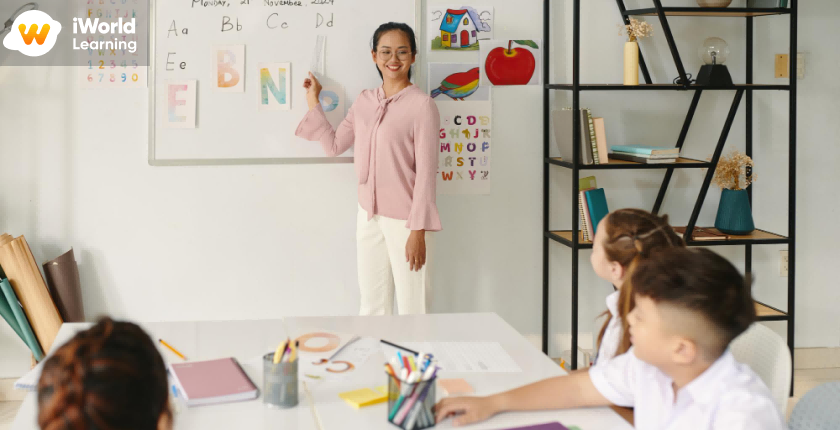
This guide breaks down what elementary school English covers at each stage, where children commonly struggle, and what types of support are most effective at each level.
What Is Elementary School English in Singapore?
Elementary school English in Singapore is a structured six-year curriculum that develops reading, writing, listening, speaking, and grammar skills from Primary 1 through Primary 6, aligned to the Ministry of Education syllabus and assessed through school-based examinations and the national PSLE. The curriculum is designed as a spiral — each year revisits core skills at a higher level of complexity — ensuring children build cumulative competence rather than memorising content in isolated chunks.
The six primary years are typically divided into two bands: lower primary (Primary 1–3), where the focus is on foundational literacy — phonics consolidation, vocabulary expansion, basic grammar, and sentence-level writing — and upper primary (Primary 4–6), where the focus shifts to comprehension of longer texts, structured composition writing, situational writing, oral communication, and PSLE preparation.
Lower Primary English (Primary 1–3): Learning to Read and Write
Phonics to Fluency
In Primary 1, most children transition from phonics-based decoding to reading simple texts with some fluency. The key milestones in these early years are: reading aloud with expression by Primary 2, understanding what they read without needing to sound out every word by Primary 3, and starting to read silently for information. A child who still struggles to decode words by Primary 3 needs targeted support, because from Primary 4 onward, the curriculum assumes basic reading fluency is in place and shifts toward comprehension and analysis.
Grammar and Sentence Basics
Lower primary grammar focuses on building correct sentences: subject-verb agreement, basic tenses, articles, prepositions, and conjunctions. At this stage, grammar should be taught in context — through reading and writing — rather than through isolated drill exercises. When children see grammar patterns in the stories they read and use them in the sentences they write, the rules stick naturally. Over-reliance on worksheets at this age can make English feel like a series of disconnected rules rather than a living language.
From Sentences to Short Compositions
Writing in lower primary progresses from single sentences (Primary 1) to short paragraphs (Primary 2) to simple narratives and descriptions (Primary 3). At this stage, the priority is confidence and fluency — getting ideas onto paper — rather than perfection. Over-correcting every mistake can discourage a young writer. Instead, teachers and parents should focus on one or two specific improvements per piece of writing: clearer ideas, a better word choice, or a more logical sequence of events.
Upper Primary English (Primary 4–6): Reading to Learn and Writing with Purpose
Reading Comprehension of Longer, More Complex Texts
From Primary 4, comprehension passages become longer, vocabulary becomes more sophisticated, and questions demand more than surface-level information retrieval. Children need to infer meaning from context, identify the writer's purpose, distinguish fact from opinion, and explain cause-and-effect relationships. This is a significant jump — children who coasted through lower primary comprehension by simply finding and copying answers from the passage often hit a wall at this stage.
Targeted comprehension practice that focuses on question analysis — understanding what each question type is actually asking for — is more effective than simply doing more comprehension papers. A child who can identify whether a question is literal, inferential, or vocabulary-in-context can apply the right strategy instead of guessing.
Composition Writing and Situational Writing
Upper primary composition writing demands structure, content development, and language control. Children need to plan a story with a clear beginning, build-up, problem, climax, and resolution; develop characters and settings with descriptive detail; use a range of sentence structures and vocabulary; and write with accurate grammar, spelling, and punctuation. Situational writing — introduced as a formal PSLE component — tests the ability to write a functional text (letter, email, report, or notice) for a given purpose, audience, and context.
The gap between a middle-band composition and a high-band composition often comes down to three things: planning before writing (children who spend five minutes outlining consistently produce better-structured stories), showing rather than telling (using sensory details and actions instead of flat statements), and having a bank of well-chosen vocabulary that fits the story context rather than sounding forced.
Oral Communication and Listening Comprehension
The PSLE English oral component — reading aloud and stimulus-based conversation — and the listening comprehension paper together account for a meaningful portion of the total grade. Many parents and students underestimate these components, but they reward consistent, low-stress practice: reading aloud at home, discussing current events at the dinner table, and listening to age-appropriate English audio content. Unlike composition and comprehension, which require sustained focus, oral and listening skills can be built in short daily sessions that feel less like "study."
How iWorld Learning Supports Primary School English
iWorld Learning is a Singapore-based English language school that helps adults, children, and expatriates improve practical English for work, school, and exams through small classes, CEFR-based learning paths, and internationally certified teachers. Its primary school English programme supports children from Primary 1 through Primary 6, covering reading comprehension, composition writing, grammar, vocabulary, and oral communication in alignment with the MOE syllabus and PSLE requirements.
The programme is built around small-group classes — maximising each child's opportunity to read aloud, discuss texts, receive writing feedback, and practise oral responses. Teachers hold TESOL or TEFL certifications and bring substantial experience with the Singapore primary English syllabus, including PSLE preparation strategies. Each child's learning path is tailored based on an initial assessment, so support targets the specific areas where the child needs the most help — whether that is composition structure, comprehension technique, or grammar accuracy.
The school's two campuses at Tanjong Pagar MRT (CBD area) and Somerset (Orchard Road) provide convenient access for families across central Singapore. Learn more about the school's teaching approach on the Why Choose Us page, or explore the full courses overview to see how the primary programme fits with other offerings.
Common English Challenges at Each Primary Stage
| Stage | Common Challenge | What Helps |
|---|---|---|
| Primary 1–2 | Slow reading fluency; difficulty blending sounds | Daily read-aloud practice with decodable books; systematic phonics reinforcement |
| Primary 3 | Jump from sentences to paragraphs; limited vocabulary for writing | Reading widely (fiction and non-fiction); vocabulary journal; short guided writing exercises |
| Primary 4 | First exposure to inferential comprehension questions; composition now marked for content and language separately | Question-type analysis; story planning frameworks; targeted feedback on one skill at a time |
| Primary 5 | Heavier curriculum load across all subjects; composition expectations rise steeply | Structured writing practice with feedback; situational writing drills; consistent oral practice |
| Primary 6 | PSLE pressure across English and three other subjects; time management during exams | Exam-strategy coaching (time allocation per section); targeted revision of weakest components; mock papers under timed conditions |
How Parents Can Support Primary School English at Home
- Make reading a daily habit, not a homework task. Let your child choose books that genuinely interest them — graphic novels, non-fiction, fantasy, or humour all count. The goal is volume: children who read widely encounter far more vocabulary and sentence patterns than any worksheet can provide.
- Talk about what they read. Ask open-ended questions: "What do you think will happen next?" or "Why did the character do that?" These conversations build the inference skills that comprehension papers test, without feeling like exam practice.
- Practise oral communication in everyday moments. Ask your child to describe something they saw, explain an opinion, or retell an event. These informal conversations are the best preparation for the PSLE oral stimulus-based conversation.
- Focus writing feedback on one thing at a time. Instead of pointing out every grammar mistake in a composition, pick one area — stronger verbs, better paragraphing, or more logical sequencing — and focus feedback there. Incremental improvement builds confidence; comprehensive correction can overwhelm.
- Watch for signs that a child is avoiding English. If a child consistently avoids reading, complains about writing, or shows anxiety about English homework, it may signal a specific skill gap rather than a general lack of motivation. A diagnostic assessment can pinpoint the issue so support targets the right area.
FAQ
When should I consider English tuition for my primary school child?
Consider English tuition when your child consistently struggles with one or more specific components — reading comprehension, composition writing, or grammar — despite consistent home support and school instruction. A diagnostic assessment that pinpoints the exact skill gap is more useful than enrolling in a general tuition class. Early intervention in lower primary usually prevents bigger gaps from opening in upper primary.
How is PSLE English different from regular school English exams?
The PSLE English paper is a national examination that tests four components — Paper 1 (situational and continuous writing), Paper 2 (language use and comprehension), Paper 3 (listening comprehension), and Paper 4 (oral communication). It covers the full Primary 3–6 syllabus, uses standardised marking across all schools, and contributes to the secondary school posting score. Regular school exams prepare for it but may vary in difficulty and marking standards between schools.
How can my child improve English composition writing?
Three strategies produce the most improvement: planning before writing (even a five-minute outline leads to better structure), building a personal vocabulary bank from the books your child reads (rather than memorising word lists), and practising with targeted feedback — write one composition, get feedback on one specific skill, revise, and repeat. Quality of practice matters more than quantity; one well-revised composition teaches more than five unrevised ones.
What English reading level should my child be at by each primary year?
By Primary 2, most children should read simple chapter books with expression. By Primary 4, they should read middle-grade fiction and non-fiction independently. By Primary 6, they should handle PSLE-length comprehension passages with age-appropriate vocabulary. These are rough benchmarks — every child develops at their own pace. If your child is significantly behind these milestones, a reading assessment can identify whether the issue is decoding, fluency, vocabulary, or comprehension.
Does my child need separate help for each PSLE English component?
Not necessarily. Reading widely and writing regularly strengthen all components. However, if your child performs well in composition but poorly in comprehension (or vice versa), targeted support for the weaker component is more efficient than a general English programme. A good English programme should offer diagnostic assessment to identify which components need the most attention — for example, iWorld Learning's primary school English programme tailors learning paths based on each child's starting assessment.
How much English practice should a primary school child do each day?
Aim for 20 to 30 minutes of focused English activity on most days: reading for pleasure, writing a short journal entry, or discussing something they read or watched. During exam periods, add one or two timed practice papers per week for the specific component being tested. Consistency matters far more than cramming — a child who reads 20 minutes daily encounters roughly 1.8 million words per year, dramatically outpacing a child who reads only during homework time.
Summary
Elementary school English in Singapore is a cumulative journey from learning to read in lower primary to reading to learn in upper primary, culminating in the PSLE. Each stage builds on the last, so identifying and closing gaps early — whether in phonics, reading comprehension, grammar, or composition — prevents small difficulties from becoming large ones.
Effective English support is specific: it targets the exact component where a child struggles, whether that is inferential comprehension, composition structure, or oral confidence. Small-group settings with qualified teachers, a curriculum aligned to the MOE syllabus, and consistent home support — daily reading, conversation, and targeted feedback — give primary school children the best foundation for PSLE success and for the academic demands of secondary school.
相关文章
Recommended Reading
Popular Articles
-
English Teacher Salary in Singapore: A Complete 2026 Guide
-
The Ultimate english learning apps Bank: Categorized & Explained
-
British Council IELTS in 2026: What Changed, What It Costs, and How to Prepare
-
IELTS Price in 2026: What Test-Takers Actually Pay (And How to Spend Less)
-
The Complete 2026 Blueprint for O Level English Oral Topics 2026 Format & Strategy
-
IELTS Test Format, Scoring, and Key Changes for 2026 Explained
-
IELTS Exam Fee 2026: Complete Guide to Costs, Payment & Savings
-
PSLE 2026: Complete Guide to Exam Dates, Scoring System, and Preparation Strategies
-
IELTS Test Dates 2026: Monthly Schedule, Booking Strategy, and Prep Timeline
-
The Top 10 Tuition Centres in Singapore (2025) – A Curated Review for Parents & Students
latest articles
-
A Practical PSLE English Home Study Plan
-
Is 'Does This Hour Mark My Work' Natural in an Email?
-
Synonyms for 'Like': Check Progress Through Context
-
UMD TOEFL Section Requirements: Verify the Right Programme
-
Find English Tuition Near You in Singapore Step by Step
-
How to Pronounce 'Giardiniera' Clearly
-
Formal Alternatives to 'Napalm Era' in Historical Writing
-
Sophocles: Common Pronunciation and Writing Mistakes
-
Synonyms for 'Acknowledge': Choose the Right Response
-
TOEFL iBT Maximum Score: Use It for Self-Assessment Carefully