How to Choose English Lessons for Kids in Singapore
Quick Answer: The right English lessons for your child in Singapore depend on their age and stage — phonics and speaking confidence for preschoolers (K1–K2), reading fluency and writing foundations for lower primary (P1–P3), and comprehension, composition, and exam preparation for upper primary and secondary students. Across all ages, small class sizes, qualified teachers who specialise in teaching children, and a curriculum that makes English feel enjoyable rather than stressful are the three factors that most reliably predict progress.
English is the language of instruction for every subject in Singapore's education system except mother tongue. A child who builds strong English skills early gains an academic advantage that grows over time — not just in English class but in math, science, and every other subject that depends on reading and understanding. A child who struggles with English struggles everywhere. This makes choosing the right English lessons one of the most important educational decisions a parent makes. This guide walks through what to look for at each age and stage, so you can choose a programme that builds your child's skills and confidence together.
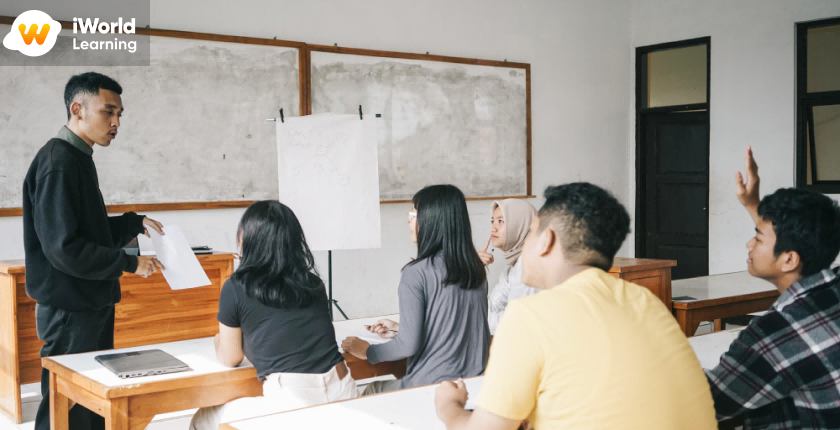
iWorld Learning provides English lessons for children at every stage — from preschool phonics through primary school reading and writing to secondary school academic English — in small classes with internationally certified teachers at campuses near Tanjong Pagar MRT and Somerset MRT.
Why Age and Stage Matter More Than a One-Size-Fits-All Syllabus
English lessons for kids are most effective when the teaching method, materials, and class structure match the child's developmental stage — not when a single syllabus is stretched across all ages. A preschooler learning phonics, a primary school student building writing skills, and a secondary student analysing texts need fundamentally different approaches taught by teachers trained for that specific age group.
A common mistake parents make is choosing a centre based on its reputation with older students and assuming the same approach will work for a younger child. A centre that excels at PSLE preparation may use methods — timed exercises, exam drills, template-based writing — that are inappropriate and counterproductive for a K1 child who needs play-based phonics and story-driven language exposure. Match the programme to your child's current stage, not the stage you expect them to reach in five years.
Preschool and Kindergarten (Ages 3–6): Phonics, Stories, and Speaking Confidence
At this stage, the goal is to make English feel like a natural, enjoyable part of life — not a school subject to be tested. Children should learn letter sounds through structured, multi-sensory phonics (tracing, singing, blending games), build vocabulary through engaging stories and discussion, and develop speaking confidence through show-and-tell, role-play, and group interaction.
Look for lessons that use a recognised phonics framework (such as Jolly Phonics or Letters and Sounds), run in small groups of six to eight, and are led by teachers with early childhood training plus English teaching certification. A trial lesson reveals more than any brochure — watch whether the teacher engages every child, not just the most outgoing ones, and whether your child leaves looking energised or drained. Explore iWorld Learning's preschool English programme for young children.
Lower Primary (Ages 7–9, P1–P3): Reading Fluency and Writing Foundations
The focus shifts to reading fluency — decoding words automatically so the brain can focus on meaning — and writing confidence — getting ideas onto paper in sentences and short paragraphs. A good lower primary programme assesses each child's phonics knowledge at entry and fills any remaining gaps before pushing into harder texts. Writing instruction should build confidence first (free writing, journaling, story prompts) before imposing structure (planning, paragraph organisation, beginning-middle-end).
Small groups remain essential — a child who is reluctant to read aloud needs the safety of a small, supportive group to build the courage to try. Learn about iWorld Learning's primary school English programme for lower and upper primary students.
Upper Primary (Ages 10–12, P4–P6): Comprehension, Composition, and PSLE
The demands of English accelerate sharply. Comprehension passages require inference and analysis, not just locating information. Writing demands full compositions with structure, description, and a clear narrative arc. For P6 students, PSLE English covers four papers — Writing, Language Use, Listening, and Oral — and a good programme addresses all four with equal attention.
At this stage, individual feedback on writing becomes critical. A teacher who can mark a composition line by line — pointing out where an argument weakens, where a sentence could be tighter, where a word choice creates the wrong impression — helps a child improve far faster than a teacher who writes "good effort" at the bottom and moves on. Small classes make this feedback possible.
Secondary (Ages 13–16, Sec 1–4): Analysis, Argument, and Exam Success
Secondary English shifts from comprehension to analysis and from narrative to argumentative and discursive writing. Students preparing for O Level, IGCSE, or IB English need teachers who understand the specific demands of their exam syllabus. The skill gaps that appear at secondary level — weak essay structure, shallow analysis, limited vocabulary for academic writing — often have roots in earlier years but need secondary-level strategies to address. Explore iWorld Learning's secondary English programme for O Level, IGCSE, and IB support.
FAQ
At what age should my child start formal English lessons?
Most children are ready for structured but play-based English lessons around age four (K1), when phonological awareness begins to develop rapidly. Before this, informal exposure — reading aloud with parents, singing English songs, playing language-rich games — is more appropriate than formal lessons. The key distinction is between "formal" (structured curriculum with learning objectives) and "rigid" (desk-bound, worksheet-heavy). The best K1–K2 programmes are formal in their phonics progression but playful in their delivery.
How much do English lessons for kids cost in Singapore?
Group English lessons for children in Singapore typically range from S$25 to S$50 per hour depending on class size, teacher qualifications, and the programme level. Small-group lessons with specialist early childhood or primary-level teachers are at the higher end. Confirm the total term fee, what materials are included, the make-up class policy, and whether sibling discounts apply.
How many English lessons per week does my child need?
Most children attend one or two English lessons per week, with each session lasting 1.5 to 2 hours. One lesson per week can maintain steady progress. Two lessons per week accelerate it, which can be helpful for children closing specific gaps or preparing for major exams. The quality of each lesson — how much individual attention your child receives — matters more than the number of lessons per week.
How can I support my child's English at home between lessons?
Read with your child daily — even ten to fifteen minutes makes a measurable difference over time. Let them choose books that interest them, even if they are "too easy" — the goal is building a reading habit, not pushing difficulty. Ask open-ended questions about what they read. Encourage writing for real purposes — shopping lists, birthday cards, short journal entries — not just school assignments. The combination of a good English programme plus a language-rich home environment produces the strongest and fastest progress.
When should I be concerned about my child's English progress?
Some signs that warrant attention: your child avoids reading or complains that it is boring, struggles to complete writing tasks without significant help, consistently scores below expectations in specific English components on school assessments, or shows anxiety or resistance around English homework. A diagnostic assessment at a reputable English centre can identify whether there is a specific skill gap — phonics, comprehension, writing structure — that targeted instruction can address, or whether your child simply needs more time and encouragement. Early intervention is almost always more effective than waiting.
Summary
Choosing English lessons for kids in Singapore is about matching the programme to your child's developmental stage — play-based phonics for preschoolers, reading and writing foundations for lower primary, comprehension and composition for upper primary, and analytical skills for secondary — in a small-group setting with teachers who are trained for that specific age group. Evaluate centres by class size, teacher qualifications, and how they assess, track, and communicate progress. The right programme builds not just skills but the confidence and motivation that turn a child into a lifelong English learner.
Learn more about iWorld Learning's approach to English education for children — small classes, internationally certified teachers, and age-appropriate programmes from preschool through secondary school at campuses near Tanjong Pagar and Somerset MRT stations.
相关文章
Recommended Reading
Popular Articles
-
English Teacher Salary in Singapore: A Complete 2026 Guide
-
The Ultimate english learning apps Bank: Categorized & Explained
-
British Council IELTS in 2026: What Changed, What It Costs, and How to Prepare
-
IELTS Price in 2026: What Test-Takers Actually Pay (And How to Spend Less)
-
The Complete 2026 Blueprint for O Level English Oral Topics 2026 Format & Strategy
-
IELTS Test Format, Scoring, and Key Changes for 2026 Explained
-
IELTS Exam Fee 2026: Complete Guide to Costs, Payment & Savings
-
PSLE 2026: Complete Guide to Exam Dates, Scoring System, and Preparation Strategies
-
IELTS Test Dates 2026: Monthly Schedule, Booking Strategy, and Prep Timeline
-
The Top 10 Tuition Centres in Singapore (2025) – A Curated Review for Parents & Students
latest articles
-
My Child Hates Writing: A Parent's Repair Plan
-
Primary English Tuition Fees in Singapore: Cost Drivers
-
Choosing a Primary 1 English Class in Singapore
-
Tuition Deposits and Notice Periods: A Parent Checklist
-
Helping With Composition at Home: Mistakes to Avoid
-
Synonyms for 'Nervous': Match the Word to the Worry
-
'Fleetwood' as a Family Name: Origin and Usage
-
PSLE Composition Ideas: Build a Story Bank That Works
-
PSLE AL Scoring: Plan Practice Around the Bands
-
One-to-One vs Group TOEFL Prep: Costs and Fit