Prepare for Primary 1 English: K2 Transition Checklist
Transitioning from Kindergarten 2 to Primary 1 represents a major educational leap for young children in Singapore. The primary school environment shifts from play-based exploratory learning to structured classroom routines and the MOE STELLAR curriculum. Ensuring your child possesses robust phonics decoding, high-frequency sight word fluency, and confident verbal expression prevents early academic anxiety and sets the foundation for primary success.
The 4 Pillars of Primary 1 English Readiness
In Singapore, Primary 1 readiness encompasses four interconnected linguistic competencies:
- Systematic Phonics & Decoding: Mastery of letter-sound relationships, consonant blends (such as bl-, tr-, st-), and digraphs (such as ch-, sh-, th-). Children must be able to sound out unfamiliar words independently without relying on guessing from illustrations.
- High-Frequency Sight Word Recognition: Instant recognition of at least 100 to 150 common irregular words (such as said, because, friend, their) that cannot be decoded phonetically.
- Sentence Mechanics & Penmanship: Ability to write simple, grammatically complete sentences starting with capital letters, ending with full stops, and maintaining consistent finger spacing between words.
- Spoken Communication & Classroom Listening: Listening to multi-step instructions, following shared book discussions under the STELLAR programme, and expressing personal needs clearly in full sentences.
Comparative Matrix: Kindergarten 2 vs Primary 1 Curriculum Expectations
| Literacy Domain | Kindergarten 2 (Preschool Baseline) | Primary 1 (MOE STELLAR Demands) | Parental Action / Readiness Target |
|---|---|---|---|
| Reading & Decoding | Shared reading with teachers; recognizes basic CVC words (cat, dog, pin) with picture cues. | Independent reading of graded readers; decodes multi-syllabic words and answers direct factual questions. | Daily 15-minute paired reading; practice decoding unfamiliar words without visual hints. |
| Writing & Grammar | Traces words, writes own name, and dictates stories for teachers to scribe. | Writes short 3 to 4-sentence paragraphs independently; applies basic subject-verb agreement and punctuation. | Encourage journal writing about weekend activities using simple sentence frames. |
| Spelling & Dictation | Informal spelling games; phonetically plausible attempts (e.g., writing frend for friend). | Weekly formal spelling lists and sentence dictation requiring precise orthographic recall. | Teach look-say-cover-write-check methods rather than rote memorization. |
| Oral Articulation | Short spoken answers in play groups; conversational turn-taking with familiar peers. | Show-and-tell presentations; answering teacher prompts in full sentences before the entire class. | Practice show-and-tell at home using favorite toys to build public speaking posture and eye contact. |
Understanding the MOE STELLAR Curriculum Framework
Primary 1 English in Singapore public schools is taught through the STELLAR framework (Strategies for English Language Learning and Reading):
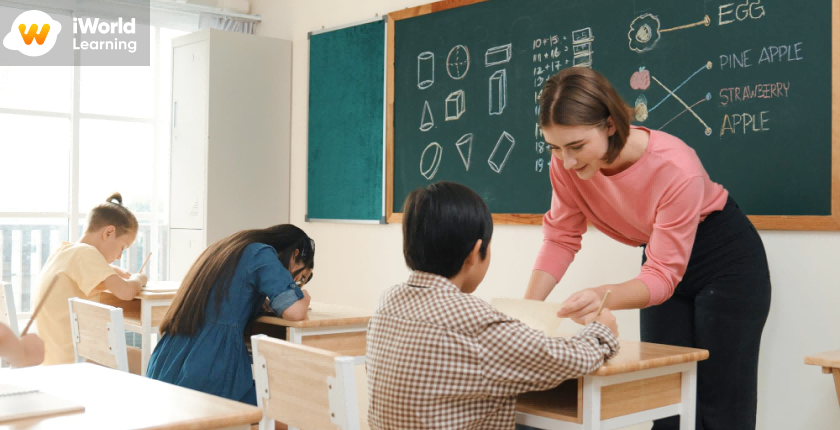
Shared Book Approach (SBA): Teachers introduce enlarged "Big Books" in class. Children listen to the story, track print, discuss character motivations, and read in unison before engaging in follow-up language activities.
Modified Language Experience Approach (MLEA): Following a shared class activity, students collaboratively dictate a story which the teacher writes on the board. Students then write their own individual variations, learning sentence formation organically.
Learning Centres & Independent Reading: Students rotate through reading, word-study, and writing stations, fostering self-directed literacy habits and peer collaboration.
Practical Strategies to Prepare Your Child at Home
Parents can implement three high-impact routines during the K2 transition year:
- Establish a Consistent Bedtime Reading Habit: Read diverse genres including non-fiction, fairy tales, and rhyming poetry. Ask open-ended questions like "Why do you think the character made that choice?" rather than simple yes/no questions.
- Daily Sight Word Flashcard Games: Introduce five new sight words weekly using interactive matching games to build instant visual recall without spelling fatigue.
- Multi-Step Instruction Practice: Train auditory focus by giving three-part verbal directions (such as "Please pack your bag, wash your hands, and choose a book") to mirror primary classroom instructions.
Nurturing Confident Early Readers at iWorld Learning
Transitioning into Primary 1 should be an exciting milestone rather than a source of family stress. iWorld Learning offers specialized early childhood and Primary 1 preparatory English courses designed to bridge developmental gaps.
Located at TripleOne Somerset near Somerset MRT, our classes maintain a boutique size of 3 to 6 young learners. Our caring, highly qualified teachers use systematic phonics methodologies, engaging shared reading, and structured writing scaffolds aligned directly with the MOE STELLAR curriculum. Through individualized attention and encouraging classroom dynamics, we empower children with fluent reading skills, clear speaking confidence, and a lifelong love for English.
Frequently Asked Questions
What literacy benchmarks should a child meet before entering Primary 1 in Singapore?
Ideally, an entering Primary 1 child should know all 26 letter sounds, blend 3-letter and 4-letter phonetic words, recognize approximately 80 to 100 high-frequency sight words, write their name neatly, and construct a simple 5-word sentence with basic punctuation.
How does the MOE STELLAR curriculum differ from traditional kindergarten reading?
Traditional preschool reading often relies heavily on phonics workbooks and repetitive worksheets. The MOE STELLAR programme is print-rich and text-driven, emphasizing context, shared narrative engagement, class discussion, and collaborative story reconstruction before individual writing.
How does iWorld Learning support preschool children making the transition to Primary 1?
Our educators conduct gentle baseline literacy assessments to evaluate letter-sound mastery and sight-word fluency. In our 3 to 6 student classes, instructors blend systematic phonics instruction with STELLAR-style shared reading, building independent decoding and classroom speaking poise.
相关文章
Recommended Reading
Popular Articles
-
English Teacher Salary in Singapore: A Complete 2026 Guide
-
The Ultimate english learning apps Bank: Categorized & Explained
-
British Council IELTS in 2026: What Changed, What It Costs, and How to Prepare
-
IELTS Price in 2026: What Test-Takers Actually Pay (And How to Spend Less)
-
The Complete 2026 Blueprint for O Level English Oral Topics 2026 Format & Strategy
-
IELTS Test Format, Scoring, and Key Changes for 2026 Explained
-
IELTS Exam Fee 2026: Complete Guide to Costs, Payment & Savings
-
PSLE 2026: Complete Guide to Exam Dates, Scoring System, and Preparation Strategies
-
IELTS Test Dates 2026: Monthly Schedule, Booking Strategy, and Prep Timeline
-
The Top 10 Tuition Centres in Singapore (2025) – A Curated Review for Parents & Students
latest articles
-
Internship Request Email: Student's Template
-
Counter-Offer From Your Employer: Responding
-
Award Nomination Email: Nominate a Peer
-
How to Pronounce 'Frites' in English and French Contexts
-
Lucidity: Meaning, Context and Natural Examples
-
Salvation: Meaning in Religious and Everyday Contexts
-
Mitigate Meaning in English: Usage, Grammar and Examples
-
Exit Interview Email: HR Templates
-
Empathic Synonyms: Differences in Meaning and Tone
-
Spelling Practice at Home: What Works