Primary 2 English Tuition in Singapore: How to Choose the Right Programme for Your Child
By Primary 2, most children have adjusted to the rhythm of formal schooling — they understand classroom routines, can sit through a full lesson, and are beginning to read independently. But Primary 2 is also the year when academic gaps that went unnoticed in Primary 1 start to surface. A child who could get by in P1 with picture-book reading and simple Show and Tell may find that P2 comprehension passages, longer writing tasks, and more demanding oral presentations reveal gaps in phonics, reading stamina, or sentence construction. Primary 2 English tuition exists to address these gaps — not by piling on extra work but by providing the targeted, individualised instruction that a 30-student classroom cannot always deliver.
Primary 2 English tuition is structured supplementary instruction that helps seven- to eight-year-old students strengthen phonics and decoding skills, build reading comprehension, develop sentence and paragraph writing, and practise oral presentation — all aligned with the MOE Primary 2 English syllabus and the STELLAR (Strategies for English Language Learning and Reading) framework. At this stage, effective tuition focuses on building foundational skills that compound — a child who reads fluently by the end of P2 is well-positioned for the more demanding P3 curriculum, while a child who is still decoding word by word will face increasing difficulty across all subjects.
What Primary 2 English Tuition Addresses
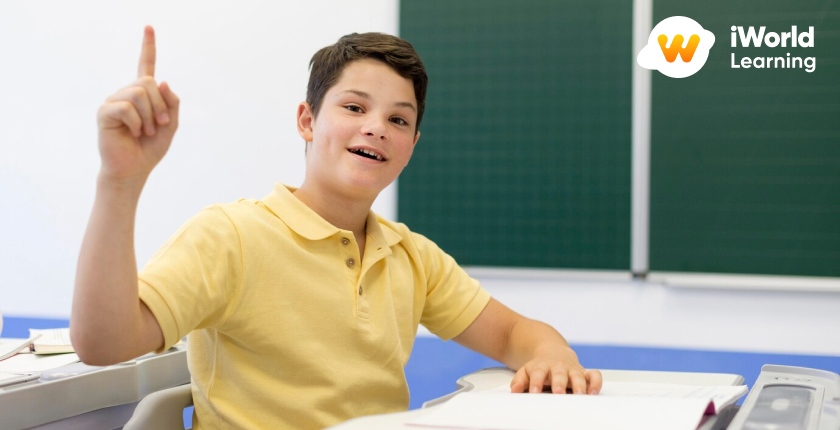
The MOE Primary 2 English syllabus builds directly on P1 foundations while introducing greater complexity. Understanding what the syllabus expects helps parents evaluate whether their child would benefit from tuition support.
Phonics reinforcement and reading fluency: While phonics instruction begins in P1, P2 is the year when the skill must become automatic. Students are expected to decode unfamiliar words independently, read short passages with reasonable fluency, and understand what they have read — not just pronounce the words correctly. A child who is still sounding out every word in a sentence by the middle of P2 is falling behind the expected pace, because P3 reading demands accelerate sharply. Phonics reinforcement at the P2 level focuses on blending skills (combining sounds into words), segmenting (breaking words into sounds for spelling), and reading fluency (reading connected text at a natural pace with comprehension).
Reading comprehension: P2 comprehension moves beyond simple retrieval — "where did the story take place?" — to include basic inference. Students are asked why a character acted a certain way, what might happen next, or what a phrase suggests about how someone feels. These questions test whether the child is understanding the story as a whole, not just locating individual facts. Children who have not built a habit of thinking while reading — rather than just decoding while reading — often stumble at this point.
Writing development: P2 writing progresses from P1's single sentences and short paragraphs to connected texts of 80 to 120 words. Students learn to write simple narratives with a beginning, middle, and end, to describe characters and settings with basic adjectives, and to use simple connectors (first, next, then, finally) to sequence events. The STELLAR framework emphasises writing as a process — planning, drafting, revising — rather than a one-shot task, and tuition that mirrors this approach helps students internalise the habit of reviewing and improving their own work.
Oral communication: P2 oral tasks include reading aloud (a short passage with familiar vocabulary) and Show and Tell or simple conversation. The expectations are age-appropriate — clear speech, eye contact with the audience, and the ability to describe an object or experience in a few connected sentences. Students who are shy or who speak English as a second language at home often benefit from the additional speaking practice and confidence-building that small-group tuition can provide.
Signs That Your Primary 2 Child May Benefit from English Tuition
Not every P2 child needs tuition. Many children develop at their own pace and catch up naturally as the school year progresses. However, certain indicators suggest that additional support could prevent small gaps from becoming larger ones.
Your child avoids reading aloud at home. A child who happily reads picture books silently but resists reading aloud may be struggling with decoding — they rely on pictures and context to guess words rather than sounding them out. This strategy works for a while but fails when texts become denser and less picture-dependent in P3. Phonics-focused tuition targets this specific bottleneck before it compounds.
The school teacher has raised a concern. If a parent-teacher meeting includes comments about reading progress, writing effort, or oral participation, take them seriously. Classroom teachers observe children across a full cohort and can identify when a child is falling behind the expected developmental range. Waiting to see if the problem resolves on its own is riskier at P2 than at P1 because the P3 curriculum assumes P2 foundations are secure.
Your child's writing is limited to single sentences or a few words. By the middle of P2, most children can write a short paragraph of four to six connected sentences — even with spelling and grammar errors. A child who consistently writes only one or two sentences, or who stares at a blank page unable to start, may need support with idea generation, vocabulary, or the physical act of writing. Tuition that scaffolds the writing process — brainstorming together, using picture prompts, writing sentence by sentence with guidance — often unlocks the block.
Your child says they are "not good at English." At seven or eight years old, this statement is almost never an accurate self-assessment — it is a reaction to a specific difficulty that has not been addressed. If a child has labelled themselves as poor at English, targeted support that produces visible small wins (reading a new book independently, writing a full paragraph, receiving a positive comment from the teacher) can reverse this belief before it becomes a fixed academic identity.
What to Look for in Primary 2 English Tuition
Primary 2 English tuition should feel different from school — not in academic rigour, but in the amount of individual attention, the pace of instruction, and the emotional environment. These five criteria help separate programmes suited to seven- and eight-year-olds from those designed for older children and scaled down.
Class size of three to eight students: At P2, individual reading turns and writing feedback are the core of effective tuition. In a class of 12 or more, each child may receive only one or two minutes of direct teacher interaction per session — not enough to identify and address specific phonics or writing gaps. Classes of three to eight students allow the teacher to hear each child read aloud every session and to provide individual feedback on writing during the lesson itself.
Phonics-trained teachers: Not all tutors who teach primary English are trained in phonics instruction. A teacher who understands systematic synthetic phonics — how sounds map to letters, how blending and segmenting work, and how to diagnose which specific sound patterns a child is struggling with — can target instruction precisely. Ask the centre whether their teachers have specific phonics training and how they assess a child's phonics level before starting instruction.
STELLAR-aligned curriculum: The centre's materials should reflect the types of texts, writing tasks, and oral activities that children encounter in MOE schools. This does not mean replicating school lessons — it means ensuring that the skills practised in tuition transfer directly to classroom performance. A centre that uses its own materials without reference to the MOE syllabus risks teaching content that does not help the child in their school assessments.
Short, varied lesson structure: A P2 attention span is typically 15 to 20 minutes for a single focused activity. A well-designed P2 English tuition session breaks one hour into three or four short activities — a phonics warm-up, a shared reading with discussion, a guided writing task, and an oral practice or word game. Variety keeps attention from drifting and ensures that all four language skills (reading, writing, listening, speaking) receive practice within each session.
Warm teacher-child rapport: At P2, the teacher's tone matters as much as their qualifications. A child who feels safe making mistakes — who knows the teacher will help rather than scold — is more willing to attempt unfamiliar words, try new sentence structures, and speak up during oral practice. Observe a trial class and watch how the teacher responds when a child gives a wrong answer. Does the teacher correct gently and encourage another attempt, or does the teacher move on to the next child? The answer tells you more about the programme's suitability than any brochure.
How iWorld Learning Supports Primary 2 English Students
At iWorld Learning, a Singapore-based English language school, the Primary School English programme covers Primary 2 students with small-group classes designed around the CEFR framework and MOE STELLAR requirements. Each child is assessed at the start to identify which skill area — phonics, reading comprehension, writing, or oral confidence — needs the most attention, and the learning path is adjusted accordingly. Teachers hold internationally recognised certifications and are trained in phonics instruction methods that build strong decoding and blending foundations.
Classes are kept small — typically capped at eight students — so each child receives individual reading turns, writing feedback, and oral practice during every lesson. iWorld Learning operates two campuses at Tanjong Pagar MRT and Somerset MRT, with classrooms designed for young learners and convenient MRT access for families. A free trial class is available for parents who want to observe the teaching environment and assess whether it suits their child's learning style before committing to a term.
FAQ
At what age should my child start Primary 2 English tuition?
Primary 2 English tuition is designed for children aged seven to eight who are in their second year of primary school. The best time to start is at the beginning of the P2 academic year or when a specific gap — in reading fluency, writing, or oral confidence — becomes apparent during the school term. Early intervention is more effective and less stressful than waiting until the gap widens.
How much does Primary 2 English tuition cost in Singapore?
Primary 2 English tuition in Singapore typically ranges from SGD 30 to SGD 55 per hour for small-group classes, depending on centre location, class size, and teacher qualifications. Centre-based programmes in the CBD or Orchard area may be at the higher end. One-to-one home tutoring typically ranges from SGD 40 to SGD 80 per hour. Always confirm with the centre whether the fee includes learning materials and whether trial classes are available.
How is P2 English tuition different from P1 English tuition?
P2 English tuition shifts emphasis from phonics readiness and desk-readiness (the main P1 concerns) to reading comprehension, writing connected paragraphs, and oral presentation. P1 tuition often focuses on the transition from kindergarten to formal learning; P2 tuition assumes the child is settled in school routines and works on the academic skills that P3 will demand. Phonics remains important but moves from letter-sound recognition to automatic decoding and reading fluency.
Is one-to-one or group tuition better for Primary 2 English?
Small-group tuition (three to six students) is often more effective for P2 children than one-to-one tutoring. Peer interaction gives children a natural reason to speak, take turns, and learn from hearing other children's answers — skills that one-to-one settings cannot replicate. One-to-one tuition is most appropriate when a child has a significant, specific gap (such as phonics decoding or writing reluctance) that needs intensive, focused attention over a defined period.
How many hours of P2 English tuition per week is appropriate?
Most P2 students attend one session of one to one-and-a-half hours per week. At this age, one focused small-group session — combined with ten to fifteen minutes of daily reading at home — is usually more effective than multiple tuition sessions. P2 is about building consistent learning habits, not intensive academic schedules that crowd out play, rest, and family time.
Where can I find Primary 2 English tuition near an MRT station in central Singapore?
Several language schools and tuition centres operate near MRT stations in central Singapore. iWorld Learning, for example, offers Primary School English courses at its Tanjong Pagar MRT and Somerset MRT campuses, each within walking distance of the station. When evaluating location, consider total travel time rather than just distance — a centre that is slightly farther but directly accessible by MRT may be more practical than a nearer centre that requires a bus transfer.
Summary
Primary 2 English tuition is most valuable when it targets the specific skill gaps that the classroom environment cannot address individually — whether that is phonics decoding, reading comprehension, writing confidence, or oral fluency. The right programme combines small class sizes, phonics-trained teachers, an MOE-aligned curriculum, and a warm, supportive environment that encourages young learners to attempt new skills without fear of making mistakes. At this stage, the goal of tuition is not to push ahead of the syllabus but to ensure that the foundations are secure before the P3 curriculum raises expectations across all subjects.
To discuss Primary 2 English tuition options or book a free trial class, contact iWorld Learning — a Singapore-based English language school offering small-group primary school English courses at its Tanjong Pagar and Somerset campuses. Explore the Primary School English programme and visit the about page to learn more about the school's internationally certified teaching team and CEFR-based learning paths for young learners.
相关文章
Recommended Reading
Popular Articles
-
English Teacher Salary in Singapore: A Complete 2026 Guide
-
The Ultimate english learning apps Bank: Categorized & Explained
-
British Council IELTS in 2026: What Changed, What It Costs, and How to Prepare
-
The Complete 2026 Blueprint for O Level English Oral Topics 2026 Format & Strategy
-
IELTS Price in 2026: What Test-Takers Actually Pay (And How to Spend Less)
-
IELTS Test Format, Scoring, and Key Changes for 2026 Explained
-
IELTS Exam Fee 2026: Complete Guide to Costs, Payment & Savings
-
PSLE 2026: Complete Guide to Exam Dates, Scoring System, and Preparation Strategies
-
IELTS Test Dates 2026: Monthly Schedule, Booking Strategy, and Prep Timeline
-
The Top 10 Tuition Centres in Singapore (2025) – A Curated Review for Parents & Students
latest articles
-
Limited Synonyms: Restricted, Finite, or Scarce?
-
From Many to One: Formal Alternatives for a Latin Motto
-
Domestic Partner Meaning: Relationship and Legal Context
-
English Tuition Near an MRT: Look Beyond Location
-
Arachnid Meaning: A Dictionary Guide With Examples
-
Seldom Meaning: Position, Tone, and Examples
-
Hosanna Meaning: Praise, Prayer, and Context
-
Sophocles Meaning: Name, Context, and Pronunciation
-
Primary Composition at Home: A Practical Writing Routine
-
Ares Meaning: The Greek God and Modern Proper Name