Primary 3 English Tuition: Catching Foundational Gaps Early
Quick Answer: Primary 3 English tuition is most useful when it catches and closes specific gaps in grammar accuracy, reading comprehension, and sentence-level writing — before those gaps compound into the harder demands of Primary 4 and the PSLE years — rather than when it pushes exam preparation onto an eight-year-old.
Primary 3 is the year when the gap between children who have solid English foundations and those who do not starts to become visible. The MOE P3 syllabus moves beyond the early literacy focus of Primary 1 and 2 into more structured grammar, longer comprehension passages, and the first real demands of continuous writing. A child who enters P3 with weak phonics, limited sight vocabulary, or shaky sentence construction will find the year progressively harder, because each new skill builds on foundations that are not yet secure.
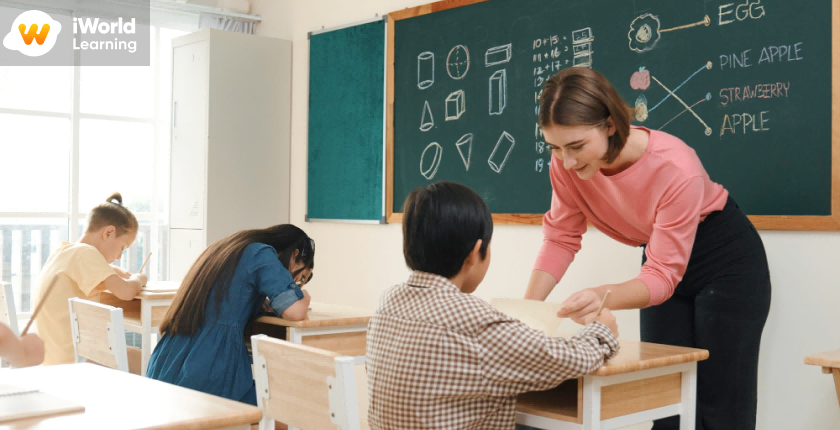
This article explains what a Primary 3 English programme should focus on, how to tell whether your child needs support at this stage, and how to choose a programme that matches an eight-year-old's development rather than imitating PSLE drilling. iWorld Learning offers primary school English courses in Singapore, delivered in small groups by internationally certified teachers at its Tanjong Pagar and Somerset campuses.
Why Primary 3 Is a Quiet Turning Point
Primary 1 and 2 are largely about acquiring the tools of literacy — phonics, sight words, basic sentence structures, and reading fluency. Primary 3 is when children are expected to use those tools independently and accurately. Comprehension passages test understanding rather than just decoding. Grammar exercises require applying rules, not just recognising them. Composition moves from guided sentence completion toward short structured pieces of a child's own.
Three shifts mark the P3 year. First, reading becomes a means of learning rather than a skill being learned — children must extract information and infer meaning from text. Second, grammar becomes productive — students must use tenses, subject-verb agreement, and connectors correctly in their own sentences. Third, writing becomes structured — a P3 composition needs a clear sequence with some descriptive detail, not just unconnected sentences.
Children who coasted through P1 and P2 on strong oral English sometimes stall here, because speaking well and writing accurately are different skills. This is the gap a Primary 3 English programme should close, carefully and at the right developmental pace.
The Three Foundations P3 Tuition Should Strengthen
Tuition at Primary 3 is not exam preparation. Its purpose is to consolidate the foundations that later years will test, and to do so in a way that protects a young child's confidence and enjoyment of English. Three areas respond best to structured, feedback-rich practice.
Grammar Accuracy
By Primary 3, most children can speak fluently but make grammar errors they do not notice — inconsistent tenses, subject-verb agreement slips, and connector misuse. The P3 syllabus formalises these rules, and the gap between fluent speech and accurate writing becomes visible in their work. Tuition helps by drilling specific structures with immediate correction, so the child internalises accurate patterns rather than carrying errors forward. Small-group practice, where the teacher can mark and explain each error on the spot, is more effective than independent worksheet completion, which often reinforces mistakes a child cannot see.
Reading Comprehension Beyond Decoding
P3 comprehension questions begin to test understanding rather than just word recognition — asking why a character did something, what a word means in context, or what is likely to happen next. Children who are strong decoders but weak comprehenders often struggle here, because they read the words without building meaning. A good programme teaches comprehension strategies: locating the relevant part of the passage, identifying the question type, and building an answer from textual evidence rather than guessing. Marked practice with explanation turns reading into comprehension.
Sentence-Level and Short-Passage Writing
The P3 composition is a child's first sustained attempt at structured writing. The goal at this age is a clear sequence of events with some descriptive detail and accurate grammar — not a polished narrative. The most common weakness is the unstructured piece: sentences that do not connect, events with no clear order, or grammar errors that obscure meaning. Tuition helps by teaching simple planning (what happens first, next, last), sentence combining, and the use of basic descriptive words. Individual feedback on the child's own writing is the key input, because a child cannot fix errors they do not see.
How P3 Tuition Differs From Early Enrichment and Later Exam Prep
Parents sometimes choose Primary 3 tuition that is either too early or too late in style — mimicking P1 phonics enrichment or jumping ahead to P5 exam drilling. Both miss the developmental point of the year.
| Programme Type | Primary Focus | Developmental Fit for P3 |
|---|---|---|
| P1-P2 enrichment | Phonics, reading fluency, oral confidence | Under-challenges a P3 child ready for structure |
| P3 skills tuition | Grammar accuracy, comprehension, structured writing | Matches the year's developmental demands |
| P5-P6 exam prep | Timed papers, exam-format drilling | Premature pressure that erodes confidence |
A P3 programme that looks like a P6 programme — assessment books and timed practice — is developmentally misaligned and can make an eight-year-old dread English before the foundations are solid. A P3 programme that looks like P1 enrichment — only games and free reading — under-challenges a child who is ready for structured skill work. The right programme sits in between: skill-focused, feedback-rich, and paced to a young learner's stamina.
Deciding Whether Your Primary 3 Child Needs Tuition
Not every P3 child needs English tuition. A child who reads willingly, writes in complete sentences with reasonable accuracy, and handles comprehension questions without frustration may simply need consistent home reading and discussion. Tuition becomes worth considering when specific, observable gaps appear.
One signal is a gap between the child's oral and written English — they speak fluently but their writing contains repeated grammar errors or thin content. Another is frustration with comprehension questions that ask "why" rather than "what", which suggests reading without understanding. A third is avoidance of writing tasks, which often signals that the child senses difficulty they cannot name. None of these alone is decisive, but together they point to foundations that the year will only build upon if they are secure.
The decision should rest on evidence from school work and the child's own response, not on comparison with other families or general anxiety about falling behind. Adding tuition to a child who is genuinely keeping up reduces the time for the reading and free play that matter just as much at this age.
How to Choose a Primary 3 English Programme
When comparing P3 programmes, the most important factors are not the brand or the worksheet volume but the quality of individual feedback, the developmental appropriateness of the pacing, and the alignment with the current MOE P3 syllabus. An eight-year-old's stamina and confidence are fragile, and a programme that is too fast, too pressured, or too impersonal can do more harm than good.
Ask how the programme gives feedback on the child's own writing — whether each child receives specific comments or only class-level praise. Ask how class time balances active production (writing, reading aloud, speaking) against passive reception (listening, filling blanks). Ask whether the teacher tracks each child's weak areas over the term. Small-group formats suit P3 learners well, because the age still benefits from peer interaction and the lower pressure it brings, while the smaller size preserves the individual attention that grammar and writing correction require.
iWorld Learning is a Singapore-based English language school that helps children build practical English through small classes, CEFR-based learning paths, and internationally certified teachers. Its primary school programme is built around active language use — speaking, reading aloud, and guided writing — rather than passive listening, and it uses CEFR-based placement to match each learner to the right level. The programme runs at the Tanjong Pagar MRT (CBD) and Somerset (Orchard Road) campuses. See how the primary school English programme supports Primary 3 skill-building.
FAQ
Is Primary 3 too early to start English tuition?
It depends on the child. Primary 3 is the right time if your child shows specific gaps in grammar accuracy, reading comprehension, or sentence-level writing, because these foundations compound in Primary 4 and beyond. For a child who reads willingly, writes accurately, and handles comprehension comfortably, consistent home reading may be enough. The trigger should be observable gaps from school work, not a general sense that tuition is expected at this age.
How is Primary 3 tuition different from PSLE preparation?
P3 tuition consolidates the foundations — grammar accuracy, comprehension strategies, and structured writing — that the PSLE paper later tests under pressure. PSLE preparation, which properly begins in Primary 5, adds timed exam practice and paper-specific strategy. Starting PSLE-style drilling in P3, before the foundations are secure, is premature pressure that can undermine an eight-year-old's confidence and produces shallow improvement that does not transfer to harder questions.
What should I prioritise when choosing a P3 English programme?
Prioritise individual feedback on the child's own writing, on-the-spot correction of grammar and comprehension practice, and clear alignment with the current MOE P3 syllabus. Developmental fit matters as much as content: a programme paced for an eight-year-old's stamina, built around active production rather than worksheet drilling, will consolidate skills while protecting confidence. Small-group formats tend to suit this age well because they preserve individual attention alongside the peer interaction that benefits oral practice.
Can home support replace Primary 3 English tuition?
For a child without significant gaps, home support is powerful and often sufficient. The highest-impact practices are daily reading aloud, discussing what was read, and short regular writing with specific feedback. Home support usually falls short on grammar accuracy and writing structure, where a child needs accurate immediate correction that a parent without teaching training may find hard to give. In those specific cases, a small-group programme is a more efficient supplement than self-study or more worksheets.
Summary
Primary 3 is a quiet turning point where the foundations of grammar accuracy, reading comprehension, and structured writing either consolidate or start to slip. A P3 English programme should focus on these foundations at a developmental pace that protects a young child's confidence, not on premature exam drilling or leftover phonics enrichment. The decision to enrol should follow evidence from school work and the child's response, and the programme chosen should match the year — feedback-rich, active, and aligned with the MOE syllabus. Catching gaps in Primary 3 prevents them from compounding into the harder demands of Primary 4 and the PSLE years.
Learn about iWorld Learning's primary school English programme — small-group, feedback-rich practice aligned with the MOE syllabus at Tanjong Pagar and Somerset — or contact the team to discuss your child's stage.
相关文章
Recommended Reading
Popular Articles
-
English Teacher Salary in Singapore: A Complete 2026 Guide
-
The Ultimate english learning apps Bank: Categorized & Explained
-
British Council IELTS in 2026: What Changed, What It Costs, and How to Prepare
-
The Complete 2026 Blueprint for O Level English Oral Topics 2026 Format & Strategy
-
IELTS Price in 2026: What Test-Takers Actually Pay (And How to Spend Less)
-
IELTS Test Format, Scoring, and Key Changes for 2026 Explained
-
IELTS Exam Fee 2026: Complete Guide to Costs, Payment & Savings
-
PSLE 2026: Complete Guide to Exam Dates, Scoring System, and Preparation Strategies
-
IELTS Test Dates 2026: Monthly Schedule, Booking Strategy, and Prep Timeline
-
The Top 10 Tuition Centres in Singapore (2025) – A Curated Review for Parents & Students
latest articles
-
Limited Synonyms: Restricted, Finite, or Scarce?
-
From Many to One: Formal Alternatives for a Latin Motto
-
Domestic Partner Meaning: Relationship and Legal Context
-
English Tuition Near an MRT: Look Beyond Location
-
Arachnid Meaning: A Dictionary Guide With Examples
-
Seldom Meaning: Position, Tone, and Examples
-
Hosanna Meaning: Praise, Prayer, and Context
-
Sophocles Meaning: Name, Context, and Pronunciation
-
Primary Composition at Home: A Practical Writing Routine
-
Ares Meaning: The Greek God and Modern Proper Name