Primary 3 Grammar in Stories: Run-ons, Stops and Tense
Once Primary 3 writing leaves the one-sentence caption, three production errors start to pull the story apart: run-on sentences, missing full stops, and mid-story tense switches. This page is a story-paragraph clinic. Find one error family in last week's composition, fix it by hearing the sentence, and leave the rest of the page alone.
The three errors that start to show once stories get longer
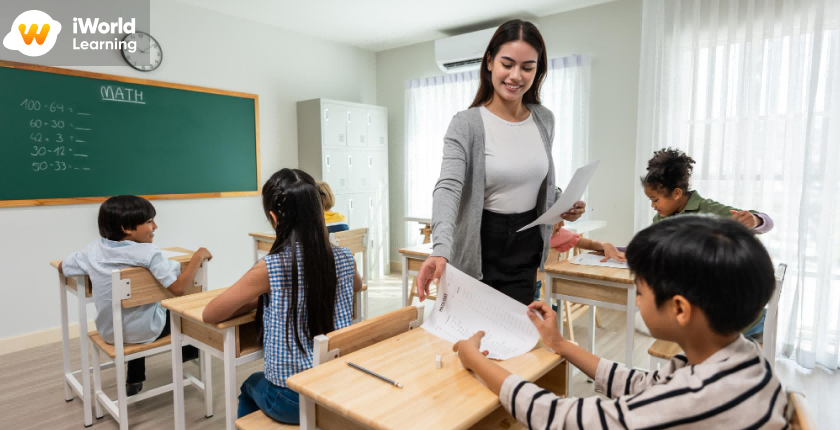
Run-on sentences, missing end punctuation, and mid-story tense switches appear when Primary 3 writing leaves the one-sentence caption stage. Primary 3 writing typically requires a full narrative rather than sentence starters, so those accuracy problems become visible on the page. Look at last week's composition for one family only. Do not mark every spelling error on this pass. Spelling can wait; a story that never stops, or that jumps from went to go, is already losing the reader.
A run-on is two or more complete ideas jammed together with no legal join: "I woke up I packed my bag I ran." A missing full stop is the quieter cousin — a line that should have ended, but a comma or nothing at all keeps it going. A tense switch is a past-tense story that suddenly uses "I go" or "he runs". You only need to find one family tonight. Circle every example of that family and ignore the rest.
Fix run-ons by hearing the full stop
Read the paragraph aloud. Each time you naturally stop, check for a full stop. Split only there, then reread. Do not turn every comma into a new paragraph. You are restoring sentence boundaries inside the story, not rebuilding the plot.
- Read the paragraph aloud once without a pencil. Notice where your voice drops.
- Read again and tap the table at each natural stop. Those taps are candidate full stops.
- Check each tap: if what came before can stand alone, and what comes next can stand alone, put a full stop. Leave a comma only when the second part cannot stand alone.
- Split only at those taps. Do not start a new paragraph for every sentence.
- Reread the fixed lines aloud. If you still run out of breath before a stop, one join remains.
Example. Child's line: "Yesterday I went to the park I saw a big dog it barked at me." Three spoken stops, three sentences: "Yesterday I went to the park. I saw a big dog. It barked at me." The story is the same. The boundary is now legal. If your child can hear that stop after two shared readings of the same paragraph, stay on this home loop. If the same run-on shape returns after you have split it together, keep the oral test; do not replace it with a worksheet tick.
Keep the story in one tense
A past-tense story that suddenly uses "I go" or "he runs" is a switch. Circle the verbs, pick the story tense — almost always past for a "yesterday" narrative — and rewrite only those verbs. Dialogue may use present tense; the narration should stay consistent. Do not start a Primary 4 accuracy loop here. You are not hunting agreement across a long page. You are putting one story back into one tense.
| What the child wrote | What broke | One-tense rewrite |
|---|---|---|
| Yesterday I go to the park and I saw a dog. | go is present inside a past story | Yesterday I went to the park and I saw a dog. |
| He runs to Mum and hugged her. | runs breaks the past narration | He ran to Mum and hugged her. |
| "I am hungry," he said. Then he eat the cake. | Dialogue can stay present; eat in the narration cannot | "I am hungry," he said. Then he ate the cake. |
Work one switched sentence tonight, not the whole composition. Circle every verb in that sentence, decide past or present for the narration, and rewrite only the verbs that left that choice. If speech marks are present, leave the spoken words unless they are unreadable. The clinic stays small so the child can finish it.
When the home fix is enough — and when it is not
Stay at home if the child can hear the full stop after two shared readings of the same paragraph. Add marked help if the same run-on returns after three stories — three separate compositions, not three rereads of one page. The home loop is the oral test plus one-family rewrite. It is enough while the child can find the stop or the switched verb with you sitting there.
It is not enough when the same jammed line comes back after you have split it together three times, or when the child cannot yet hear a sentence boundary even when you tap the table. That is a production problem, not a missing workbook page. If you want marked story drafts, iWorld Learning's Primary School English course teaches grammar in context in 1-to-1 or 3-6 groups and lists a trial class. Confirm live terms there. Do not treat a class as a promise of a composition mark.
FAQ
Should we still do grammar workbooks in Primary 3?
A short recognition page can help name the error — run-on, missing stop, tense switch. The story paragraph is where the mark is won or lost. If the workbook tick does not change the next composition, drop the extra page and return to last week's story.
Is this the same practice as Primary 4 grammar accuracy?
No. Primary 3 stops at hearing sentence boundaries and keeping one tense. Primary 4 adds agreement under a longer writing load and a write-aloud-fix loop across the child's own paragraph. Do not import that loop yet. Finish the three story-breaking families first.
When should I look at a writing class?
When the same run-on or tense switch returns after three marked home stories. The oral test has been tried and the family has not moved. iWorld Learning's Primary School English page is the matching verified option to evaluate; confirm the current trial there. Ask how story drafts are marked and returned. Do not ask for a promised composition score.
相关文章
Recommended Reading
Popular Articles
-
English Teacher Salary in Singapore: A Complete 2026 Guide
-
The Ultimate english learning apps Bank: Categorized & Explained
-
British Council IELTS in 2026: What Changed, What It Costs, and How to Prepare
-
The Complete 2026 Blueprint for O Level English Oral Topics 2026 Format & Strategy
-
IELTS Price in 2026: What Test-Takers Actually Pay (And How to Spend Less)
-
IELTS Test Format, Scoring, and Key Changes for 2026 Explained
-
IELTS Exam Fee 2026: Complete Guide to Costs, Payment & Savings
-
PSLE 2026: Complete Guide to Exam Dates, Scoring System, and Preparation Strategies
-
IELTS Test Dates 2026: Monthly Schedule, Booking Strategy, and Prep Timeline
-
The Top 10 Tuition Centres in Singapore (2025) – A Curated Review for Parents & Students
latest articles
-
How to Read a Marked English Script
-
Write a P3 Why-Answer with a Clue and Because
-
Should You Continue Primary 6 English Tuition After One Term?
-
Comparing PSLE English Tuition - 12 Questions for Parents
-
IELTS General Training for Singapore PR Plans - Check the Requirement First
-
IELTS Speaking Part 3 - Build Answers Beyond One Opinion
-
O-Level English Exam Strategy - Match Revision to the Weakest Process
-
Build a Primary-School Reading Habit That Improves Understanding
-
PSLE Grammar and Vocabulary Tuition - Diagnose the Error Before Choosing
-
Build the Reasoning Skills PSLE English Questions Actually Need