Primary 4 English Tuition Singapore: Building the Skills P5 and PSLE Depend On
Primary 4 English tuition is targeted English instruction that helps children in Singapore consolidate lower-primary literacy and make the developmental shift from "learning to read" to "reading to learn" — a transition that determines how well they will handle the upper-primary syllabus in P5 and P6.
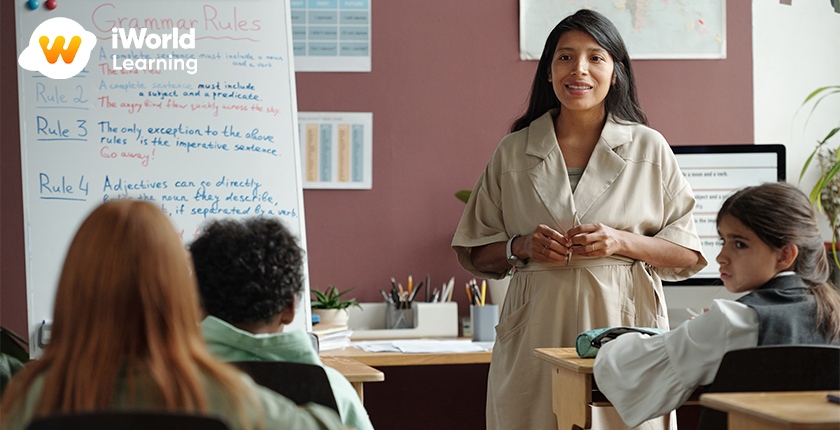
Lower-primary English (P1-P3) is about acquiring the tools of literacy: phonics, sight words, basic sentence patterns, and the mechanics of reading and writing. Upper-primary English (P5-P6) is about using those tools to extract meaning from longer texts, craft structured compositions, and express ideas orally with reasoning and elaboration. The P4 year sits between these two worlds, and how well a child navigates this transition has consequences that echo through the PSLE years.
This article explains the four skill shifts that define the P4 English year, how to recognise when a child is struggling with one or more of them, and what quality P4 English tuition does to bridge the gap — not by accelerating into P5 content, but by strengthening the foundations that P5 content rests on.
The Four Skill Shifts of Primary 4 English
| Skill Area | Lower Primary (P1-P3) | Upper Primary (P5-P6) | What P4 Must Bridge |
|---|---|---|---|
| Reading | Decode words; understand simple sentences; answer literal questions by finding words in the text | Read extended passages of 300+ words; infer meaning, author intent, and character motivation; synthesise information across paragraphs | Move from literal retrieval to simple inference; learn to use context clues for unfamiliar vocabulary; identify main ideas in multi-paragraph passages |
| Writing | Write simple sentences and short paragraphs; describe a picture in a few lines; use basic punctuation | Plan and write narrative compositions of 150+ words with a structured plot; produce functional texts (letters, emails, reports) for specific purposes and audiences | Learn to plan before writing; structure a story with beginning, middle, and end; expand a paragraph from 3-4 sentences to 6-8 with descriptive detail |
| Grammar | Use present and past tenses; form simple and compound sentences; apply basic subject-verb agreement | Use a range of tenses accurately; construct complex sentences; apply synthesis and transformation patterns; edit for grammatical errors in longer texts | Consolidate irregular past tense forms; learn conjunctions for complex sentences; recognise and correct common errors in their own writing |
| Oral | Read aloud simple passages; answer direct questions about a picture; speak in short, simple sentences | Read aloud with fluency and expression; engage in stimulus-based conversation requiring reasoning, elaboration, and personal response under exam conditions | Build reading fluency (phrase-reading, not word-by-word); practice describing and giving opinions about a picture in connected sentences; develop the confidence to speak at length |
A P4 child who has not made these four shifts enters P5 functionally unprepared. The P5 teacher assumes that students can infer, write structured paragraphs, use a range of tenses, and speak in connected English. A child who cannot do these things will not only score poorly; they will lose confidence in English at exactly the point when the subject matter becomes more demanding and the stakes (PSLE) become visible on the horizon.
How to Recognise the P4 Transition Gap
The gap between lower-primary competence and upper-primary readiness does not announce itself dramatically. It shows up in small, consistent patterns that parents can observe at home.
Reading. When your child reads a page from a P4-level book and you ask "why did that happen" or "what do you think will happen next," can they answer in a full sentence that references the text? A child who can only retell what happened (literal) but cannot explain why or predict what comes next (inferential) is still reading at a lower-primary level, regardless of how fluently they decode words.
Writing. Read your child's most recent composition. If the story begins, develops, and ends in a recognisable sequence and includes at least some descriptive language (an adjective beyond "good" or "bad," a sentence that describes how a character feels rather than just what they did), your child is on track. If the story jumps between ideas, lacks a clear ending, or reads like a list of events ("I went to the park. I played on the swing. I ate ice cream. I went home."), the child has not yet internalised narrative structure.
Grammar and vocabulary. A P4 child who still writes "He go to school yesterday" or "She is more taller than me" has not yet consolidated the tense and comparative patterns that P3 introduces. These errors do not self-correct through more reading alone; they require targeted practice and feedback.
Oral confidence. When a P4 child is asked to describe a picture or talk about a favourite activity, do they produce a few words, a single sentence, or a short connected response of three or more sentences? The last is the P4 target; the first two suggest that oral fluency is lagging behind the syllabus expectation.
What Effective P4 English Tuition Does Differently
Not all P4 English tuition is equally effective. The programmes that reliably bridge the lower-to-upper primary gap share a common approach: they target the specific transition skills rather than accelerating into P5 content prematurely.
1. Diagnostic-first placement. Before instruction begins, the child is assessed on reading, writing, grammar, and oral communication against a recognised framework such as CEFR. The assessment produces a skill-by-skill profile that identifies which of the four shifts the child has made and which are still in progress. Instruction then targets the unfinished shifts, not a generic P4 curriculum. A child whose grammar is strong but writing structure is weak should spend more time on composition planning and less on grammar worksheets. Data-driven placement makes that possible; a programme that assigns all P4 children the same materials does not.
2. Comprehension taught as a skill, not tested as a task. Many P4 English programmes give children comprehension passages to read and questions to answer, then go through the answers. This tests comprehension; it does not teach it. Effective tuition teaches comprehension strategies explicitly: how to find the main idea by looking at the first and last sentences, how to answer "why" questions by connecting information from two different parts of the passage, how to guess unfamiliar words from context clues, and how to eliminate wrong multiple-choice options by checking them against the text. Children who learn these strategies in P4 carry them into P5 and P6, where the passages are longer and the questions harder.
3. Writing taught through planning and feedback, not volume. The most common error in P4 English tuition is assigning a composition every week with minimal feedback. The child writes, the teacher marks, the child sees a score, and the cycle repeats. This produces volume but not growth. Effective programmes teach writing as a three-step process: plan (theme, plot points, vocabulary bank), draft (write with the plan visible), and revise (improve based on specific feedback). Over a year, a child who writes 20 compositions with this process will show more progress than one who writes 40 compositions that are only graded.
4. Oral practice built into every session. Oral communication cannot be improved through occasional mock exams. Fluency, expression, and the ability to speak in connected sentences build through frequency — short oral practice in every session, not a long session once a term. Small-group settings (4–8 students) are essential for this because each child needs multiple speaking turns per session and individual pronunciation and fluency feedback. In a class of 15, a quiet P4 child can go an entire term without speaking more than a few sentences in front of the teacher.
English language schools that follow this diagnostic-structured approach include iWorld Learning's primary school English programme, which places each child by CEFR level, runs small-group classes with internationally certified teachers, and covers all four English skill areas with equal attention. The two CBD-accessible campuses (Tanjong Pagar and Somerset) make weekly attendance practical for families balancing school, tuition, and other activities.
FAQ
How do I know if my P4 child is ready for P5 English?
Four practical checks: Can your child read a P4-level passage and answer at least three out of five inferential questions correctly? Can they write a composition of 120+ words with a clear beginning, middle, and end? Do they use past tense consistently in narrative writing, with no more than one or two errors per paragraph? Can they describe a picture and give a personal opinion in at least four connected sentences? A "no" to any of these suggests a transition gap that P4 tuition can address before the P5 syllabus raises expectations further.
What is the difference between P4 English tuition and just doing more assessment books at home?
Assessment books provide practice; they do not provide instruction, diagnosis, or feedback. A child who is struggling with composition structure will not learn to plan a story by writing more compositions at home and comparing them to model answers. They need someone to look at their writing, identify the specific gap (e.g., "your stories have a beginning but no real ending — let's practice writing endings"), and coach them through the missing skill. That is what tuition provides and what assessment books, however well-designed, cannot.
How much does P4 English tuition cost in Singapore?
P4 English tuition in Singapore typically ranges from S$25–55 per hour. Group tuition at general centres (10–20 students) costs S$25–40 per hour. Small-group tuition at specialised English language schools (4–8 students) with internationally certified teachers costs S$45–55 per hour. The wider the class, the less individual attention each child receives — which matters most for writing feedback and oral practice, the two skills that need teacher interaction to improve.
Can a good P4 English tuition programme help my child enjoy reading more?
Indirectly, yes. Children who struggle to understand what they read naturally avoid reading. As comprehension skills improve through strategy instruction and practice with level-appropriate texts, reading becomes less effortful and more rewarding. A P4 child who can pick up a book, understand the story without constant frustration, and talk about what they read is far more likely to become a voluntary reader than a child for whom every page feels like a comprehension test. iWorld Learning's primary English courses integrate reading skill development with engaging, age-appropriate texts that make the reading-to-learn transition feel natural rather than forced.
How often should P4 English tuition sessions be scheduled?
Once per week for 1.5–2 hours is the standard and effective frequency for P4 English tuition. This gives enough time per session to cover two skill areas (e.g., writing planning/drafting plus comprehension strategy, or grammar consolidation plus oral practice) and provides a weekly rhythm that sustains progress without overwhelming the child's schoolwork schedule. Twice-weekly sessions are rarely necessary at the P4 level unless the child has significant foundational gaps across multiple skill areas.
Summary
The Primary 4 English year is defined by four transitions: from literal to inferential reading, from simple sentences to structured paragraphs in writing, from basic tenses to consistent grammatical control, and from short answers to connected speech in oral communication. Each of these transitions forms the foundation on which P5 and P6 English — and ultimately PSLE — are built.
Quality P4 English tuition targets these specific transitions through diagnostic placement, explicit comprehension strategy instruction, process-based writing with individual feedback, and oral practice integrated into every session. It does not rush into P5 content or assign endless worksheets; it ensures the child crosses the P4 bridge with the skills intact. For parents, the practical takeaway is this: assess which of the four shifts your child has made and which are still in progress, then choose a tuition programme that addresses the gaps rather than one that treats all P4 children as having the same needs.
Next step: Book a free trial class for Primary English at iWorld Learning →
相关文章
Recommended Reading
Popular Articles
-
English Teacher Salary in Singapore: A Complete 2026 Guide
-
The Ultimate english learning apps Bank: Categorized & Explained
-
British Council IELTS in 2026: What Changed, What It Costs, and How to Prepare
-
IELTS Price in 2026: What Test-Takers Actually Pay (And How to Spend Less)
-
The Complete 2026 Blueprint for O Level English Oral Topics 2026 Format & Strategy
-
IELTS Test Format, Scoring, and Key Changes for 2026 Explained
-
IELTS Exam Fee 2026: Complete Guide to Costs, Payment & Savings
-
PSLE 2026: Complete Guide to Exam Dates, Scoring System, and Preparation Strategies
-
IELTS Test Dates 2026: Monthly Schedule, Booking Strategy, and Prep Timeline
-
The Top 10 Tuition Centres in Singapore (2025) – A Curated Review for Parents & Students
latest articles
-
What Is Dream Symbolism? A Careful Reading Framework
-
PSLE AL Bands and Secondary School Posting Explained
-
How to Pronounce Llanfairpwll: A Practical Breakdown
-
Preschool Phonics in Singapore: What Systematic Teaching Does
-
Primary English Enrichment Progress Checklist for Parents
-
How to Choose Primary 1 English Tuition in Singapore
-
Primary 6 English Paper 2: Diagnose Errors Before Drilling
-
How to Remember Ares: Meaning, Myth and Word Context
-
Assessing Workplace English: Real Tasks for Singapore Roles
-
TOEFL Score Reports: Order the Right Recipient in ETS