Primary English Oral Communication: Speaking Skills by Stage
Quick Answer: Oral communication develops in stages across Singapore primary school: children build speaking confidence through sharing activities in Primary 1–2, meet their first oral exams in Primary 3, and progress toward reading aloud and stimulus-based conversation by Primary 6. Three skills matter at every stage — clarity, expression and elaboration.
Spoken English is a child's first language experience, yet it is often the least practised skill at home. In Singapore's six-year primary school programme, oracy is developed deliberately: lower primary builds oral confidence, middle primary introduces the first oral examinations, and upper primary works toward the PSLE Oral Communication format. This guide explains each stage and how to support it at home.
How Oral Communication Grows from Primary 1 to Primary 6
Primary 1–2: Speaking with Confidence
Lower primary prioritises oral confidence. Children share objects and experiences in show-and-tell style activities, learn to speak in full sentences, and build the classroom speaking habits — waiting for a turn, facing the listener, using a clear voice — that later examinations depend on. At this stage, willingness to speak matters more than polish.
Primary 3–4: First Oral Exams
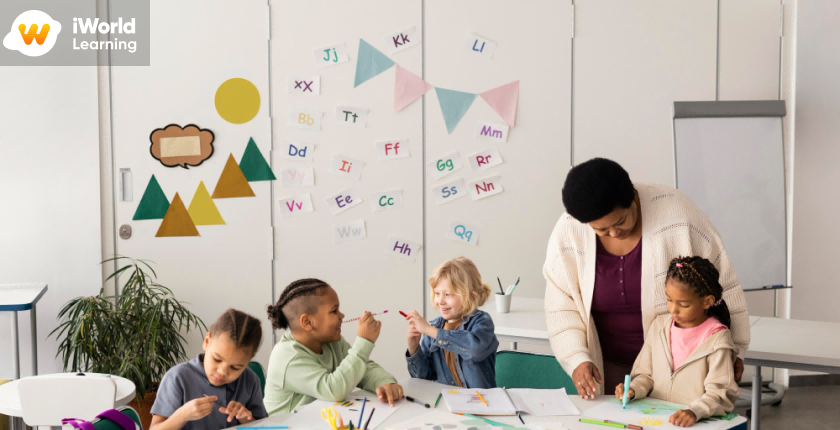
Oral examinations begin in Primary 3. Children are assessed on their speaking for the first time, which changes the classroom focus: reading aloud with expression, answering questions in complete sentences, and holding a short conversation. Middle primary is also when children learn to add a reason to an opinion, turning "I like it" into "I like it because".
Primary 5–6: Reading Aloud and Stimulus-Based Conversation
Upper primary works toward the PSLE Oral Communication paper, which is worth 40 marks (20% of PSLE English): Reading Aloud (15 marks) and Stimulus-Based Conversation (25 marks), with about 10 minutes of preparation. In class, children practise reading with pace and expression, and talk about pictures and prompts — describing what they see, giving opinions, and supporting them with reasons and personal examples.
Speaking Skills by Stage at a Glance
| Stage | Focus | What children practise |
|---|---|---|
| Primary 1–2 | Confidence | Show-and-tell sharing, full sentences, a clear voice |
| Primary 3–4 | Clarity and accuracy | First oral exams, reading aloud, opinions with reasons |
| Primary 5–6 | Expression and elaboration | Reading aloud, stimulus-based conversation, sustained talk |
Three Skills That Matter at Every Stage
Clarity
Clarity means being understood: pronunciation, pace and volume. At home, model and encourage a "talking voice" — not too fast, not too soft — and let your child finish their sentence before you respond. Clarity is built by repetition, not by correcting mid-sentence.
Expression
Expression is how the voice carries meaning: tone, emphasis and eye contact. Reading aloud at home is the simplest training ground — a story read with different voices for different characters teaches children that how you say something changes what it means.
Elaboration
Elaboration is the difference between an answer and a conversation. Children learn to add reasons, examples and details: "I like recess because I can play football with my friends." Prompt gently — "Why?" or "Tell me more" — and elaborate answers become a habit rather than an exam technique.
Everyday Home Practice for Speaking
Turn Family Time into Talk Time
Dinner conversations, car rides and bedtime chats are free speaking lessons. Ask open questions — "What was the funniest thing that happened today?" — and follow up with "Why?" or "What happened next?" A child who narrates their day in detail is practising elaboration without noticing.
Read Aloud Together
Reading aloud builds every oral skill at once: clarity, expression and stamina. Take turns reading pages, try different voices, and record your child occasionally so they can hear their own progress. Many children are surprised by how much better they sound each month.
Play Describe-and-Explain Games
Choose a picture — from a book, a menu or a family photo — and take turns describing it in full sentences, then giving opinions with reasons. Games keep speaking low-pressure, which matters: confidence is the soil every other oral skill grows in.
How iWorld Learning Builds Speaking Confidence
Speaking improves through practice with a listener, which is why class size matters. iWorld Learning, a Singapore-based English language school, teaches Primary School English in small classes where every child speaks in every lesson. Its internationally certified teachers — from the US, UK and Singapore — model clear, expressive English for children to hear and copy, and its immersive, real-world methodology makes speaking practice feel like conversation rather than drill. With campuses at Tanjong Pagar MRT and Somerset/Orchard, lessons fit easily into a family's week.
Summary
Oral communication grows in stages across primary school: confidence in Primary 1–2, first oral exams in Primary 3–4, and reading aloud with stimulus-based conversation in Primary 5–6. Through every stage, the same three skills carry the progress — clarity, expression and elaboration — and all three can be practised at home through daily talk, read-alouds and describe-and-explain games.
Frequently Asked Questions About Primary English Oral Communication
When do oral exams start in primary school?
Oral examinations begin in Primary 3. Before that, lower primary (Primary 1–2) focuses on oral confidence through activities such as show-and-tell, so children have a speaking foundation before they are assessed.
What is stimulus-based conversation?
Stimulus-based conversation is the second part of the PSLE Oral Communication paper. Children look at a picture or prompt, talk about what they see, and share opinions and personal experiences related to it. It is worth 25 of the paper's 40 marks.
How can I help a shy child speak more?
Lower the pressure and raise the frequency. Practise in one-to-one conversations at home, ask open questions, and resist correcting mid-sentence — the goal is the habit of speaking, not a perfect sentence. Confidence grows from many small, successful exchanges.
Does reading aloud really help oral communication?
Yes. Reading aloud practises clarity (pronunciation and pace) and expression (tone and emphasis) at the same time, and it builds the stamina to speak at length — the exact combination later oral tasks ask for.
What is the difference between show-and-tell and the PSLE oral?
Show-and-tell in lower primary builds confidence through sharing objects and experiences. The PSLE Oral Communication paper is a formal assessment with two parts: Reading Aloud (15 marks) and Stimulus-Based Conversation (25 marks). Think of show-and-tell as the early practice and the PSLE oral as the later, assessed form.
Would you like your child to build speaking confidence in a structured, supportive environment? Contact iWorld Learning to arrange a course consultation, and our team will recommend an approach that matches your child's stage.
相关文章
Recommended Reading
Popular Articles
-
English Teacher Salary in Singapore: A Complete 2026 Guide
-
The Ultimate english learning apps Bank: Categorized & Explained
-
British Council IELTS in 2026: What Changed, What It Costs, and How to Prepare
-
IELTS Price in 2026: What Test-Takers Actually Pay (And How to Spend Less)
-
The Complete 2026 Blueprint for O Level English Oral Topics 2026 Format & Strategy
-
IELTS Test Format, Scoring, and Key Changes for 2026 Explained
-
IELTS Exam Fee 2026: Complete Guide to Costs, Payment & Savings
-
PSLE 2026: Complete Guide to Exam Dates, Scoring System, and Preparation Strategies
-
IELTS Test Dates 2026: Monthly Schedule, Booking Strategy, and Prep Timeline
-
The Top 10 Tuition Centres in Singapore (2025) – A Curated Review for Parents & Students
latest articles
-
Synonyms for 'Diverse': Describe Difference Precisely
-
Choosing an English Camp for Primary School Children in Singapore
-
Alternatives to 'Empathetically': Meaning and Tone Differences
-
Conflate: Meaning, Usage and a Progress Check
-
When to Take the WPLN Assessment in Singapore
-
Synonyms for 'Think': Match the Verb to the Mental Action
-
English Communication Courses for Working Adults in Singapore
-
WPLN Writing Test Length: Check the Current Candidate Guide
-
How to Pronounce 'Philemon' in English
-
Why 'Colonel' Is Pronounced Like 'Kernel'