Primary Tuition Singapore: Subject Options and Cost Guide 2026
Quick Answer: Primary tuition in Singapore spans four core subjects — English, Mathematics, Science, and Mother Tongue — with costs ranging from S$25 to S$80 per hour depending on subject, class size, and format. English is the most commonly sought subject for tuition because it underpins comprehension and written expression across all other subjects.
Primary tuition in Singapore is supplementary academic instruction for students aged 7 to 12, delivered through private home tutoring, tuition centres, and small-group language programmes, designed to reinforce MOE syllabus content across English, Math, Science, and Mother Tongue subjects.
Singapore's primary tuition industry is one of the most developed in the world, reflecting both the competitiveness of the PSLE and the widespread belief among parents that early academic support pays long-term dividends. But the sheer range of options — across subjects, formats, price points, and teaching philosophies — makes the decision harder than simply signing up for the nearest centre.
What Subjects Do Singapore Parents Seek Primary Tuition For
Not all subjects draw equal demand. Survey data from tuition aggregators and MOE's own household expenditure surveys suggest the following demand pattern at the primary level:
| Subject | Demand Level | Why Parents Seek Tuition |
|---|---|---|
| English | Highest | English is the medium of instruction for all subjects; weak English affects Math problem sums, Science open-ended questions, and Mother Tongue comprehension. Parents seek support for comprehension, composition, oral communication, and grammar. |
| Mathematics | Very High | Problem sums and heuristics strategies (model drawing, guess-and-check, working backwards) require structured teaching that many parents find difficult to guide at home, especially at the upper primary level. |
| Science | High (P3–P6) | Science is introduced in Primary 3 and demands precise terminology, structured answering techniques, and the ability to apply concepts to unfamiliar scenarios — skills that go beyond memorising facts from the textbook. |
| Mother Tongue | Moderate to High | Families where English is the dominant home language often seek Mother Tongue tuition to build vocabulary, oral fluency, and composition skills for the PSLE Mother Tongue paper. |
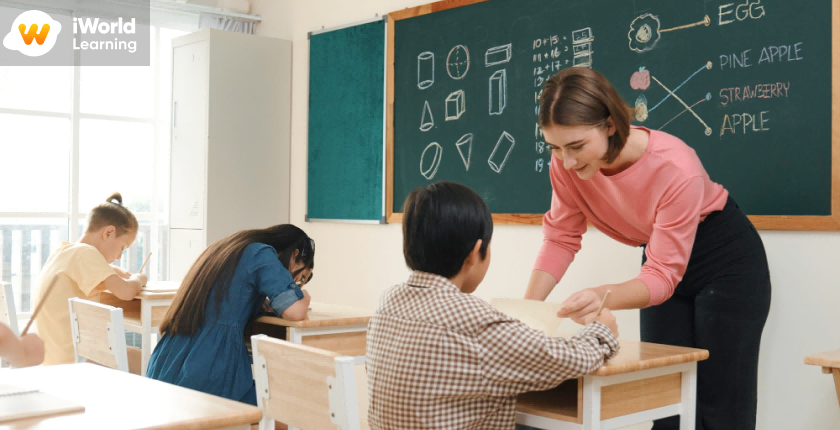
The dominance of English tuition reflects a structural feature of the Singapore education system: English is not just another subject — it is the language through which every other subject is taught, assessed, and discussed. A Primary 3 student who struggles with reading comprehension will face the same difficulty decoding a Math problem sum or a Science open-ended question. Investing in English tuition at the primary level therefore has a multiplier effect across the entire curriculum.
Primary Tuition Formats Compared
Parents choose among four main delivery formats, each with distinct trade-offs in cost, attention, and social learning:
- Private home tutoring (1-to-1): Provides fully individualised pacing and content. Best for students with specific, well-defined gaps in one or two subjects. Less effective for oral communication practice because there is no peer interaction. Cost: S$30–70 per hour, depending on tutor qualifications (MOE-trained teachers at the higher end, undergraduates at the lower end).
- Tuition centres (large group, 15–30 students): Deliver structured MOE-aligned content with practice papers and exam techniques. Most effective for self-motivated students who can learn in a lecture format without needing individual prompting or writing feedback. Cost: S$25–45 per hour.
- Small-group language schools (4–8 students): Combine structured curriculum with individual feedback — particularly valuable for English where writing and oral skills require teacher attention. Each student receives personalised feedback on compositions and speaking, while peer discussion enriches comprehension analysis and oral practice. Cost: S$40–80 per hour.
- Online tuition platforms: Offer flexibility and access to tutors beyond the student's geographic area. Effective for content-heavy subjects like Science where screen-sharing can convey diagrams. Less effective for oral communication and handwriting-dependent composition practice. Cost: S$20–55 per hour.
The choice between formats should be driven by the child's learning profile, not by price alone. A child who needs writing feedback and oral practice will gain more from a small-group programme at S$50 per hour than from a large-centre class at S$30 per hour that cannot provide individual attention on composition work.
How Much Does Primary Tuition Cost in Singapore
Primary tuition costs in Singapore depend on four main factors: class size, teacher qualifications, subject, and programme type. The following table provides a general reference range for 2026:
| Tuition Format | English / Math / Science | Mother Tongue | Teacher Profile |
|---|---|---|---|
| Large tuition centre | S$25–45 / hour | S$20–40 / hour | Centre-trained tutors; curriculum set centrally |
| Private home tutor (undergraduate) | S$25–40 / hour | S$20–35 / hour | University students; variable teaching experience |
| Private home tutor (graduate / NIE-trained) | S$45–70 / hour | S$35–55 / hour | Degree holders, former MOE teachers; structured lesson planning |
| Small-group language school | S$40–80 / hour | S$35–60 / hour | Internationally certified teachers (TESOL/TEFL); CEFR-aligned curriculum |
| Online tuition | S$20–55 / hour | S$18–45 / hour | Varies by platform; may include international tutors |
These are reference ranges based on publicly available listings and published centre rates. Actual fees depend on the specific centre, tutor experience, and programme duration. Parents should always obtain a current quotation from the provider and ask what is included — some programmes bundle materials, assessment reports, and holiday workshops in the fee, while others charge separately.
When Should Parents Start Primary Tuition
The timing of starting tuition is as important as the decision to start at all. The key transition points in the Singapore primary education system create natural windows for tuition:
- Primary 1–2 (Foundation years): Tuition at this stage is primarily for reading and phonics support, especially for children who enter P1 without a strong English foundation. For most children, daily reading at home and school-based learning support programmes are sufficient. Tuition should be considered only when the school identifies a specific literacy gap.
- Primary 3 (Transition year): This is the most common entry point for English and Math tuition. The syllabus shifts from learning to read toward reading to learn; Science is introduced as a new subject; and comprehension expectations move from literal to inferential. Starting tuition in P3 helps prevent gaps from widening in P4 and P5.
- Primary 5 (Upper primary consolidation): By P5, the PSLE-format papers are in full use, and students who are behind in any subject face an increasingly steep catch-up curve. Tuition at this stage is often reactive — addressing gaps that have accumulated — rather than proactive.
- Primary 6 (PSLE year): Tuition in P6 focuses on exam technique, timed practice, and targeted component improvement. Most parents who start tuition only in P6 are managing a late discovery of gaps, which limits how much ground can be recovered.
The most effective approach, supported by the experience of tuition providers and teachers, is to begin structured support in Primary 3 or at the start of Primary 5 — giving the child time to build skills before the PSLE year rather than cramming under time pressure.
English Tuition: The Subject That Affects Every Other Subject
Among the four subjects, English merits special attention not because it is more "important" than Math or Science, but because a weakness in English translates into weaker performance across the entire curriculum. A student who cannot parse the language of a multi-step Math problem sum, or who cannot construct a precise, logically ordered answer to a Science open-ended question, will lose marks in those subjects regardless of their conceptual understanding.
This is why primary English tuition — especially programmes that teach comprehension inference, structured writing, and oral communication — has a compounding effect. Strengthen English, and you strengthen the student's capacity to process and express knowledge in every subject. iWorld Learning's primary school English programme addresses this through small-group classes with internationally certified teachers, using CEFR-aligned learning pathways that build the comprehension, composition, and oral skills that the MOE syllabus demands — skills that benefit a student from P1 through PSLE and beyond.
FAQ
How much does primary tuition cost in Singapore per month?
At S$25–80 per hour with four weekly sessions of 1.5–2 hours each, monthly primary tuition costs range from approximately S$150 to S$640 per subject. The total depends on the format (private tutor, centre, or small-group school), the number of subjects, and the session duration. Language schools with small classes and certified teachers typically sit in the S$320–640 per month range per subject.
Is primary tuition necessary for all subjects or just English?
Not all students need tuition in all subjects. English is the most commonly supplemented subject because it is the medium of instruction for the entire curriculum. Math tuition is common for students who struggle with problem sums. Science tuition typically starts in P3 or P4. Mother Tongue tuition is common in English-dominant households. The decision should be based on specific skill gaps, not a blanket approach.
What is the best age to start primary tuition in Singapore?
Primary 3 is the most common and strategically sensible entry point. The syllabus intensifies across all subjects at this stage (especially English comprehension and composition), and Science is introduced. Starting in P3 gives the child three years to build skills before PSLE, rather than starting reactively in P5 or P6 when gaps are deeper and time is shorter.
Does primary English tuition help with math and science grades?
Yes, indirectly but measurably. Math problem sums and Science open-ended questions both require precise reading comprehension and structured written responses. Students with strong English skills can parse multi-step problem statements more accurately and construct clearer, more logically ordered answers, which translates into better performance in Math and Science assessments.
How do I choose between a tuition centre and a small-group language school for primary English?
Choose a large tuition centre if your child is self-motivated, learns well in a lecture-style environment, and mainly needs practice papers and exam technique. Choose a small-group language school if your child needs individual writing feedback, oral communication practice, or comprehension discussion — all of which require teacher-student interaction that large centres typically cannot provide at the individual level.
Summary
Primary tuition in Singapore is a multi-subject landscape where English holds a unique position: the one subject whose improvement lifts performance across the entire curriculum. Parents choose among four formats — private tutoring, large centres, small-group schools, and online platforms — each with distinct trade-offs in cost, individual attention, and teaching methodology. The most strategically effective time to begin is Primary 3, when the syllabus intensifies and gaps that are manageable in lower primary begin to widen. For English specifically, a programme with small classes, individual writing feedback, and MOE syllabus alignment delivers the skills that matter not just for English grades but for every subject that a primary student studies. iWorld Learning's primary English programme and full course offerings provide this structured, small-group approach at two accessible CBD campuses in Tanjong Pagar and Somerset.
Next step: Contact iWorld Learning to discuss primary tuition options for your child →
相关文章
Recommended Reading
Popular Articles
-
English Teacher Salary in Singapore: A Complete 2026 Guide
-
The Ultimate english learning apps Bank: Categorized & Explained
-
British Council IELTS in 2026: What Changed, What It Costs, and How to Prepare
-
The Complete 2026 Blueprint for O Level English Oral Topics 2026 Format & Strategy
-
IELTS Price in 2026: What Test-Takers Actually Pay (And How to Spend Less)
-
IELTS Test Format, Scoring, and Key Changes for 2026 Explained
-
IELTS Exam Fee 2026: Complete Guide to Costs, Payment & Savings
-
PSLE 2026: Complete Guide to Exam Dates, Scoring System, and Preparation Strategies
-
IELTS Test Dates 2026: Monthly Schedule, Booking Strategy, and Prep Timeline
-
The Top 10 Tuition Centres in Singapore (2025) – A Curated Review for Parents & Students
latest articles
-
Limited Synonyms: Restricted, Finite, or Scarce?
-
From Many to One: Formal Alternatives for a Latin Motto
-
Domestic Partner Meaning: Relationship and Legal Context
-
English Tuition Near an MRT: Look Beyond Location
-
Arachnid Meaning: A Dictionary Guide With Examples
-
Seldom Meaning: Position, Tone, and Examples
-
Hosanna Meaning: Praise, Prayer, and Context
-
Sophocles Meaning: Name, Context, and Pronunciation
-
Primary Composition at Home: A Practical Writing Routine
-
Ares Meaning: The Greek God and Modern Proper Name