Secondary School Tuition in Singapore: How to Choose the Right Support for Your Child
Quick Answer: Choosing secondary school tuition in Singapore depends on three main factors: the specific subject or skill gap your child needs to address, whether group or individual instruction suits their learning style, and how the tuition complements — rather than duplicates — what the school already provides. For English specifically, look for tuition that targets the O-Level or school-internal paper components your child finds most challenging, rather than a general English course.
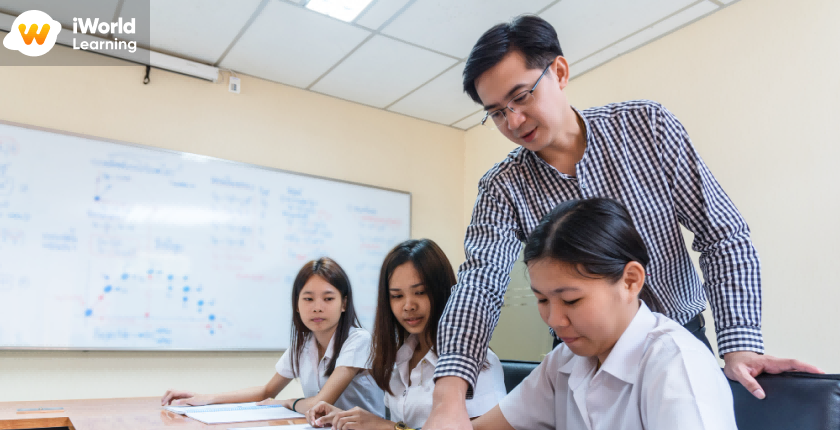
The transition from primary to secondary school brings a jump in subject depth, writing expectations, and independent learning demands. A student who managed PSLE English with minimal outside help may find Secondary 1 English — with its literature-adjacent comprehension passages, argumentative and discursive essay formats, and summary-writing requirements — a genuine step up. Tuition at the secondary level works best when it addresses this shift directly rather than replaying upper-primary methods.
When Secondary School Tuition Makes Sense
Secondary school tuition is most useful when there is a specific gap between the student's current performance and the demands of the secondary curriculum — not as a default add-on for every student. Signs that tuition may help include: consistently scoring below the class median in a core subject, losing marks on the same paper component across multiple tests (for example, summary writing in English or open-ended questions in Science), or the student expressing that they do not understand what the teacher wants even after seeking clarification in class.
Tuition that simply repeats what the school covers — going through the same textbook and the same worksheet style — rarely improves results because it adds time without adding insight. The tuition that works adds something the classroom cannot always provide: individual feedback on the student's actual written work, a different explanation of a difficult concept, or structured practice on a narrow skill such as summary writing or source-based analysis.
Group Tuition vs One-on-One: What Fits Your Child
| Dimension | Group Tuition (3–8 students) | One-on-One Tuition |
|---|---|---|
| Cost per session | S$30–60/hour | S$50–100+/hour |
| Peer motivation | Students see peers working at similar or higher levels | No peer reference point |
| Individual attention | Moderate — shared across the group | Full — every minute targets the student |
| Best for | Students within 1–2 grades of the expected standard who benefit from discussion | Students with a significant gap or those preparing for a specific high-stakes exam |
| Watch out for | Groups larger than 8 reduce speaking and writing-feedback time per student | Dependency risk — the student waits for the tutor to explain rather than developing self-study habits |
Most secondary students perform well in a small-group setting of three to six students, where they hear peers' questions, contribute to discussion, and still receive individual feedback on written work. One-on-one tuition becomes worth the higher cost when the student has a large gap to close in a short time (for example, a Secondary 4 student six months from O-Levels who is scoring below a C6 in English) or when the student has specific learning needs that a group format cannot accommodate.
Subject-Specific Tuition vs General Academic Support
Secondary school subjects diverge quickly. By Secondary 2, English, Mathematics, Science (split into Physics, Chemistry, Biology), Humanities (Geography, History, Literature), and Mother Tongue each have distinct assessment formats. A general "secondary tuition" centre that covers all subjects under one roof may be convenient but rarely provides the subject depth that an English specialist or a Mathematics specialist offers.
For English specifically, the secondary-level paper components that students most commonly need targeted support for include: summary writing (identifying and paraphrasing key points within a word limit), comprehension open-ended questions that require inference and use of own words, argumentative and discursive essay writing, and oral communication for the O-Level English oral examination. A tutor who can show the student exactly how a summary answer earned 12 out of 15 marks versus 8 out of 15 — by comparing the student's attempt with a model answer side by side — provides the kind of feedback that classroom marking alone rarely delivers.
How English Tuition Changes at the Secondary Level
Primary-level English tuition often focuses on grammar foundations, vocabulary building, and narrative composition structure. Secondary-level English shifts emphasis toward analytical reading, structured argumentation in writing, summary skills, and text-type awareness (expository, argumentative, discursive, descriptive, and hybrid essay forms). A student who thrived in a primary English tuition setting built around grammar worksheets and vocabulary lists may find that the same approach no longer addresses what secondary English requires.
Key Secondary English Skills Tuition Should Build
- Summary writing: The ability to read a passage of 300–400 words, identify 8–12 key points, and rephrase them in 80 words or fewer without changing meaning. This is a technical skill that improves with methodical practice and side-by-side comparison with model summaries, not with general reading.
- Argumentative and discursive essays: The shift from "write a story about a memorable day" to "discuss the view that social media does more harm than good" demands a different organisational structure (thesis, counter-argument, rebuttal, conclusion) and a more formal register.
- Inferential comprehension: Secondary comprehension passages are longer, denser, and include questions that require reading between the lines — inferring a character's motivation, a writer's tone, or the implied meaning of a phrase — rather than direct fact retrieval.
What to Look For in a Secondary English Tutor or Centre
When evaluating a secondary English tuition option, ask three questions. First, does the tutor provide written feedback on the student's compositions and comprehension answers between sessions? A tutor who only marks work during lesson time limits the volume of practice the student can receive. Second, does the tutor use actual past-year O-Level or school examination papers, or do they rely on proprietary worksheets that may not match the exam format? Authentic materials matter because they familiarise the student with the exact question types and mark schemes they will face. Third, does the tutor teach a transferable method — such as a summary-writing process or an essay-planning framework — that the student can use independently during examinations, or does the student remain dependent on the tutor to correct every attempt?
FAQ
When should secondary school tuition start for a new Sec 1 student?
It is usually better to let a new Secondary 1 student settle into the school routine for at least one term — and ideally one full semester — before starting tuition. This gives the student time to adjust to the new subject formats, identify which subjects genuinely need support, and avoid tuition becoming a crutch before the student has attempted independent learning. If the mid-year examination results show a clear gap in one or two subjects, targeted tuition from Term 3 onward is a reasonable timeline.
How much does secondary school tuition cost in Singapore?
Secondary-level group tuition at a tuition centre typically ranges from S$30 to S$60 per hour per subject. One-on-one private tutoring ranges from S$50 to over S$100 per hour depending on the tutor's qualifications and experience. English tuition at the upper secondary (Sec 3 and 4) level tends toward the higher end of these ranges because of the O-Level preparation demand.
Is group tuition effective for secondary English?
Small-group tuition of three to six students can be effective for secondary English because students benefit from peer discussion during comprehension and oral practice. The limiting factor is group size: beyond six to eight students, the amount of individual writing feedback each student receives per session drops sharply. English improvement depends on feedback on the student's own writing, so ask the centre directly how many pieces of written work are marked per student per month.
Should my child take tuition for all subjects or only weak ones?
Tuition for every subject is rarely necessary and can leave the student with no time for self-directed study, which is a skill secondary school explicitly expects students to develop. Focus tuition on the one or two subjects where the gap between current performance and the expected standard is widest, and where the student's own efforts in class and at home have not been enough to close it. A student who is meeting or exceeding expectations in a subject does not need additional tuition in that subject.
How do I know if a tuition centre's English programme matches the O-Level syllabus?
Ask to see a sample lesson plan or worksheet and compare it against the latest SEAB O-Level English syllabus document, which is publicly available on the SEAB website. Check that the paper components covered — editing, situational writing, continuous writing, visual text comprehension, comprehension and summary, listening, and oral communication — match the O-Level format. A centre that cannot clearly map its programme to the O-Level syllabus components may be teaching general English skills that do not directly support examination performance.
Summary
Secondary school tuition in Singapore works best when it is targeted: one or two subjects where a clear gap exists, delivered in a small-group or one-on-one format that provides individual feedback on the student's own work. For English, look for tuition that teaches transferable methods for summary writing, argumentative essays, and inferential comprehension — using actual examination-format materials — rather than general English enrichment. Let a new secondary student settle into the school rhythm for at least a term before starting tuition, so the support addresses a real need rather than becoming a default habit.
相关文章
Recommended Reading
Popular Articles
-
English Teacher Salary in Singapore: A Complete 2026 Guide
-
The Ultimate english learning apps Bank: Categorized & Explained
-
British Council IELTS in 2026: What Changed, What It Costs, and How to Prepare
-
IELTS Price in 2026: What Test-Takers Actually Pay (And How to Spend Less)
-
The Complete 2026 Blueprint for O Level English Oral Topics 2026 Format & Strategy
-
IELTS Test Format, Scoring, and Key Changes for 2026 Explained
-
IELTS Exam Fee 2026: Complete Guide to Costs, Payment & Savings
-
PSLE 2026: Complete Guide to Exam Dates, Scoring System, and Preparation Strategies
-
IELTS Test Dates 2026: Monthly Schedule, Booking Strategy, and Prep Timeline
-
The Top 10 Tuition Centres in Singapore (2025) – A Curated Review for Parents & Students
latest articles
-
My Child Hates Writing: A Parent's Repair Plan
-
Primary English Tuition Fees in Singapore: Cost Drivers
-
Choosing a Primary 1 English Class in Singapore
-
Tuition Deposits and Notice Periods: A Parent Checklist
-
Helping With Composition at Home: Mistakes to Avoid
-
Synonyms for 'Nervous': Match the Word to the Worry
-
'Fleetwood' as a Family Name: Origin and Usage
-
PSLE Composition Ideas: Build a Story Bank That Works
-
PSLE AL Scoring: Plan Practice Around the Bands
-
One-to-One vs Group TOEFL Prep: Costs and Fit