Small-Group English Class for Children: Inside a Lesson
A small-group English class for children typically has four to eight students, few enough that every child speaks in every lesson and the teacher can correct each one individually. The format sits between a large enrichment class and private tuition, and it is the setting where most children make steady progress in both fluency and accuracy at the same time.
A small-group English class is an English lesson designed for a small number of children, usually four to eight, so that each child practises speaking and receives individual teacher feedback in every session. Parents choosing this format usually want to know what actually happens inside a lesson and whether it suits their child. This guide walks through a typical session, compares the format with large classes and one-to-one tuition, and explains which children benefit from it.
What Happens Inside a Small-Group English Lesson
A well-run small-group lesson follows a rhythm that balances teacher input, guided practice and independent output. The timings below describe a typical 60-minute class for primary-aged children.
Opening Warm-Up and Review (5–10 Minutes)
The teacher greets each child by name and opens with a quick round of speaking: a song or chant for younger children, or two review questions for older ones. Every child speaks within the first ten minutes. This opening matters because children who speak early in a lesson tend to keep speaking throughout it, while children who stay silent for the first fifteen minutes often stay quiet for the rest of the hour.
New Language Input (10–15 Minutes)
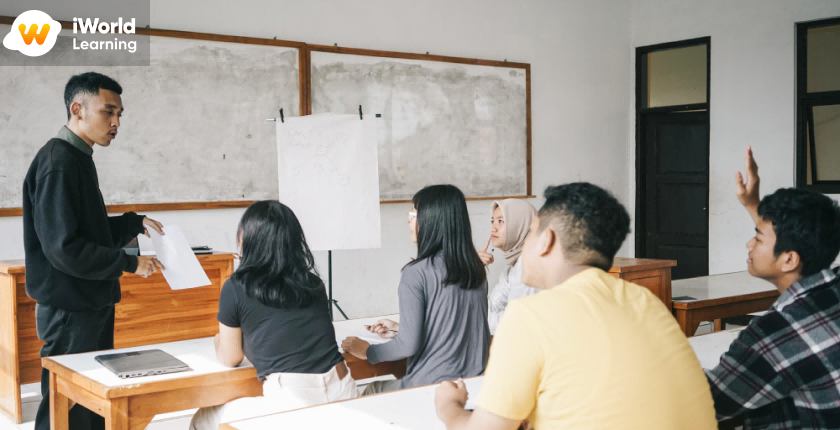
The teacher introduces new vocabulary or a sentence pattern using pictures, real objects or a short story, keeping explanations brief and checking understanding with quick questions. In a group of six, the teacher can read each face and rephrase on the spot for a child who looks lost. That kind of immediate adjustment is rarely possible in a class of twenty, where one pace must fit everyone.
Guided Practice and Pair Work (15–20 Minutes)
Children practise the new language in pairs or small teams through games, role-plays or information-gap activities, where each child holds information the other one needs. Pair work multiplies speaking time: in six minutes of pair work, every child talks for most of those minutes, while in whole-class question time each child might speak for only twenty seconds. The teacher moves between pairs, correcting errors quietly and noting what to review next week.
Independent Output and Wrap-Up (10 Minutes)
Each child produces something with the new language: a sentence spoken to the class, a short dialogue performed with a partner, or three lines written in a workbook. The teacher ends by telling children and parents exactly what was covered and what to practise at home. This closing loop turns one lesson into a week of learning instead of an isolated hour.
Small Group, Large Class or One-to-One: Comparing the Formats
The three common formats each carry real trade-offs. The table below compares them across the dimensions parents ask about most.
| Dimension | Small group (4–8 children) | Large class (15 or more) | One-to-one |
|---|---|---|---|
| Speaking time per child | High | Low | Very high |
| Individual feedback | Frequent and immediate | Rare | Constant |
| Peer interaction | Built into every activity | Present but uneven | Absent |
| Comfort for shy children | Gentle, low pressure | Can be intimidating | Focused but intense |
| Typical price per lesson | Mid-range | Lower | Higher |
Small groups suit most children precisely because they combine the two things the other formats separate: enough speaking time to improve and enough peers to make practice feel like play rather than performance. One-to-one remains the right choice for a child with a very specific gap or an exam deadline, and a large class can serve a confident, self-directed learner who mainly needs input. The trade-off you accept in a small group is that the teacher's attention is shared, so the quality of pairing and activity design matters more than in private tuition.
Which Children Benefit Most from Small Groups
The format fits four situations particularly well. First, children who understand English but rarely speak it: the group creates natural reasons to talk, while the small size removes the fear of speaking in front of a big room. Second, children losing interest in worksheet-heavy tuition: games and pair work restore the engagement that drills drain away.
Third, only children or children with limited English exposure at home, who gain peer language models and conversation partners in every lesson. Fourth, children preparing for school oral components, because speaking regularly in front of five classmates builds exactly the habit an oral assessment demands.
The format is not for every child at every moment. A child with a pronounced specific difficulty, such as a serious reading gap, may progress faster with temporary one-to-one support before rejoining a group. A child who is already fluent and needs stretch may prefer a class grouped by ability well above their school year.
Small-Group English Classes at iWorld Learning
iWorld Learning is a Singapore-based English language school that runs small-group English classes for children, teenagers and adults at its Tanjong Pagar and Somerset campuses. Small classes are central to how its primary school English classes are taught: teachers track each child's speaking, correct errors immediately and adjust tasks so stronger children stay stretched while quieter children keep participating. Placement follows a short assessment of each child's level rather than age alone, and parents receive regular feedback on progress. You can read more about the school's small-class teaching approach on its website.
Summary
A small-group English class gives children what neither a large class nor pure one-to-one provides: frequent speaking turns, immediate feedback and peers who make practice feel natural. Inside a typical lesson, every child speaks early, practises the target language in pairs and leaves with a clear record of what to review. The format suits children who need more speaking time, and placement by level rather than age keeps each group workable. iWorld Learning runs its children's classes on exactly these principles, with small groups at its two CBD-area campuses.
FAQ
How many children are in a small-group English class?
Most centres in Singapore define a small group as four to eight children, with six being common. Below four, a class starts to feel like shared tuition and loses pair-work variety; above eight or ten, individual speaking time drops quickly. When comparing centres, ask for the maximum class size, not the average, because a class that enrolls eight but regularly runs with twelve is no longer small.
Is a small-group class better than a large class for children?
For speaking and confidence, usually yes: a child in a group of six may speak many times more per lesson than in a class of twenty. Large classes can still work for children who learn well by listening and need an economical option. The honest answer depends on your goal: more spoken output points to a small group, while pure input and exposure can happen in any format.
How much do small-group English classes for children cost in Singapore?
Children's English classes in Singapore commonly start above S$50 per lesson hour, with small-group rates sitting between large-class and one-to-one pricing. Exact fees depend on class size, teacher qualifications, programme length and campus location. Most centres publish only package prices, so ask for the per-lesson figure, the package length and any registration or material fees before comparing providers.
My child is shy. Will a small group be too much pressure?
Usually the opposite. Shy children often freeze in large classes, where speaking means performing in front of thirty peers, but they participate in a group of five or six because the setting feels like a table of friends. Good teachers also let shy children rehearse in pairs before speaking to the whole group. If your child is anxious, ask to observe a session before enrolling.
Can my child move from a large class to a small group mid-year?
Yes, and the transition is usually smooth because small-group teaching quickly reveals what a child already knows. Ask the new centre for a short placement assessment so your child enters at the right level rather than by age or school year. Bring recent school work or reports if you have them, since this helps the teacher set sensible targets for the first month.
Curious whether a small-group class would suit your child? Contact iWorld Learning to arrange a consultation and class visit, and the team will advise on placement after a short level check.
相关文章
Recommended Reading
Popular Articles
-
English Teacher Salary in Singapore: A Complete 2026 Guide
-
The Ultimate english learning apps Bank: Categorized & Explained
-
British Council IELTS in 2026: What Changed, What It Costs, and How to Prepare
-
IELTS Price in 2026: What Test-Takers Actually Pay (And How to Spend Less)
-
The Complete 2026 Blueprint for O Level English Oral Topics 2026 Format & Strategy
-
IELTS Test Format, Scoring, and Key Changes for 2026 Explained
-
IELTS Exam Fee 2026: Complete Guide to Costs, Payment & Savings
-
PSLE 2026: Complete Guide to Exam Dates, Scoring System, and Preparation Strategies
-
IELTS Test Dates 2026: Monthly Schedule, Booking Strategy, and Prep Timeline
-
The Top 10 Tuition Centres in Singapore (2025) – A Curated Review for Parents & Students
latest articles
-
Internship Request Email: Student's Template
-
Counter-Offer From Your Employer: Responding
-
Award Nomination Email: Nominate a Peer
-
How to Pronounce 'Frites' in English and French Contexts
-
Lucidity: Meaning, Context and Natural Examples
-
Salvation: Meaning in Religious and Everyday Contexts
-
Mitigate Meaning in English: Usage, Grammar and Examples
-
Exit Interview Email: HR Templates
-
Empathic Synonyms: Differences in Meaning and Tone
-
Spelling Practice at Home: What Works