Sec 1 English Tuition: Small Group vs Private — Which Format Delivers Better Results?
Small-group English tuition for Secondary 1 students typically provides better overall value than private one-to-one sessions for most learners — combining individual writing feedback with the peer comparison and discussion that deepen analytical skills — while private tuition serves a more specific role for students with acute gaps in a single skill area or those who need maximum scheduling flexibility. The decision between these two formats is one of the most common questions parents face after their child transitions from PSLE to secondary school, and it rarely has a single correct answer.
What makes this comparison genuinely useful is going beyond the obvious trade-off of "private means more attention, group means lower cost." The less discussed but often more important factors are how each format affects a student's willingness to engage, how writing feedback differs between the two settings, and whether the presence of peers accelerates or slows a particular student's progress.
Small-Group English Tuition for Sec 1: How It Works in Practice
In a well-run small-group class — typically four to eight students — the session structure alternates between whole-group instruction on a specific skill (such as summary writing technique or argumentative essay structure) and individual practice with targeted feedback. The tutor introduces the skill, works through a model example with the group, then sets a practice task that each student completes individually. While students work, the tutor circulates and provides real-time corrections and suggestions. At the end, selected student work is discussed with the group — not to single anyone out, but to illustrate common patterns and alternative approaches.
The advantage that is hardest to replicate in private tuition is the exposure to multiple approaches to the same task. When five students summarise the same passage, each with different content-point selections and paraphrasing choices, the group discussion that follows teaches students to evaluate their own work against alternatives — a higher-order skill that simply does not arise when only the tutor's model answer is available for comparison.
Private One-to-One English Tuition for Sec 1: When It Is the Right Fit
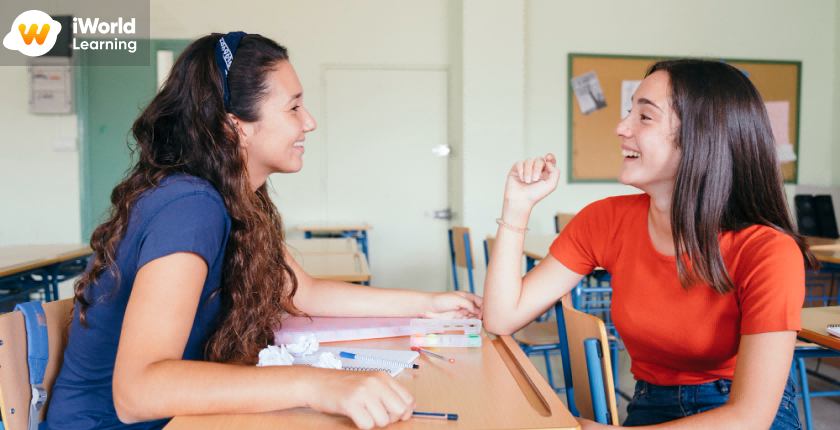
Private tuition concentrates all the tutor's attention on one student for the full session. This means every minute of practice is observed and corrected in real time, every composition is reviewed line by line, and the pace of instruction adapts immediately to the student's understanding. For a Sec 1 student who is significantly behind in a specific skill — for example, a student who consistently scores below half marks in summary writing while performing adequately in other sections — private tuition can close that gap faster than a group setting because the entire session targets the single area of weakness without needing to accommodate other students' needs.
The limitations of private tuition are less about attention and more about two subtler factors. First, private tuition eliminates the healthy calibration that comes from comparing one's work against peers: a student who consistently receives tutor approval in a one-to-one setting may develop an inflated sense of their own writing quality, only to be surprised by school assessment results. Second, private tuition puts the entire learning dynamic on the relationship between one student and one tutor — if that dynamic does not click, there is no peer interaction to sustain engagement.
Decision Table: When Each Format Works Best for Secondary 1 English
| Student Profile | Recommended Format | Reason |
|---|---|---|
| Transitioning well from PSLE; needs broad syllabus coverage across writing, comprehension, and summary | Small group (4–8 students) | Structured syllabus coverage with peer discussion and individual feedback; cost-effective for broad skill development |
| Strong in comprehension and summary but weak specifically in argumentative writing | Private tuition (short-term) | Targeted intensive work on one skill; transition back to group once the gap closes |
| Quiet or lacks confidence; benefits from hearing other students discuss answers | Small group | Peer modelling of discussion norms; group interaction builds the oral communication skills needed for Paper 4 |
| Very strong writer; needs extension beyond standard syllabus | Private tuition or advanced small group | Extension content requires individualised material selection; a general group class may not stretch the student |
| Busy CCA schedule; needs flexible timing | Private tuition | Individual scheduling can accommodate irregular availability; group classes follow fixed timetables |
Cost Comparison: What You Pay For in Each Format
Private Sec 1 English tuition in Singapore typically costs S$50–80 per hour, while small-group centre-based tuition costs S$30–60 per hour per student. A 2-hour private session at S$60 per hour costs S$120; a 2-hour small-group session at S$40 per hour costs S$80. Over a school term of ten weeks, the difference is S$400 — significant but not the whole picture.
The more useful comparison is cost per minute of individual feedback. In a 2-hour group class with six students, a skilled tutor might provide roughly 15–20 minutes of direct individual attention to each student. At S$80 per session, that is approximately S$4–5 per minute of individual feedback. In a 2-hour private session at S$120, the student receives virtually the entire 120 minutes as individual attention — approximately S$1 per minute. On this measure, private tuition delivers more individual attention per dollar. But attention is only one component of learning. The peer discussion, comparison, and oral participation that occur in group settings have their own educational value that does not show up in a per-minute calculation.
How iWorld Learning's Small-Group Model Addresses the Trade-Off
The Middle School English programme at iWorld Learning uses small-group classes capped at eight students, designed to maximise individual writing feedback while retaining the benefits of peer learning. Each session includes dedicated time for the tutor to review each student's composition individually — not just a score but marginal comments on structure, argument development, and language accuracy. The group discussion component allows students to compare summary-writing approaches and comprehension answers, developing the evaluative judgement that they will need for the higher-order comprehension and summary questions in upper secondary. Teachers are internationally certified with TESOL or TEFL qualifications and understand both the MOE secondary English syllabus and the CEFR proficiency framework. For students who need additional one-to-one support, iWorld Learning can advise on the best approach — sometimes a short block of private sessions targeting a specific gap, followed by a return to the group programme for ongoing syllabus coverage. Visit the iWorld Learning campuses at Tanjong Pagar or Somerset to discuss your child's needs, or contact us for a placement assessment.
FAQ
Does private tuition always produce faster improvement than group tuition?
Not necessarily. For broad skill development across multiple areas — writing, comprehension, summary, and oral — a well-structured group programme often produces comparable or better outcomes because students learn from peer discussion and comparison. Private tuition produces faster results when the student has one specific, significant weakness that needs intensive targeting, such as summary writing technique or argumentative structure.
What class size is considered "small group" for English tuition?
A class of four to eight students is generally considered small-group English tuition. Below four students, the group discussion dynamic weakens. Above eight, the tutor's ability to provide individual feedback on each student's composition during a single session drops significantly, which reduces the primary benefit of small-group learning.
Can I combine group tuition with occasional private sessions?
Yes, and this combination can work well. A student attends weekly group sessions for structured syllabus coverage and peer learning, supplemented by a private session once or twice a month targeting a specific weakness identified by the group tutor. This hybrid approach captures the benefits of both formats without the full cost of private tuition.
How do I know if my child would do better in a group or private setting?
Observe how your child responds to school English lessons. If they participate actively in class discussions, ask questions, and benefit from hearing other students' answers, they are likely well suited to a group format. If they are quiet, avoid speaking up, and produce better work when working alone with a teacher's undivided attention, private tuition may be the better starting point.
Summary
The small-group versus private tuition decision for Secondary 1 English is best made by matching format to student profile rather than defaulting to one or the other. Small-group tuition offers the best balance of individual feedback, peer learning, syllabus coverage, and cost for most Sec 1 students transitioning from PSLE English to the broader demands of secondary school. Private tuition serves a valuable but more specific role — intensive targeting of a single skill gap, extension beyond syllabus, or scheduling flexibility. The right question is not "which format is better" but "which format matches what my child needs right now."
Explore the small-group Middle School English programme at iWorld Learning, where students work with experienced, internationally certified teachers in classes of no more than eight. Contact us to discuss your child's needs and arrange a placement assessment at the Tanjong Pagar or Somerset campus.
相关文章
Recommended Reading
Popular Articles
-
English Teacher Salary in Singapore: A Complete 2026 Guide
-
The Ultimate english learning apps Bank: Categorized & Explained
-
British Council IELTS in 2026: What Changed, What It Costs, and How to Prepare
-
The Complete 2026 Blueprint for O Level English Oral Topics 2026 Format & Strategy
-
IELTS Price in 2026: What Test-Takers Actually Pay (And How to Spend Less)
-
IELTS Test Format, Scoring, and Key Changes for 2026 Explained
-
IELTS Exam Fee 2026: Complete Guide to Costs, Payment & Savings
-
PSLE 2026: Complete Guide to Exam Dates, Scoring System, and Preparation Strategies
-
IELTS Test Dates 2026: Monthly Schedule, Booking Strategy, and Prep Timeline
-
The Top 10 Tuition Centres in Singapore (2025) – A Curated Review for Parents & Students
latest articles
-
Limited Synonyms: Restricted, Finite, or Scarce?
-
From Many to One: Formal Alternatives for a Latin Motto
-
Domestic Partner Meaning: Relationship and Legal Context
-
English Tuition Near an MRT: Look Beyond Location
-
Arachnid Meaning: A Dictionary Guide With Examples
-
Seldom Meaning: Position, Tone, and Examples
-
Hosanna Meaning: Praise, Prayer, and Context
-
Sophocles Meaning: Name, Context, and Pronunciation
-
Primary Composition at Home: A Practical Writing Routine
-
Ares Meaning: The Greek God and Modern Proper Name