Tuition Centre vs Home Tutor: The Primary English Decision Grid
For parents of primary school children in Singapore, deciding between enrolling in a dedicated tuition centre versus hiring a private home tutor for English is one of the most consequential decisions shaping a child's academic development. As students transition from lower primary foundational literacy (Primary 1 and 2) to the high-stakes diagnostic testing of Primary 3 through Primary 6, the linguistic demands of the Singapore Ministry of Education (MOE) curriculum escalate dramatically. While private home tutors offer doorstep convenience, personalized scheduling, and customized attention, they frequently lack structured curriculum development, proprietary diagnostic materials, and the peer interactive environment essential for mastering Paper 4 Stimulus-Based Conversation. Conversely, established tuition centres provide vetted pedagogical frameworks, experienced curriculum specialists, and robust exam simulations, but vary considerably in class sizes and teaching quality. Selecting the appropriate educational architecture requires balancing curriculum depth, teacher accountability, and developmental suitability against family logistics and budget. This comprehensive decision grid breaks down core pedagogical differences, contrasts cost benchmarks, provides an analytical comparison matrix, examines an authentic Primary 5 case study, and delivers a parent diagnostic audit. This guide focuses on the Singapore MOE primary English curriculum leading to the PSLE.
The Evolution of Primary English: Why Homework Supervision Is Not Enough
Many parents initially engage a private home tutor under the assumption that the tutor will simply "supervise school homework and check spelling." In modern primary school English, this approach is fundamentally inadequate.
The Structural Rigour of Upper Primary English
From Primary 3 onward, English is no longer an exercise in passive reading and basic vocabulary tests. The PSLE examination format evaluates sophisticated cognitive and syntactic competencies:
- Synthesis and Transformation (Paper 2 Booklet B): Requires manipulating complex clauses using conditional conjunctions ("Neither... nor," "In spite of," "Much as") without tense or prepositional distortion.
- Comprehension Open-Ended: Demands inferential deduction of character motives and authorial craft, with severe penalties for direct lifting.
- Continuous Writing (Paper 1): Evaluates narrative structure, emotional character development, and atmospheric sensory pacing under strict 50-minute time limits.
- Stimulus-Based Conversation (Paper 4): Requires spontaneous personal commentary and societal reflection on a visual photographic prompt.
A university student home tutor who merely sits beside a child while they complete school worksheets cannot provide the systematic, rule-governed pedagogical instruction required to master these specialized components.
Evaluating the Four Core Dimensions
When weighing a tuition centre against a private home tutor, primary parents must evaluate four critical operational pillars:
1. Curriculum Architecture and Proprietary Worksheets
A reputable tuition centre invests significant resources in an in-house curriculum team that studies past-year top-school preliminary examination trends, tracks MOE syllabus updates, and authors scaffolded practice sets. Every worksheet is engineered to dismantle specific cognitive hurdles (such as subject-verb agreement traps or comprehension clue-hunting). In contrast, many private home tutors rely entirely on commercially printed assessment books purchased from bookstores or photocopied past-year exam papers downloaded online. These materials lack custom pedagogical progression, often leaving students confused by disparate answer keys.
2. Teacher Accountability and Professional Pedagogical Vetting
Tuition centres operate under formal organizational governance: teachers are vetted, observe standardized lesson structures, and participate in regular pedagogical training. If an instructor falls ill or demonstrates poor rapport, the centre provides replacement coverage and academic oversight. With private home tutors, parents bear the full burden of vetting credentials, monitoring lesson quality, and managing sudden cancellations. Finding an experienced, reliable private tutor who possesses authentic MOE syllabus insight requires considerable trial and error.
3. Oral Communication and Sociolinguistic Environment
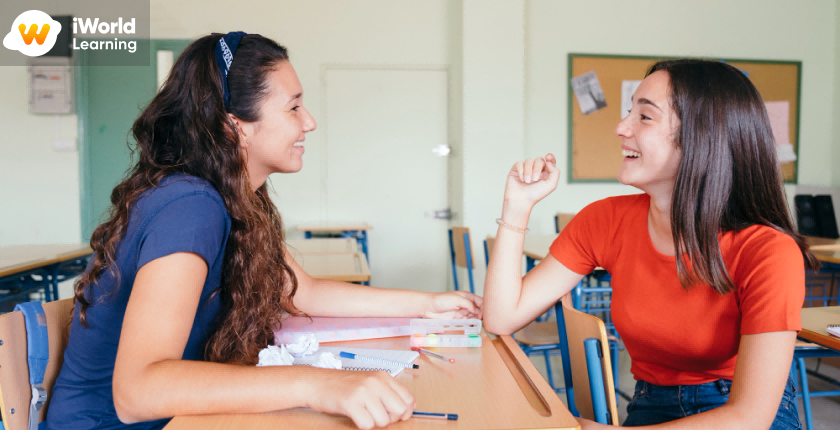
Language acquisition is fundamentally communicative. For Paper 4 Stimulus-Based Conversation, a child needs to hear diverse viewpoints, observe how peers express personal opinions, and practice unscripted discussions without fear. In a private home tutoring setting, the dynamic is strictly adult-to-child; children often feel interrogated or simply nod passively. In a focused small group of 6 to 8 peers at a centre, children observe classmates' expressive storytelling, which inspires them to articulate richer personal reflections.
4. Cost Structures and Logistical Flexibility
Home tuition offers zero commuting time for busy families, as the tutor travels directly to your residence. However, experienced private tutors charge significant premiums—often S$55 to S$90+ per hour for Upper Primary. In contrast, high-quality small-group centre tuition delivers access to specialized curriculum teams and master educators at S$45 to S$70 per hour, representing substantial annual savings while providing dedicated, distraction-free classroom environments.
The Primary English Decision Matrix
The following analytical matrix compares Private Home Tutoring, Small-Group Tuition Centres (6 to 8 students), and Large Commercial Franchise Centres across core educational parameters.
| Comparison Parameter | Private Home Tutor (1-to-1) | Small-Group Centre (6 to 8 Students) | Large Franchise Centre (15 to 20+ Students) |
|---|---|---|---|
| Curriculum Materials | Commercially bought assessment books or photocopied school papers. | Proprietary, scaffolded curriculum updated annually to target MOE exam traps. | Standardized corporate workbooks; often generic and inflexible. |
| Oral Communication Training | Limited; conversational practice restricted to one-on-one adult interaction. | Optimal; interactive peer discussions, collaborative brainstorming, mock oral drills. | Minimal; lecture-style format with negligible individual speaking time. |
| Writing Feedback Depth | Variable; depends entirely on individual tutor diligence and expertise. | High; line-by-line mark annotations using MOE/SEAB rubrics with model exemplar comparison. | Moderate to low; brief comments or outsourced marking by teaching assistants. |
| Learning Environment | Home environment; comfortable, but prone to domestic distractions (toys, screens). | Professional, focused classroom designed exclusively for academic concentration. | Crowded, busy commercial centre; can be noisy and distracting. |
| Average Monthly Cost (SGD) | S$400 – S$750+ (weekly 2-hour session). | S$320 – S$550 (weekly 2-hour session). | S$260 – S$420 (weekly 2-hour session). |
Deconstructing a Transition: An Authentic Primary 5 Case Study
Examining an authentic primary school student transition illustrates how switching learning environments unlocks rapid academic turnaround.
The Baseline Challenge
A Primary 5 student from a school in Bishan was struggling with the transition to Upper Primary English, with marks dropping from 82% in Primary 4 to 61% (AL5) in the mid-year examination. The parents hired a university undergraduate home tutor for two hours twice weekly to supervise the child's homework and drill assessment papers. Despite five months of tutoring, the child's preliminary grade remained stuck at 63% (AL5). In Paper 2 Booklet B, the student lost 8 out of 10 marks in Synthesis and Transformation and dropped 9 marks in Comprehension Cloze.
The Underlying Diagnosis
An objective skills audit revealed that the home tutor was merely checking whether the student's final answers matched the back of the assessment book. The tutor did not understand the underlying linguistic mechanisms: why "No sooner had" requires subject-auxiliary inversion, or how to identify forward-referencing context clues in cloze passages. The student was repeating identical guessing errors week after week.
The Small-Group Intervention
The parents terminated the home tutoring and enrolled the child in a focused small-group class of six students at a specialized centre. The intervention targeted three specific areas:
- Formulaic Synthesis Drills: The educator broke down the top twenty PSLE connector patterns using visual sentence-stripping exercises, teaching the child exactly how to identify clause boundaries and preserve original verb tenses.
- Comprehension Cloze Clue Mapping: The child learned to draw physical arrows linking blank spaces to semantic clues in preceding and succeeding paragraphs.
- Peer Oral Simulation: In the small group, the child practiced Stimulus-Based Conversation weekly, gaining conversational confidence from hearing classmates share diverse personal anecdotes.
The Outcome
In the end-of-year examination six months later, the student's Synthesis mark rose to 9/10, Comprehension Cloze improved by 6 marks, and overall performance surged to 81% (AL2), placing the child in a commanding position ahead of the PSLE year.
Common Parent Misconceptions in Primary Tuition
Parents navigating tuition options frequently harbor three persistent misunderstandings.
Misconception 1: "A Home Tutor Is Automatically More Attentive Because They Are in My Living Room"
Physical presence does not equal pedagogical attentiveness. Many home tutors spend significant portions of the lesson watching the child silently complete worksheets or checking their personal phones while the child writes. Real attentiveness is measured by the depth of diagnostic feedback and real-time cognitive questioning, which experienced centre educators deliver consistently.
Misconception 2: "Primary School English Is Easy Enough for Any Tutor to Teach"
While primary school math and science follow straightforward formulas, primary English requires nuanced understanding of SEAB marking criteria. Subtle differences between acceptable paraphrasing and direct-lifting penalties in open-ended comprehension require professional pedagogical calibration.
Misconception 3: "Completing More Worksheets Automatically Yields Higher Marks"
Assigning a child three assessment books a week without teaching the underlying rules simply reinforces bad habits. Quality of diagnostic feedback consistently outperforms sheer quantity of unanalyzed drilling.
The Primary English Tuition Selection Protocol
Evaluate your prospective tuition option against this six-point diagnostic checklist before committing to an arrangement:
- Curriculum Transparency: Can the provider show you their structured, week-by-week curriculum roadmaps designed specifically for the latest MOE syllabus?
- Diagnostic Marking Depth: Does the teacher provide explicit, line-by-line mark annotations on continuous writing compositions, or merely a holistic grade?
- Interactive Oral Opportunities: Does the weekly lesson plan dedicate at least 20 minutes to unscripted, interactive Stimulus-Based Conversation training?
- Synthesis Methodology: Does the educator teach explicit syntactic rules for clause transformation, or do they tell the child to rely on "what sounds right"?
- Class Size Cap: If choosing a centre, is the physical classroom strictly limited to 6 to 8 students to preserve individual attention?
- Student Engagement: Does your child emerge from the lesson capable of explaining a concrete rule or strategy they learned that day?
Primary English Excellence at iWorld Learning
At iWorld Learning, located at TripleOne Somerset (111 Somerset Road), we specialize in bridging foundational literacy gaps and nurturing confident, articulate primary scholars. Our Primary School English programme is conducted exclusively in focused small cohorts of 6 to 8 learners. Our dedicated primary specialists utilize proprietary, scaffolded curriculum materials that demystify complex Synthesis and Transformation rules, teach surgical reading comprehension inference techniques, and inspire creative narrative composition. Through weekly unscripted oral coaching and personalized line-by-line feedback, our students build the academic resilience and linguistic clarity needed to achieve AL1 excellence in the PSLE.
Conclusion: Setting the Foundation for Lifelong Confidence
The choice between a tuition centre and a home tutor is not merely a matter of convenience; it is an investment in your child's intellectual development. By choosing a structured, small-group learning environment that combines proprietary curriculum rigour with dynamic peer interaction, parents ensure their children navigate primary school with confidence, clarity, and enduring academic distinction.
Related Articles
Recommended Reading
Popular Articles
-
English Teacher Salary in Singapore: A Complete 2026 Guide
-
The Ultimate english learning apps Bank: Categorized & Explained
-
British Council IELTS in 2026: What Changed, What It Costs, and How to Prepare
-
IELTS Price in 2026: What Test-Takers Actually Pay (And How to Spend Less)
-
The Complete 2026 Blueprint for O Level English Oral Topics 2026 Format & Strategy
-
IELTS Test Format, Scoring, and Key Changes for 2026 Explained
-
IELTS Test Dates 2026: Monthly Schedule, Booking Strategy, and Prep Timeline
-
IELTS Exam Fee 2026: Complete Guide to Costs, Payment & Savings
-
PSLE 2026: Complete Guide to Exam Dates, Scoring System, and Preparation Strategies
-
How Does Paper 1 English PSLE Work and What Are the Key Changes in 2026?
latest articles
-
How to Choose an Intensive English Course Near You
-
How to Compare Secondary English Tuition Centres
-
English Home Tutor Rates in Singapore: 2026 Cost Guide
-
Which English school in Singapore offers small classes and experienced teachers?
-
Cultivate Synonyms: 7 Mistakes That Change the Meaning
-
Which English language schools in Singapore offer personalised learning programmes?
-
What should I look for when choosing an English tuition centre in Singapore?
-
What are the best English learning centres near Orchard Road in Singapore?
-
Small vs Large English Tuition Groups for Secondary Students
-
Which English school in Singapore offers courses for both adults and children?