Creative Writing for Primary School Singapore: From First Sentences to PSLE-Ready Compositions
Why Creative Writing Matters for Primary School Students in Singapore
Creative writing is more than just putting words on paper. For primary school students in Singapore, it is a foundational skill that shapes how they think, communicate, and perform academically. The PSLE English Paper 1, which tests both situational writing and continuous composition, places significant weight on a student's ability to craft coherent, vivid, and structured narratives. But the benefits of creative writing extend far beyond exam preparation.
Children who practise creative writing regularly develop stronger vocabularies, better grammar instincts, and a natural feel for sentence variety—switching between simple, compound, and complex structures with ease. They also build emotional intelligence, learning to articulate feelings and see the world through different perspectives. In a competitive education system like Singapore's, these advantages compound over time.
What Creative Writing Actually Involves at the Primary Level
At the primary school level, creative writing in Singapore covers a range of skills that build progressively from lower to upper primary:
- Descriptive writing — using sensory details (sight, sound, touch, smell, taste) to bring scenes to life
- Narrative structure — building stories with a clear beginning, middle, climax, and resolution
- Character development — creating believable characters with consistent motivations and personalities
- Dialogue writing — using conversations to reveal emotions and advance the plot
- Literary devices — similes, metaphors, personification, hyperbole, and alliteration
- Situational writing — composing emails, letters, and reports for specific purposes (upper primary)
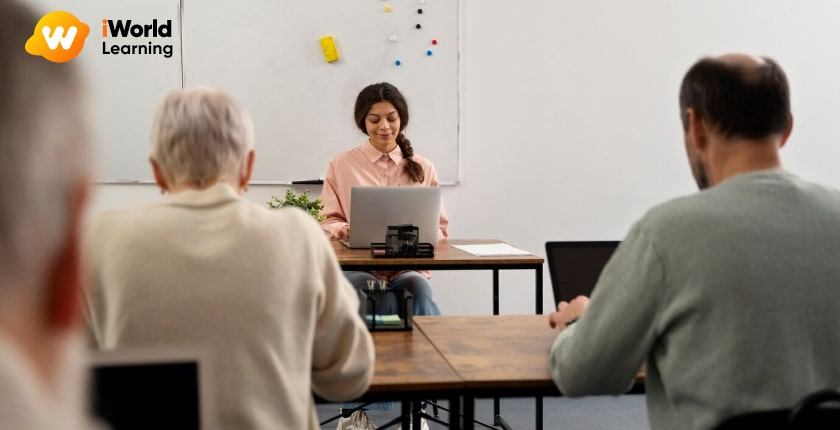
Many enrichment centres in Singapore follow a structured 6-step writing process: brainstorm, organise ideas (web), write, improve, correct errors, and publish. This mirrors the approach recommended by the Ministry of Education (MOE) and ensures students develop both creativity and discipline in their writing.
Key Techniques That Transform a Child's Writing
The difference between a flat composition and one that scores well often comes down to a handful of techniques. Here are the most impactful ones taught in Singapore's creative writing programmes:
Show, Not Tell
Rather than stating "John was angry," a skilled writer describes clenched fists, a reddening face, or a trembling voice. This technique makes writing immersive and is heavily emphasised in PSLE preparation.
Sensory Description
Encouraging children to describe what a character sees, hears, smells, tastes, and feels creates vivid imagery that examiners reward. For example, instead of "the market was busy," a child might write "the market buzzed with the chatter of bargaining aunties and the sizzle of satay stalls."
Suspense and Pacing
Upper primary students learn to build tension through short sentences, cliffhangers, and foreshadowing—techniques that elevate a simple story into something gripping.
Varied Sentence Structures
Using fronted adverbials ("Breathless from the run, she..."), passive voice, and a mix of sentence lengths demonstrates language mastery. Studies suggest children who engage in creative writing develop an enhanced ability to modify sentence structures to better express their ideas.
How Creative Writing Supports Academic Performance
The skills developed through creative writing transfer directly to exam performance. Here is how specific writing abilities map to key assessment areas:
| Creative Writing Skill | Exam Benefit |
|---|---|
| Vivid vocabulary and imagery | Higher marks in PSLE composition content and language |
| Logical story structure | Better organisation scores in both composition and comprehension |
| Dialogue and expression | Improved oral exam performance through confidence in expression |
| Situational writing formats | Direct preparation for PSLE situational writing component |
| Editing and proofreading | Fewer grammatical errors across all written papers |
Children who write creatively also tend to perform better in comprehension tasks, because the act of crafting stories deepens their understanding of how texts are constructed.
When and How to Start Creative Writing Training
Most children in Singapore are ready for structured creative writing classes between Primary 2 and Primary 3, when they have developed basic sentence construction skills. Some centres accept younger learners, but these programmes typically use games, drawing, and oral storytelling rather than heavy writing exercises.
For parents considering enrichment options, here are practical factors to evaluate:
- Curriculum alignment — Look for programmes that align with the MOE syllabus and prepare students for PSLE requirements
- Class size — Smaller classes (typically 6–10 students) allow for personalised feedback, which is critical for writing improvement
- Teaching approach — Prioritise centres that nurture imagination and self-expression rather than those focused solely on memorising model essays
- Trial classes — Many centres offer trial sessions; observe whether your child is engaged and motivated
- Feedback quality — Detailed, constructive feedback on each piece of writing is more valuable than generic praise
Practical Tips for Parents to Support Writing at Home
Enrichment classes are only one part of the equation. Research and experienced educators consistently recommend the following home practices:
Short, frequent practice works best. Twenty minutes of writing twice a week is far more effective than a single two-hour session. Use simple prompts like "Describe what you saw on the way to school today" or "Write three sentences about a character who finds something unexpected."
Encourage wide reading. Exposure to different genres—fairy tales, science fiction, mystery, poetry—broadens a child's understanding of what is possible in writing. Children who read widely naturally develop richer vocabularies and more varied writing styles.
Focus on ideas first, corrections later. If a child fears making mistakes, they will write safe, boring sentences. Create a supportive environment where experimentation is valued. Editing and grammar corrections come after the ideas are on paper.
Use the story mountain framework. Teach children to plan their stories using a visual arc: introduction, rising action, climax, falling action, and resolution. This simple structure dramatically improves the coherence of young writers' compositions.
Common Challenges and How to Overcome Them
Many primary school children in Singapore face specific hurdles when learning creative writing:
- Blank page syndrome: Use picture prompts, word banks, or "what if" questions to spark ideas. The goal is to get words flowing without pressure.
- Repetitive vocabulary: Keep a personal "better words" list. Replace common words like "happy" with "delighted," "thrilled," or "overjoyed" to build variety.
- Weak endings: Many children rush their conclusions. Teach them to write endings that reflect on the events or show how a character has changed.
- Over-reliance on memorised phrases: While good phrases are useful, encourage children to adapt them to their specific story context rather than inserting them mechanically.
Choosing the Right Creative Writing Programme in Singapore
Singapore has no shortage of creative writing enrichment centres, but not all programmes are created equal. Here is what separates effective programmes from the rest:
The best programmes build skills progressively, starting with foundational techniques like sensory description and basic story structure in lower primary, then advancing to complex narrative techniques like suspense, flashbacks, and situational writing in upper primary. They provide individualised feedback on every piece of writing, not generic comments. They also create opportunities for students to share their work, building confidence and motivation.
For families seeking a programme that combines MOE-aligned curriculum with small class sizes and immersive teaching methods, iWorld Learning offers creative writing courses designed specifically for primary school students in Singapore. Their approach focuses on building real writing skills through structured practice, personalised feedback, and techniques students can apply immediately in school and exams. With experienced ESL-certified instructors and a curriculum tailored to Asian learners' specific challenges, iWorld Learning helps children move from struggling with blank pages to writing with confidence.
The Long-Term Value of Creative Writing Skills
The benefits of developing strong creative writing skills in primary school extend well beyond the PSLE. Children who learn to write well also learn to think clearly, organise their ideas logically, and communicate persuasively—skills that serve them in secondary school, university, and eventually the workplace.
Creative writing nurtures empathy, critical thinking, and self-expression. It gives children a voice. And in Singapore's education system, where English proficiency is a key differentiator, investing in creative writing skills early is one of the most impactful decisions a parent can make.
相关文章
Recommended Reading
Popular Articles
-
English Teacher Salary in Singapore: A Complete 2026 Guide
-
The Ultimate english learning apps Bank: Categorized & Explained
-
British Council IELTS in 2026: What Changed, What It Costs, and How to Prepare
-
The Complete 2026 Blueprint for O Level English Oral Topics 2026 Format & Strategy
-
IELTS Price in 2026: What Test-Takers Actually Pay (And How to Spend Less)
-
IELTS Test Format, Scoring, and Key Changes for 2026 Explained
-
IELTS Exam Fee 2026: Complete Guide to Costs, Payment & Savings
-
PSLE 2026: Complete Guide to Exam Dates, Scoring System, and Preparation Strategies
-
IELTS Test Dates 2026: Monthly Schedule, Booking Strategy, and Prep Timeline
-
The Top 10 Tuition Centres in Singapore (2025) – A Curated Review for Parents & Students
latest articles
-
How to Read a Marked English Script
-
Write a P3 Why-Answer with a Clue and Because
-
Should You Continue Primary 6 English Tuition After One Term?
-
Comparing PSLE English Tuition - 12 Questions for Parents
-
IELTS General Training for Singapore PR Plans - Check the Requirement First
-
IELTS Speaking Part 3 - Build Answers Beyond One Opinion
-
O-Level English Exam Strategy - Match Revision to the Weakest Process
-
Build a Primary-School Reading Habit That Improves Understanding
-
PSLE Grammar and Vocabulary Tuition - Diagnose the Error Before Choosing
-
Build the Reasoning Skills PSLE English Questions Actually Need