Teach Primary 1 English: A Home Routine That Builds Fluency
Quick Answer: Primary 1 English develops fastest through short, repeated experiences that connect sounds, words, sentences, stories and real conversation. A home routine should build confidence and accuracy without turning every interaction into correction or formal tuition.
Parents of Primary 1 children, including multilingual and newly arrived families adjusting to English-medium learning. This page is updated for the 2026 examination and transition context and should be checked against the latest official SEAB or MOE guidance before a high-stakes decision.
What This Topic Means
Primary 1 English instruction is an early-literacy approach that helps children connect spoken language, print and meaning so they can read, write and communicate with increasing independence.
Early learning should support the broad primary English outcomes that later underpin PSLE: understanding spoken and written texts and communicating appropriately through speech and writing. At Primary 1, foundations and willingness to use English matter more than examination drilling.
A 25-Minute Home Routine
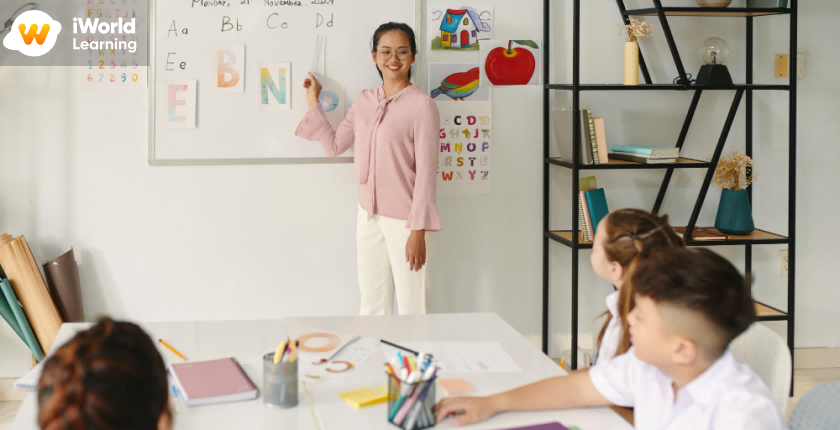
The routine can be shortened on busy days; regularity and responsive feedback matter more than a long lesson.
| Minutes | Activity | Adult role | Skill built |
|---|---|---|---|
| 5 | Sound and word review | Model, blend and notice patterns | Decoding and spelling |
| 8 | Shared reading | Ask prediction and meaning questions | Fluency and comprehension |
| 5 | Talk about the text | Prompt complete ideas without scripting | Vocabulary and oral organisation |
| 5 | Write one to three sentences | Support planning, then let the child attempt | Sentence control and expression |
| 2 | Celebrate and choose one correction | Name progress and one next step | Confidence and self-monitoring |
Teaching Moves That Help Young Learners
- Model before asking: Read or think aloud once so the child understands the process, not only the expected answer.
- Use concrete conversation: Talk about school, meals, transport, pictures and stories so vocabulary connects to lived meaning.
- Correct selectively: Choose the error that matters for the lesson and avoid interrupting every sentence.
- Revisit familiar books: Rereading builds fluency, expression and confidence while freeing attention for deeper comprehension.
- End with success: Finish on a task the child can complete independently to strengthen willingness for the next session.
What Can Slow Primary 1 Progress
- Starting with long worksheets: Young learners may tire before they practise meaningful reading or communication.
- Correcting pronunciation harshly: Clear modelling and another attempt are more useful than creating fear of speaking.
- Advancing before foundations are secure: Difficult books do not automatically produce faster growth when decoding and vocabulary remain fragile.
- Comparing children publicly: Development varies with prior exposure, language background and confidence.
When a Small-Group Class May Help
A class can help when the child needs systematic phonics, more English interaction or professional feedback beyond what home routines provide. iWorld Learning's preschool and primary pathways use small-group activities and tailored goals to create speaking opportunities while strengthening reading and writing foundations.
Families can also review iWorld Learning's teaching team, compare the wider English course pathways and read how the learning approach works before choosing support.
FAQ
Should Primary 1 children learn phonics?
Phonics can help children connect letters and sounds so they decode unfamiliar words. It should sit alongside vocabulary, comprehension, oral language and meaningful reading rather than replace them.
How often should a Primary 1 child read in English?
Frequent short reading is usually more manageable than occasional long sessions. Choose texts the child can mostly understand, reread favourites and discuss meaning instead of measuring success only by pages.
What if my child refuses to speak English at home?
Reduce performance pressure. Use games, picture talk, shared reading and predictable phrases, allow preparation time and respond to meaning before correcting form. Seek support if anxiety or comprehension difficulties persist.
When should parents consider Primary 1 English classes?
Consider classes when the child needs structured phonics, broader vocabulary, guided writing or more interaction than home and school currently provide. Check class size, level matching, feedback and whether the child feels safe participating.
Summary
Primary 1 English grows through connected practice: hear language, decode print, discuss meaning and write a small amount. Keep the routine short, model the process, correct selectively and choose support that protects confidence while building strong foundations.
Next step: explore Primary 1 English support →
相关文章
Recommended Reading
Popular Articles
-
English Teacher Salary in Singapore: A Complete 2026 Guide
-
The Ultimate english learning apps Bank: Categorized & Explained
-
British Council IELTS in 2026: What Changed, What It Costs, and How to Prepare
-
The Complete 2026 Blueprint for O Level English Oral Topics 2026 Format & Strategy
-
IELTS Price in 2026: What Test-Takers Actually Pay (And How to Spend Less)
-
IELTS Test Format, Scoring, and Key Changes for 2026 Explained
-
IELTS Exam Fee 2026: Complete Guide to Costs, Payment & Savings
-
PSLE 2026: Complete Guide to Exam Dates, Scoring System, and Preparation Strategies
-
IELTS Test Dates 2026: Monthly Schedule, Booking Strategy, and Prep Timeline
-
The Top 10 Tuition Centres in Singapore (2025) – A Curated Review for Parents & Students
latest articles
-
How to Read a Marked English Script
-
Write a P3 Why-Answer with a Clue and Because
-
Should You Continue Primary 6 English Tuition After One Term?
-
Comparing PSLE English Tuition - 12 Questions for Parents
-
IELTS General Training for Singapore PR Plans - Check the Requirement First
-
IELTS Speaking Part 3 - Build Answers Beyond One Opinion
-
O-Level English Exam Strategy - Match Revision to the Weakest Process
-
Build a Primary-School Reading Habit That Improves Understanding
-
PSLE Grammar and Vocabulary Tuition - Diagnose the Error Before Choosing
-
Build the Reasoning Skills PSLE English Questions Actually Need