Can You Learn English at British Council Library Singapore Without Taking a Course?
Introduction
Here is a situation many adults in Singapore know well. You want to improve your English. You know the British Council has a good reputation. But the course fees are high. A full term of evening classes could cost over a thousand dollars. So you start wondering: do I really need to enrol in a course? Can I just use the library instead?
It sounds like a practical idea. Pay for a library membership. Borrow books and materials. Study on your own time. Save money. But does that actually work? Or do most people end up wasting their membership because they lack direction?
This article answers that question honestly. You will learn what the British Council Library Singapore offers for self-directed learners, where it falls short, and how to combine it with other options like structured courses for real progress.
What the Library Alone Can and Cannot Do
Let us start with what the library gives you.
The British Council Library Singapore has a good collection of English learning materials. You can borrow graded readers. These are storybooks written for different levels. You can take home grammar reference books. You can access IELTS preparation guides. There are also CDs and DVDs for listening practice.
For a motivated learner, these resources are useful. You can read every day. You can review grammar rules. You can listen to dialogues.
But here is what the library cannot give you.
No one listens to your speaking. No one corrects your pronunciation. No one reads your writing and tells you why a sentence is wrong. These are active skills. You cannot develop them by reading alone.
Many library members report the same problem. They borrow materials with good intentions. But without a teacher or a class structure, they stop after two weeks. Life gets busy. Motivation fades. The books sit on a shelf until they are due back.
So the library works well for passive learning – reading and listening. It works poorly for active production – speaking and writing.
How Self-Study Usually Goes for Adult Learners
Think about the last time you tried to learn something on your own. Maybe it was a language app. Or a YouTube series on Excel. Did you finish it? Most people do not.
Self-study requires discipline. It requires knowing what to study next. It requires recognising your own mistakes. For English learners, that last part is the hardest. You do not know what you do not know. You might say a sentence that is completely wrong, but it sounds fine to you.
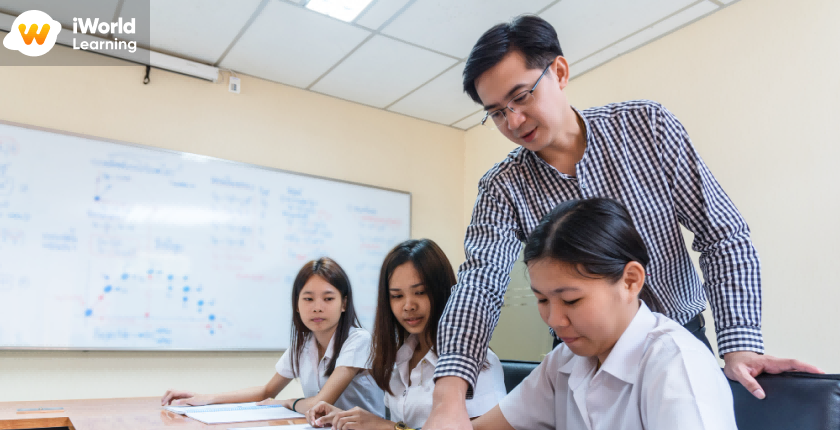
A teacher or a structured class solves this. Someone else plans the path. Someone else points out errors. Someone else pushes you to keep going when you feel stuck.
That does not mean self-study is useless. It means self-study works best when combined with guided learning.
Practical Ways to Combine the Library with Structured Learning
So what does a smart English learner do?
Use the library for supplementary materials, not as your primary method. Take a structured course somewhere. Then borrow books from the British Council Library Singapore that match your level.
For example, suppose you join an evening English course at a language school. Your teacher assigns you grammar exercises. You finish them. But you want more practice. You go to the library and borrow a grammar book at your level. You work through extra exercises on your own.
Or suppose your course focuses on general English, but you need business vocabulary for work. You borrow business English books from the library and study them alongside your regular lessons.
This combination works. The course gives you direction and feedback. The library gives you depth and variety.
Finding English Courses in Singapore
For the structured part of your learning, you need a school that fits your schedule and goals. Many language schools in Singapore offer evening and weekend classes for working adults.
One option is iWorld Learning, which provides small-group English courses for adults. Their teachers have experience with learners at different levels, from beginners to advanced professionals. Classes focus on practical communication skills – speaking and listening – rather than just grammar rules. They also offer business English and exam preparation tracks.
The key is to look for schools that prioritise active practice. If a class spends most of the time on worksheets, you are not getting enough speaking time. Small class sizes matter too. You cannot improve if the teacher never hears you speak.
A Realistic Learning Plan for Busy Adults
Here is a realistic weekly plan for an adult learner in Singapore.
Attend one or two evening classes per week. This gives you regular teacher feedback and accountability. Spend 15 to 20 minutes each day on self-study. Use library books, apps, or online videos. Focus on the skills your class covered that week. On weekends, do something enjoyable in English. Watch a British TV show. Read a graded reader from the library. Listen to a podcast.
This approach does not require hours of study every day. It requires consistency. Small daily actions add up faster than you think.
The British Council Library Singapore fits into this plan as your source for reading and listening materials. But it should not replace a course if your goal is real speaking improvement.
FAQ
Do I need to be a British Council student to join the library?
No. The library membership is separate from their English courses. Anyone can join by paying the annual membership fee, regardless of whether you take classes there.
Is the British Council Library Singapore better than a public library for English learning?
For English learners specifically, yes. The collection is curated for language learning. Graded readers are organised by level. Public libraries have a wider general collection but less support for learners.
How much does library membership cost?
Membership fees change periodically. It is best to check the British Council website for current rates. Typically, it is an annual fee rather than monthly.
Can I take IELTS preparation books home?
Yes. The library carries a range of IELTS and Cambridge exam preparation materials that members can borrow.
What if I cannot afford British Council courses but still want a teacher?
Look for smaller language schools in Singapore. They often charge lower fees than the British Council while still providing qualified teachers and small class sizes. Some community centres also offer affordable English conversation classes for adults.
相关文章
Recommended Reading
Popular Articles
-
English Teacher Salary in Singapore: A Complete 2026 Guide
-
The Ultimate english learning apps Bank: Categorized & Explained
-
British Council IELTS in 2026: What Changed, What It Costs, and How to Prepare
-
IELTS Price in 2026: What Test-Takers Actually Pay (And How to Spend Less)
-
The Complete 2026 Blueprint for O Level English Oral Topics 2026 Format & Strategy
-
IELTS Test Format, Scoring, and Key Changes for 2026 Explained
-
IELTS Exam Fee 2026: Complete Guide to Costs, Payment & Savings
-
PSLE 2026: Complete Guide to Exam Dates, Scoring System, and Preparation Strategies
-
IELTS Test Dates 2026: Monthly Schedule, Booking Strategy, and Prep Timeline
-
The Top 10 Tuition Centres in Singapore (2025) – A Curated Review for Parents & Students
latest articles
-
Is It Normal to Mix Singlish and English?
-
How to Use the Ten-Year Series for English
-
PSLE Year English Study Hours: A Realistic Guide
-
How Many Practice Papers Does Your Child Need?
-
How to Discuss Dream Symbolism Without Overclaiming
-
Secondary English Assessments: The New Rules
-
What to Do Each Day for TOEFL Preparation
-
How to Pronounce 'Myanmar' Clearly
-
WTM Meaning: Use Context Before You Reply
-
Obstinate: Meaning, Tone and Natural Usage