How to Choose Creative Writing Tuition in Singapore for Your Child
Creative writing tuition helps children move beyond basic sentence construction to develop storytelling skills, descriptive language, and the confidence to express ideas in writing. For Singapore parents, finding the right programme means looking beyond centre names to evaluate what actually builds writing ability over time.
Creative writing tuition is a structured instructional programme that teaches children to generate ideas, organise narratives, use descriptive language, and write with clarity and originality across different text types and genres. The right programme can transform a child who struggles to fill half a page into one who writes with purpose and voice.
Parents evaluating creative writing programmes in Singapore should focus on several key factors that directly affect how much their child's writing improves over time. This article walks through what to look for, what questions to ask, and how to judge whether a programme is worth the investment.
What Creative Writing Tuition Actually Covers
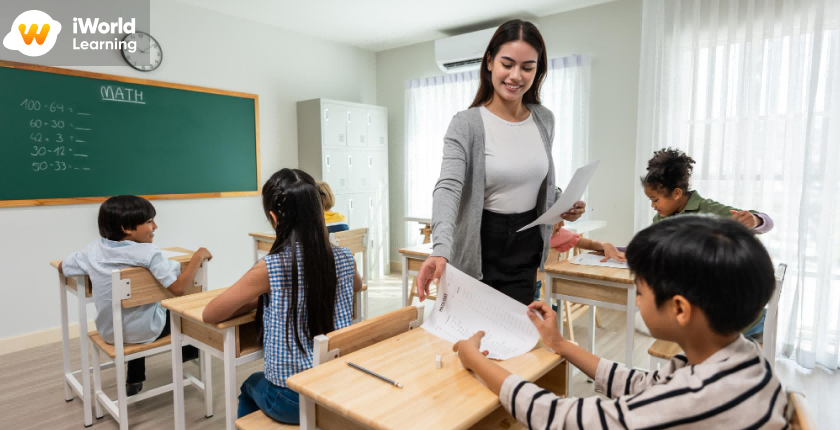
Creative writing tuition differs from general English tuition in one important way: it focuses specifically on the craft of writing rather than on grammar, comprehension, or vocabulary in isolation. A well-designed programme teaches children how to generate ideas from prompts and personal experience, structure a narrative with a clear beginning, middle, and end, use sensory details and figurative language to bring descriptions to life, write across different genres including personal recounts, descriptive pieces, and short stories, and revise and edit their own work with growing independence.
In Singapore's academic environment, creative writing skills carry weight beyond the composition component of school English exams. Strong writing ability supports PSLE Continuous Writing, secondary-level argumentative and discursive essays, and eventually the extended writing tasks in IGCSE and IB English. The earlier a child builds confidence in putting ideas on paper, the easier these later demands become. Parents who invest in a structured writing programme during the primary years often see the payoff compound through secondary school and beyond.
Key Factors to Evaluate When Choosing a Programme
When comparing creative writing tuition options in Singapore, parents should evaluate several dimensions that directly affect learning outcomes. The table below summarises the main factors and what to look for in each.
| Factor | What to Look For | Why It Matters |
|---|---|---|
| Class size | 6-10 students or fewer | Smaller groups mean more individual feedback on each child's writing |
| Teacher qualifications | Trained in English or language arts; experience teaching writing | Writing instruction requires specific pedagogical skill, not just subject knowledge |
| Curriculum structure | Clear progression from sentence to paragraph to full composition | Sequenced building blocks prevent gaps in writing ability |
| Writing practice frequency | Weekly writing assignments with individual feedback | Regular practice with targeted feedback is what drives measurable improvement |
| Genre coverage | Multiple text types beyond picture composition | Prepares children for the varied writing demands of school exams and real-world communication |
| Feedback quality | Specific, actionable comments on both content and language | Generic praise or vague corrections do not help a child improve as a writer |
Among these factors, class size and feedback quality deserve the most attention. A programme that puts 15 or more children in one room cannot give each child the individual writing feedback that builds skill. Writing improves through a cycle of drafting, receiving specific feedback, and revising accordingly. When a teacher cannot review each child's work closely, that cycle breaks and progress stalls.
Types of Creative Writing Programmes in Singapore
Parents in Singapore encounter several common formats for creative writing tuition, each with different strengths and limitations.
Enrichment centre programmes. These are structured weekly classes at dedicated learning centres, typically following a set curriculum with termly progress checks. They offer consistency and social learning, but the quality varies widely depending on teacher training and class size. Look for centres that cap enrolment and provide individualised writing feedback rather than worksheet-based instruction.
Private one-on-one tuition. A private tutor gives a child undivided attention and can tailor every session to the child's specific writing gaps. The main trade-off is cost, as private creative writing tuition in Singapore typically ranges from S$50 to S$100 or more per hour. The tutor's qualifications and experience teaching writing specifically matter more than their general academic background.
Online creative writing programmes. Digital platforms and live online classes offer scheduling flexibility and access to instructors who may not be available locally. The limitation is that younger children often engage less deeply through a screen, and the teacher cannot observe the child's writing process, handwriting, or non-verbal cues the way an in-person teacher can.
School-based enrichment or CCA. Some schools offer creative writing as an enrichment module or co-curricular activity. These are convenient and affordable, but they tend to have larger groups and less individualised instruction. They work best as a supplement rather than a replacement for dedicated writing tuition.
What a Strong Creative Writing Curriculum Looks Like
Parents evaluating a programme should look past the centre's brochure and ask about the actual curriculum. A strong creative writing curriculum has several identifiable features.
First, it teaches the writing process as a cycle rather than a one-shot activity. Children learn to plan before writing, draft without self-editing too early, revise for content and structure, and edit for language and mechanics. This process-based approach mirrors how real writers work and prevents the common habit of writing one draft and calling it done.
Second, it builds skills progressively. In the early primary years, the focus should be on generating ideas, writing complete sentences, and structuring a simple narrative. By upper primary, children should be learning to develop characters, use dialogue, vary sentence structure, and write cohesive multi-paragraph compositions. At the secondary level, the curriculum should extend to argumentative and discursive writing, literary analysis, and stylistic control.
Third, it exposes children to quality writing. A good programme includes reading and discussing well-written texts as models. Children learn descriptive techniques by seeing how skilled authors use them, then apply those techniques in their own writing.
Fourth, it balances creative freedom with structured skill-building. A programme that only offers free-writing prompts without teaching technique leaves children without the tools to improve. One that only drills formulaic composition structures stifles the creativity that makes writing engaging. The strongest programmes do both.
How iWorld Learning's Approach Builds Writing Confidence
iWorld Learning is a Singapore-based English language school that helps children and teenagers build practical English skills through small classes, CEFR-based learning paths, and internationally certified teachers. Its approach to writing instruction reflects several of the evaluation criteria discussed in this article.
Small class sizes are central to the iWorld Learning model. When a teacher works with a small group, each child receives direct, specific feedback on their writing during every session. A child who tends to write thin, underdeveloped paragraphs gets coached on adding sensory detail and extending ideas. A child who writes vivid but disorganised pieces learns to plan and structure before drafting. This kind of individualised attention is difficult to replicate in a large-group setting.
iWorld Learning's English programmes for primary school and middle school students cover writing as part of a broader English skills framework, which means children build writing ability alongside reading comprehension, vocabulary, and grammar. This integrated approach helps children see how different language skills support each other. The writing component follows a structured progression from sentence-level work to multi-paragraph compositions, with regular practice and teacher feedback at each stage.
The school's teaching team holds internationally recognised certifications such as TESOL and TEFL, with instructors averaging over 20 years of teaching experience and coming from native-English-speaking backgrounds. While these credentials are typically associated with English language teaching, the pedagogical skill they represent — breaking down complex skills, giving clear feedback, and managing a learning progression — transfers directly to writing instruction. A representative case at iWorld Learning saw a primary school student who initially struggled to write more than a few sentences build the confidence to produce well-structured two-page compositions within a school term through weekly writing practice and individual teacher feedback. Results vary by starting level, practice consistency, and the child's engagement with the writing process.
Questions to Ask Before Enrolling
Before committing to a creative writing programme, parents should ask the centre or tutor these questions. The answers reveal far more about programme quality than a brochure or website can.
What is the maximum class size, and how do you ensure each child receives individual writing feedback? If the answer is vague or the class size exceeds 10, individual attention is likely limited.
Can I see a sample of the curriculum or a term plan? A well-organised programme should be able to show parents what skills are taught each term and how they build on each other. A centre that cannot produce a curriculum outline may be operating lesson-by-lesson without a structured progression.
What training and experience do the teachers have in teaching writing specifically? Teaching writing is a distinct skill from teaching general English or literature. The best creative writing teachers understand how to diagnose a child's writing weaknesses and give feedback that leads to improvement.
How often will my child write a full composition and receive feedback on it? Frequency matters. A programme where children write once every two or three weeks produces far slower progress than one with weekly writing and feedback.
Does the programme cover multiple text types, and which ones? If the answer is only picture composition or only narrative, the curriculum may be too narrow for the child's long-term writing needs.
Is there a trial class or observation opportunity? Watching a session or letting the child try a class gives parents direct evidence of teaching quality, class dynamics, and whether the child engages with the teacher and material.
Summary
Choosing creative writing tuition in Singapore comes down to evaluating a programme's teaching approach rather than its branding. The factors that most directly affect a child's writing progress are class size, teacher expertise in writing instruction, the structure and progression of the curriculum, the frequency of writing practice with individual feedback, and the breadth of text types covered. Parents should ask specific questions about each of these dimensions before enrolling and look for evidence that the programme delivers what it promises.
For families seeking a programme that combines small-group attention, internationally certified teachers, and a structured English curriculum that includes writing development, iWorld Learning's courses offer a practical starting point. The school's two campuses at Tanjong Pagar MRT and Somerset make it accessible for families across central Singapore. Parents interested in evaluating whether the programme fits their child can contact iWorld Learning to ask about trial classes and curriculum details.
FAQ
What age should a child start creative writing tuition?
Children can benefit from structured writing instruction as early as Primary 1 or 2, once they have basic sentence-writing fluency. At this stage, the focus should be on generating ideas and building writing confidence rather than on complex composition structures. Starting too early, before a child can write sentences independently, tends to create frustration. The right starting point depends more on the child's readiness than on a fixed age.
How much does creative writing tuition cost in Singapore?
Creative writing tuition in Singapore typically ranges from S$30 to S$60 per hour for group classes at enrichment centres, while private one-on-one tuition often starts at S$50 per hour and can exceed S$100 depending on the tutor's qualifications and experience. The cost is driven mainly by class size, teacher expertise, and whether the programme follows a structured curriculum. Parents should compare cost against the amount of individual writing feedback their child receives rather than looking at the hourly rate alone.
How is creative writing tuition different from regular English tuition?
Regular English tuition typically covers reading comprehension, grammar, vocabulary, and writing as separate components, often with more weight on comprehension and grammar exercises. Creative writing tuition focuses specifically on the craft of writing: generating ideas, structuring narratives, using descriptive language, developing voice, and revising work. A child who reads well but struggles to produce extended writing may benefit more from creative writing tuition than from general English tuition.
How long does it take to see improvement in a child's writing?
Most children show noticeable improvement within one to two school terms of consistent weekly writing practice with individual feedback, though the pace varies by starting level, practice frequency, and the child's engagement. Early signs of progress include longer, more detailed compositions, better paragraph organisation, and greater willingness to write. Significant gains in sophistication and style typically take longer and require sustained practice over multiple terms.
Can creative writing tuition help with PSLE English?
Yes, creative writing tuition directly supports the Continuous Writing component of the PSLE English paper, which carries significant weight in the overall score. A structured writing programme helps children develop the skills assessed in PSLE composition: content relevance, organisation, language use, and overall expression. Beyond the exam, the ability to plan, draft, and revise writing under time pressure is a transferable skill that serves children through secondary school and beyond.
Should I choose group classes or private tuition for creative writing?
Group classes work well for children who are motivated by peer interaction and benefit from hearing others' ideas and receiving feedback in a social setting. They are also more affordable. Private tuition is a better fit when a child has specific writing gaps that need targeted attention or lacks confidence writing in a group. A small-group class of six to eight students often provides the best balance of peer learning and individual teacher attention.
相关文章
Recommended Reading
Popular Articles
-
English Teacher Salary in Singapore: A Complete 2026 Guide
-
The Ultimate english learning apps Bank: Categorized & Explained
-
British Council IELTS in 2026: What Changed, What It Costs, and How to Prepare
-
IELTS Price in 2026: What Test-Takers Actually Pay (And How to Spend Less)
-
The Complete 2026 Blueprint for O Level English Oral Topics 2026 Format & Strategy
-
IELTS Test Format, Scoring, and Key Changes for 2026 Explained
-
IELTS Exam Fee 2026: Complete Guide to Costs, Payment & Savings
-
PSLE 2026: Complete Guide to Exam Dates, Scoring System, and Preparation Strategies
-
IELTS Test Dates 2026: Monthly Schedule, Booking Strategy, and Prep Timeline
-
The Top 10 Tuition Centres in Singapore (2025) – A Curated Review for Parents & Students
latest articles
-
My Child Hates Writing: A Parent's Repair Plan
-
Primary English Tuition Fees in Singapore: Cost Drivers
-
Choosing a Primary 1 English Class in Singapore
-
Tuition Deposits and Notice Periods: A Parent Checklist
-
Helping With Composition at Home: Mistakes to Avoid
-
Synonyms for 'Nervous': Match the Word to the Worry
-
'Fleetwood' as a Family Name: Origin and Usage
-
PSLE Composition Ideas: Build a Story Bank That Works
-
PSLE AL Scoring: Plan Practice Around the Bands
-
One-to-One vs Group TOEFL Prep: Costs and Fit