P1 Preparation Class: How to Give Your Child a Strong Start in Primary 1 English
Quick Answer: A P1 preparation class helps preschool children — typically K2 — build the English skills they need to transition confidently into Primary 1: phonics and decoding, reading fluency, basic sentence writing, listening comprehension, and the oral confidence to speak up in a classroom. The best preparation classes develop these skills through structured, age-appropriate activities that make learning feel like exploration rather than pressure.
The jump from kindergarten to Primary 1 is one of the biggest transitions in a Singapore child's education. In kindergarten, English is learned through songs, stories, and play. In Primary 1, it becomes a formal subject — with a syllabus, specific learning outcomes, and assessments. A well-designed P1 preparation class bridges this gap: it introduces the skills children will need without introducing the stress they are not developmentally ready for. The goal is readiness, not acceleration — a child who enters P1 feeling capable and curious about English, not anxious about it.
A P1 preparation class is a structured English programme designed for children in the year before Primary 1 — typically K2 — that develops phonics, early reading, basic writing, listening, and oral communication skills in alignment with the Primary 1 MOE English syllabus expectations, while using age-appropriate, play-based teaching methods.
What Skills Does a P1 Preparation Class Cover?
A comprehensive P1 English preparation class builds readiness across these areas:
| Skill Area | What P1 Expects | What a Preparation Class Should Do |
|---|---|---|
| Phonics and decoding | Recognise letter sounds, blend sounds to read simple words, decode unfamiliar words | Systematic phonics instruction — not just alphabet recognition — covering blending, segmenting, and common digraphs in a structured sequence |
| Reading fluency | Read simple sentences and short passages with understanding | Daily reading practice with levelled readers, building from word-by-word reading toward sentence-level fluency and basic comprehension |
| Basic writing | Write simple sentences with correct spelling of common words, basic punctuation, and legible handwriting | Sentence construction — starting with subject-verb-object patterns — and guided writing of short personal texts (a few sentences about what they did at the weekend) |
| Listening comprehension | Follow simple instructions, understand a short story read aloud, answer basic questions | Listening activities with age-appropriate stories and instructions, followed by simple oral or pictorial responses |
| Oral communication | Speak clearly, express simple ideas, respond to questions, participate in class discussions | Show-and-tell, simple discussions about pictures or stories, and practice expressing thoughts in full sentences — in a supportive small-group setting |
When to Start P1 Preparation
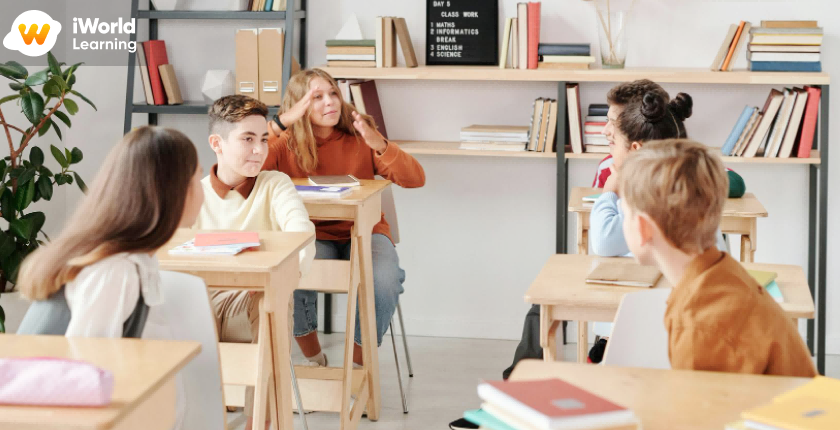
Most P1 preparation classes are designed for children in K2 — the year before they enter Primary 1 — typically starting in January or at the beginning of the school year. Starting in K2 provides a full 12 months of preparation without the risk of starting so early that the child burns out or loses interest before P1 even begins. Some parents begin structured English enrichment earlier — in K1 or even nursery — but earlier programmes should focus on building a love of language through stories, songs, and conversation, not on formal academic preparation. A child who enters K2 already enjoying English books and stories has a strong foundation; a child who enters K2 already tired of worksheets may have been started too early with the wrong approach.
How to Choose a P1 Preparation Class
Not all preparation classes take the same approach. When evaluating a P1 English preparation class, assess these factors:
Teacher-child interaction. A good P1 prep teacher knows how to engage young children — using varied activities, keeping verbal instructions short and clear, and balancing structure with warmth. Observe a class if possible: do the children look engaged or restless? Does the teacher respond to individual children or deliver the same script to everyone?
Class size. A group of 6–10 children is typical for a quality P1 preparation class. Small enough for individual attention — a teacher can listen to each child read aloud, check each child's writing — but large enough for peer interaction and social learning. Above 12, individual attention drops sharply.
Balance of skills. A class that only does worksheets is phonics drill wearing a preparation-class label. A class that only does songs and stories is kindergarten, not preparation. The best classes blend structured skill-building — phonics, sentence writing, oral practice — with age-appropriate activities that maintain engagement.
Alignment with P1 expectations. The class should be designed by someone who understands what Primary 1 English actually requires. iWorld Learning's preschool and P1 preparation programmes are developed by internationally certified teachers familiar with both early childhood education and the MOE Primary 1 English syllabus. Visit the Preschool English page to learn more.
What Parents Can Do at Home Alongside a Preparation Class
A once- or twice-weekly preparation class is most effective when reinforced by daily home practices that take minutes, not hours:
- Read aloud together every day — even just 10–15 minutes. The single most effective home practice for P1 readiness. Take turns reading, ask simple questions about the story, and let the child see you reading for enjoyment. Children who are read to daily enter P1 with larger vocabularies and stronger comprehension than children who are not, even when formal preparation is the same.
- Encourage talk, not just answers. Instead of asking "what did you do at school?", ask "tell me about the best thing that happened today." The goal is to build the child's ability to express ideas in full sentences — the foundation of oral communication and, later, composition writing.
- Provide writing for a purpose. A child who only writes in workbooks associates writing with drills. Let them write a shopping list, a birthday card message, a one-sentence diary entry, or a label for a drawing. Purposeful writing builds motivation and shows the child that writing is communication, not just an exercise.
FAQ
Is a P1 preparation class necessary, or is kindergarten enough?
It depends on the child's current skills and the kindergarten they attend. Some kindergartens provide strong phonics and early literacy instruction, and a child leaving such a programme may enter P1 ready without additional preparation. Others focus more on social and play-based learning and provide less structured English instruction — in which case a preparation class can fill the gap. The best way to decide is to compare what your child can do against the P1 English expectations: can they read simple sentences? Write a short sentence independently? Speak clearly and participate in a group? If there are gaps, a preparation class in K2 provides a full year to close them without pressure.
What if my child is not ready for a formal preparation class?
Some K2 children — especially younger ones with late-year birthdays — may not be developmentally ready for structured academic preparation. In these cases, choose a preparation programme that emphasises phonics and oral language through play-based methods rather than worksheets. The goal is to build skills without building resistance. A child who hates "English class" by the end of K2 carries that attitude into P1, and that is harder to undo than any skill gap. iWorld Learning's preschool English programmes use age-appropriate, engaging methods that build readiness without pressure.
How is a P1 preparation class different from phonics enrichment?
Phonics enrichment focuses specifically on the relationship between letters and sounds — decoding, blending, and segmenting. A P1 preparation class includes phonics but also covers reading comprehension, basic writing, listening, and oral communication — the broader set of skills that Primary 1 English demands. A child who has only done phonics enrichment may read words accurately but struggle with comprehension, writing, or speaking up in class. A comprehensive preparation class addresses all of these, with phonics as the foundation rather than the entire programme. iWorld Learning's Preschool English programme covers phonics alongside the other skills needed for P1 readiness.
How much does a P1 preparation class cost in Singapore?
P1 English preparation classes — typically for K2 children — range from around S$30–S$55 per hour in a group format, depending on class size, teacher qualifications, and centre location. Rates tend to be comparable to primary-level English enrichment. Some programmes offer trial classes or assessment sessions. iWorld Learning provides preschool and P1 readiness programmes through small groups at Tanjong Pagar and Somerset. Contact the team for programme details.
Summary
A P1 preparation class builds the English skills — phonics, reading fluency, basic writing, listening, and oral communication — that help a child transition confidently from kindergarten to Primary 1. The best preparation classes balance structured skill-building with age-appropriate engagement, use small groups so each child receives individual attention, and align their curriculum with actual Primary 1 expectations. Combined with daily reading at home and plenty of encouragement to talk, a good preparation class gives a child the strongest possible start to their formal English education. iWorld Learning provides preschool and P1 readiness English programmes through small-group classes, internationally certified teachers, and CEFR-aligned pathways at Tanjong Pagar and Somerset. Visit the Preschool English page to explore programmes or contact the team to learn more.
相关文章
Recommended Reading
Popular Articles
-
English Teacher Salary in Singapore: A Complete 2026 Guide
-
The Ultimate english learning apps Bank: Categorized & Explained
-
British Council IELTS in 2026: What Changed, What It Costs, and How to Prepare
-
IELTS Price in 2026: What Test-Takers Actually Pay (And How to Spend Less)
-
The Complete 2026 Blueprint for O Level English Oral Topics 2026 Format & Strategy
-
IELTS Test Format, Scoring, and Key Changes for 2026 Explained
-
IELTS Exam Fee 2026: Complete Guide to Costs, Payment & Savings
-
PSLE 2026: Complete Guide to Exam Dates, Scoring System, and Preparation Strategies
-
IELTS Test Dates 2026: Monthly Schedule, Booking Strategy, and Prep Timeline
-
The Top 10 Tuition Centres in Singapore (2025) – A Curated Review for Parents & Students
latest articles
-
My Child Hates Writing: A Parent's Repair Plan
-
Primary English Tuition Fees in Singapore: Cost Drivers
-
Choosing a Primary 1 English Class in Singapore
-
Tuition Deposits and Notice Periods: A Parent Checklist
-
Helping With Composition at Home: Mistakes to Avoid
-
Synonyms for 'Nervous': Match the Word to the Worry
-
'Fleetwood' as a Family Name: Origin and Usage
-
PSLE Composition Ideas: Build a Story Bank That Works
-
PSLE AL Scoring: Plan Practice Around the Bands
-
One-to-One vs Group TOEFL Prep: Costs and Fit