How to Tackle PSLE Oral Picture Discussion with Confidence
Introduction
The PSLE oral examination can feel like one of the most nerve-wracking parts of the Primary School Leaving Examination. Among its three components, the picture discussion segment often causes the most anxiety for students and parents alike. Unlike reading aloud or stimulus-based conversation, the picture discussion requires students to think on their feet, interpret visual information, and express coherent thoughts within a limited time frame. With the right preparation strategies, however, this component becomes an opportunity rather than an obstacle.
In Singapore, where English proficiency is highly valued, the PSLE oral picture discussion tests more than just language ability—it assesses a student’s observation skills, critical thinking, and ability to communicate ideas fluently. For many families, understanding how to prepare effectively for this section is a priority in the months leading up to the examination.
Understanding the PSLE Oral Picture Discussion Format
The picture discussion component typically presents students with a visual scene depicting everyday situations familiar to Singaporean children. Scenarios might include a hawker centre scene, a school sports event, a family gathering, or a neighbourhood activity. Students are given a short preparation time—usually about five minutes—to study the picture and plan their response before speaking.
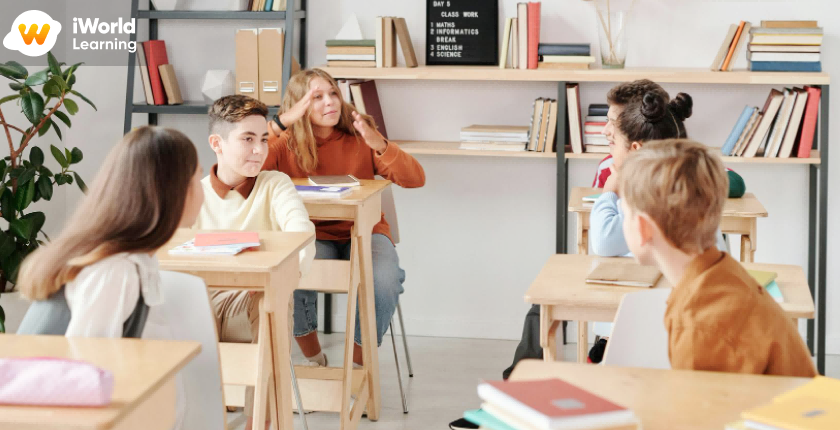
During the actual discussion, the examiner guides the conversation with prompts designed to encourage deeper thinking. The student is expected to describe what they see, infer what might be happening, express opinions about the situation, and occasionally suggest alternative outcomes or solutions. This goes beyond mere description; students must demonstrate the ability to engage in meaningful dialogue.
What makes this component challenging is its interactive nature. Unlike a prepared speech, the discussion flows naturally based on the examiner's questions. Students who are used to memorising answers often find this difficult because they cannot predict every question that might arise.
Why PSLE Oral Picture Discussion Matters
Beyond examination scores, the skills developed through picture discussion practice have lasting value. Observing visual details carefully translates into better reading comprehension. Expressing opinions clearly builds confidence in classroom participation. Learning to respond to prompts thoughtfully prepares students for secondary school tutorials and beyond.
For parents, understanding why this component carries significant weight helps in providing better support. The oral examination accounts for a substantial portion of the PSLE English grade. More importantly, it measures communication skills that written tests cannot capture. A student who performs well in the picture discussion demonstrates genuine language competence that extends beyond textbook learning.
Examiners assess not just what students say but how they say it. Pronunciation, grammatical accuracy, vocabulary range, and overall fluency all contribute to the final score. Equally important is the student's ability to elaborate, giving fuller answers rather than short, one-sentence responses.
Effective Strategies for Picture Discussion Success
Observation Skills
The foundation of a strong picture discussion response lies in careful observation. Students should practise scanning pictures systematically rather than randomly. One useful approach involves dividing the picture into sections, starting with the main focal point, then moving to background details, and finally noting smaller elements that might provide context.
Encourage students to describe not just objects but also relationships between elements. For instance, instead of saying "there is a girl," they might say "a girl in a school uniform is holding a trophy and smiling at her friends." This demonstrates awareness of narrative and emotional context.
Elaboration Techniques
A common weakness in PSLE oral picture discussions is under-developed responses. Students often state what they see and stop, waiting for the next question. Learning to elaborate spontaneously is a skill that requires practice.
One effective technique involves the "five senses" approach—considering what might be heard, felt, smelled, or even tasted in the scene. Another method is to explore the "before and after"—what might have happened leading up to this moment, and what could happen next. This creates natural opportunities for extended speech.
Students should also practise giving opinions. Examiners frequently ask "What do you think about this?" or "Is this a good idea?" Being prepared to agree, disagree, or provide a balanced perspective adds depth to the discussion.
Building Vocabulary
Having a rich vocabulary allows students to express their thoughts more precisely. However, vocabulary learning should be contextual rather than memorising lists of words. Regular reading of age-appropriate materials exposes students to varied language in natural contexts.
For picture discussion specifically, students benefit from learning descriptive words for emotions, actions, and settings. Words like "concerned," "excited," "cautious," or "generous" can elevate a basic description to a more sophisticated observation. Practising the use of connective phrases such as "on the other hand," "furthermore," and "for instance" helps structure responses more coherently.
Managing Nervousness
Examination anxiety can undermine even well-prepared students. Building confidence through regular practice in simulated conditions helps normalise the experience. Parents can create low-pressure practice sessions at home, using pictures from newspapers, magazines, or online resources.
Deep breathing before entering the examination room and maintaining positive self-talk are simple but effective techniques. Remind students that the examiner is not trying to catch them out but rather to help them perform at their best.
How to Practise for the PSLE Oral Picture Discussion
Structured Practice at Home
Creating a regular practice routine makes a significant difference. Set aside fifteen to twenty minutes twice a week specifically for picture discussion practice. Use a variety of pictures—scenes from the neighbourhood, illustrations from storybooks, photographs from travel brochures—to broaden the range of topics students are comfortable with.
During practice, time the preparation phase strictly. A stopwatch helps students get used to organising their thoughts within the five-minute limit. After the preparation, parents can act as examiners, asking the types of questions students might encounter.
Recording practice sessions offers valuable feedback opportunities. Play back the recording and discuss areas for improvement. Students often notice habits they were unaware of, such as using filler words like "erm" or "you know" too frequently.
Group Practice Opportunities
Learning from peers can be highly motivating. Arrange study groups where students take turns being the examiner. Observing how others approach the same picture provides new perspectives and techniques. Group practice also helps students get comfortable speaking in front of others, reducing the pressure of the actual examination.
Many students find that discussing pictures with friends feels less like studying and more like natural conversation. This relaxed approach often produces more fluent and creative responses.
Professional Guidance
Some families opt for structured support through tuition centres that specialise in English examination preparation. Professional teachers can provide expert feedback on areas such as pronunciation, grammatical accuracy, and response structure that parents might not feel confident addressing. For families seeking additional support, language schools across Singapore offer specialised oral preparation programmes. iWorld Learning provides small-group English courses designed to improve communication skills, with experienced instructors who understand the specific demands of the PSLE examination.
Common Mistakes to Avoid in Picture Discussion
Rushing to answer. Taking a moment to think before speaking often results in more coherent responses. A few seconds of silence while organising thoughts is perfectly acceptable.
Describing rather than discussing. The examiner wants conversation, not just description. Students should connect their observations to wider ideas and personal opinions.
Limited vocabulary. Using simple words repeatedly can make the discussion seem monotonous. Encouraging students to experiment with new vocabulary during practice builds confidence.
Short answers. Extending responses by adding reasons, examples, or alternative perspectives demonstrates stronger communication skills.
Ignoring context. Understanding the Singaporean context in pictures helps students make relevant observations about everyday situations they recognise.
FAQs
How long is the PSLE oral picture discussion component?
The entire oral examination typically lasts around fifteen minutes, with the picture discussion segment taking approximately five to eight minutes. Students receive about five minutes of preparation time before the discussion begins.
Can students ask the examiner to repeat questions?
Yes, students may politely ask the examiner to repeat a question if they did not hear it clearly. This is perfectly acceptable and demonstrates composure rather than weakness.
What happens if a student makes a grammar mistake during the discussion?
Minor grammatical errors are expected and do not significantly affect scores. Examiners focus on overall communication effectiveness, not perfection. Correcting mistakes mid-sentence can sometimes disrupt fluency, so it is often better to continue speaking smoothly.
Are students marked on their ideas or their language ability?
Both aspects are considered. Language accuracy and vocabulary use carry weight, but the quality of ideas and ability to engage in meaningful discussion are equally important. A balanced approach that demonstrates both language competence and thoughtful responses yields the best results.
Related Articles
Recommended Reading
Popular Articles
-
English Teacher Salary in Singapore: A Complete 2026 Guide
-
The Ultimate english learning apps Bank: Categorized & Explained
-
British Council IELTS in 2026: What Changed, What It Costs, and How to Prepare
-
IELTS Price in 2026: What Test-Takers Actually Pay (And How to Spend Less)
-
The Complete 2026 Blueprint for O Level English Oral Topics 2026 Format & Strategy
-
IELTS Test Format, Scoring, and Key Changes for 2026 Explained
-
IELTS Exam Fee 2026: Complete Guide to Costs, Payment & Savings
-
PSLE 2026: Complete Guide to Exam Dates, Scoring System, and Preparation Strategies
-
IELTS Test Dates 2026: Monthly Schedule, Booking Strategy, and Prep Timeline
-
The Top 10 Tuition Centres in Singapore (2025) – A Curated Review for Parents & Students
latest articles
-
Story Mountains for Primary Writing: A Practical Guide
-
How to Use 'Indicted' Accurately in English
-
Plan TOEFL iBT Practice Around the Full Test Cost
-
Review Small-Group PSLE Oral Practice with Useful Evidence
-
PSLE English Format Review: Fix Repeated Preparation Mistakes
-
How to Ask a Client for a Testimonial: Email
-
Review TOEFL Practice Results Without Chasing Scores
-
How to Read Spanish Dictionary Definitions and Examples
-
When an Intensive English Course Is the Right Choice
-
A Reliable Planning Method for IELTS General Training Letters