What Are Primary School Fees for PR in Singapore
Introduction
If you are a Permanent Resident (PR) in Singapore, one of the practical questions you will ask before your child starts formal education is about school fees. The Ministry of Education (MOE) sets different fee structures for Singapore Citizens, PRs, and international students. Understanding the primary school fees for PR is important for family budgeting and long-term planning. Many parents also want to know whether these fees change over time and what additional costs might come up beyond the monthly school bill. This article breaks down the fees clearly, explains why they matter, and looks at available options for families navigating the primary school system in Singapore.
Direct Answer: Primary School Fees for PR
The primary school fees for PR in Singapore are currently set at S$280 per month for students attending government and government-aided primary schools. This fee applies to all PR children enrolled in MOE schools from Primary 1 to Primary 6. On top of that, there is a standard miscellaneous fee of S$10 per month and a second-tier miscellaneous fee of up to S$10 per month depending on the school. Therefore, the total monthly fee for a PR child can range from S$290 to S$300. In comparison, Singapore Citizens pay S$13 in monthly school fees, while international students in ASEAN countries pay S$560, and non-ASEAN international students pay S$935. These fees are reviewed periodically by MOE and may be adjusted in future years.
Why Do PR School Fees Matter to Families
For many PR families, the cost of education is one of the biggest recurring expenses after housing and transport. The difference between citizen and PR fees is significant—more than 20 times higher. This gap affects household cash flow, especially for families with more than one child in primary school. Beyond the monthly fees, there are also enrichment programmes, school uniforms, textbooks, and transport costs. When people search for primary school fees for PR, they are often comparing the affordability of raising children in Singapore against other countries or considering whether to apply for citizenship. The fee structure also influences decisions about enrolling in international schools, which have a completely different cost model. Understanding the fees helps parents plan early and avoid surprises when the school term begins.
Available Education Options for PR Children in Singapore
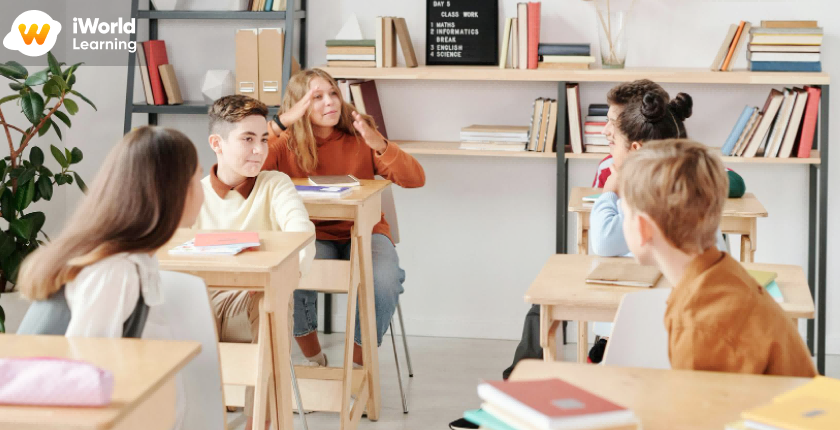
PR children in Singapore have several schooling pathways. The most common choice is the MOE primary school system, which offers a national curriculum leading to the Primary School Leaving Examination (PSLE). These schools are heavily subsidised even for PRs compared to private institutions. Within MOE schools, some offer specialised programmes such as the Gifted Education Programme, while others have niche areas like sports or arts. Beyond MOE schools, PR families may consider government-aided schools, which follow the same fee structure but may have slightly different miscellaneous fees. Some families also explore international schools, but these charge significantly higher tuition fees, often ranging from S$20,000 to S$40,000 per year. For parents looking for additional academic support, enrichment centres and tuition providers are widely available in Singapore. Language schools like iWorld Learning offer English programmes that help children strengthen their foundation, especially if they are transitioning from a different education system or need extra help with the language.
How MOE Sets and Reviews School Fees
The Ministry of Education reviews school fees on a regular basis, typically every year or two. Fee adjustments are announced in advance, so parents have time to prepare. PR school fees were last adjusted in 2025, and the current rates are expected to remain stable for the near future. The fee structure is designed to reflect the different levels of subsidy provided to each residency status. Citizens receive the highest subsidy because Singapore prioritises education for its nationals. PRs receive a lower subsidy, while international students receive minimal subsidy. MOE also offers financial assistance schemes, but these are primarily targeted at low-income citizen families. PR families are encouraged to check with their school's administration for any available support or payment instalment plans. The government has stated that fee adjustments aim to balance quality education with fiscal sustainability.
Additional Costs to Consider Beyond Monthly Fees
The primary school fees for PR cover only the basic tuition and standard miscellaneous charges. Parents should also budget for other expenses throughout the school year. Textbooks and workbooks cost around S$100 to S$200 per year, depending on the level. School uniforms, PE attire, and name tags are additional one-time purchases at the start of Primary 1, costing roughly S$80 to S$150. Transport to and from school can add S$80 to S$150 monthly for school bus services or MRT fare cards. Many schools also collect funds for enrichment programmes, learning journeys, and co-curricular activities. These may range from S$50 to S$200 annually. Some parents opt for supplementary tuition in subjects like English, Maths, and Science, which can cost S$200 to S$600 per month per subject. Therefore, the actual monthly outlay for a PR child in primary school can easily reach S$500 to S$800 or more, depending on the family's choices.
Tips for Managing School Fees as a PR Family
Planning ahead is the best strategy for managing education costs. One practical step is to open a dedicated savings account for school fees and contribute regularly throughout the year. This helps avoid the shock of paying lump sums at the start of each term. Another tip is to check with the school about payment modes—many schools allow GIRO deductions or instalment payments. Parents can also reduce costs by buying second-hand uniforms and textbooks through school-based exchanges or online parent groups. For enrichment, consider community centres that offer subsidised programmes, or look for group tuition rates that are more affordable than one-to-one coaching. Some families also review their residency plans and consider whether applying for citizenship makes financial sense in the long run. It is also helpful to stay informed about fee changes by subscribing to MOE updates or checking the school's website regularly.
Common Questions About Primary School Fees for PR
Do PR children pay the same fees in all MOE primary schools?
Yes, the standard monthly tuition fee of S$280 applies to all MOE primary schools, including government and government-aided schools. However, the miscellaneous fees may vary slightly between schools, ranging from S$10 to S$20 per month depending on the school's specific programmes and facilities.
Are there any subsidies or financial assistance for PR families?
MOE financial assistance schemes are primarily designed for low-income Singapore Citizen families. PR families generally do not qualify for these subsidies. However, some schools may offer hardship waivers on a case-by-case basis, so it is worth speaking to the school's administration if you face financial difficulties.
Do primary school fees for PR increase every year?
Not necessarily every year, but fees are reviewed periodically. The Ministry of Education announces fee adjustments in advance. The last revision took effect in 2025. It is wise to check MOE's official website annually for updated fee schedules and to plan your budget accordingly.
Is there a difference in fees between morning and afternoon sessions?
No, the monthly tuition fee remains the same regardless of session timing. Some schools operate double sessions, but the fee structure is uniform across all sessions. The miscellaneous fees also do not change based on session.
Can PR children transfer to international schools to save money?
International schools generally charge much higher fees, often exceeding S$20,000 per year. For most PR families, MOE primary schools remain the most affordable and academically rigorous option. International schools may be considered for families seeking specific curricula like IB, but cost savings should not be the primary reason for switching.
相关文章
Recommended Reading
Popular Articles
-
English Teacher Salary in Singapore: A Complete 2026 Guide
-
The Ultimate english learning apps Bank: Categorized & Explained
-
British Council IELTS in 2026: What Changed, What It Costs, and How to Prepare
-
The Complete 2026 Blueprint for O Level English Oral Topics 2026 Format & Strategy
-
IELTS Price in 2026: What Test-Takers Actually Pay (And How to Spend Less)
-
IELTS Test Format, Scoring, and Key Changes for 2026 Explained
-
IELTS Exam Fee 2026: Complete Guide to Costs, Payment & Savings
-
PSLE 2026: Complete Guide to Exam Dates, Scoring System, and Preparation Strategies
-
IELTS Test Dates 2026: Monthly Schedule, Booking Strategy, and Prep Timeline
-
The Top 10 Tuition Centres in Singapore (2025) – A Curated Review for Parents & Students
latest articles
-
Limited Synonyms: Restricted, Finite, or Scarce?
-
From Many to One: Formal Alternatives for a Latin Motto
-
Domestic Partner Meaning: Relationship and Legal Context
-
English Tuition Near an MRT: Look Beyond Location
-
Arachnid Meaning: A Dictionary Guide With Examples
-
Seldom Meaning: Position, Tone, and Examples
-
Hosanna Meaning: Praise, Prayer, and Context
-
Sophocles Meaning: Name, Context, and Pronunciation
-
Primary Composition at Home: A Practical Writing Routine
-
Ares Meaning: The Greek God and Modern Proper Name