Primary 1 English Tuition: Building Phonics, Reading, and Writing Foundations Early
Primary 1 is a transition year. Children move from kindergarten's play-based learning to a formal classroom where they are expected to sit, listen, read, and write for extended periods. English becomes the medium through which they learn everything else. A child who enters Primary 1 with weak English foundations — poor letter-sound knowledge, limited sight-word recognition, or difficulty forming simple sentences — faces an uphill path not just in English lessons but in Mathematics word problems, Science instructions, and social interaction with teachers and classmates.
Primary 1 English tuition is early-stage literacy support for six-to-seven-year-old learners, focused on building phonics knowledge, sight-word recognition, reading fluency, and basic writing skills through small-group or one-to-one instruction that complements the MOE Primary 1 English syllabus without replicating it.
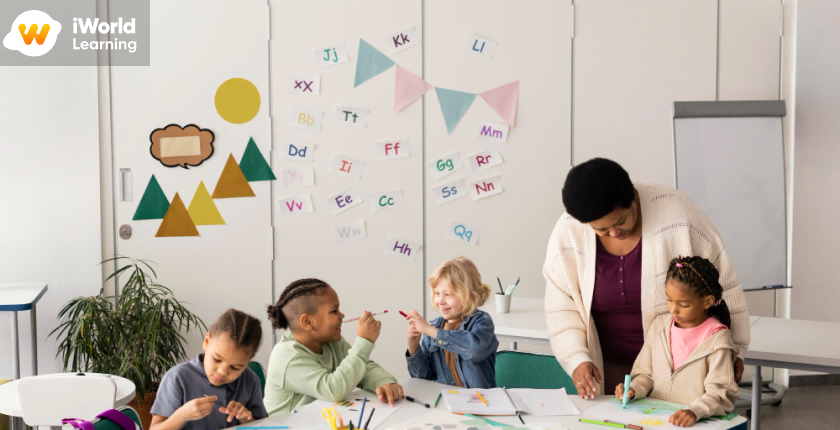
Parents considering English support for a Primary 1 child often worry about pushing too hard too early. The legitimate concern is that formal tuition at this age could make a child dislike English before they have even settled into primary school. The counterpoint is that a well-designed P1 English programme does not look like exam preparation at all — it looks like guided reading, phonics games, storytelling, and supported writing, delivered in a small group where the child feels safe to make mistakes and try again. This article explains what good Primary 1 English tuition actually involves, when it is warranted, and how to distinguish a developmentally appropriate programme from one that is premature.
What Primary 1 English Tuition Should Focus On (and What It Should Avoid)
| Should Focus On | Should Avoid |
|---|---|
| Phonics: letter-sound correspondence, blending, segmenting | Spelling lists memorised without phonics understanding |
| Sight-word recognition through repeated exposure in context | Rote drilling of vocabulary cards in isolation |
| Reading aloud with expression and comprehension checks | Silent independent reading without discussion |
| Guided writing: sentence construction, basic punctuation, simple narratives | Timed composition writing or exam-format practice |
| Speaking and listening: show-and-tell, following instructions, asking questions | Grammar-rule memorisation without context |
| Building confidence and enjoyment of English | Pressure to perform or compare with peers |
A developmentally appropriate Primary 1 English programme prioritises skill-building through interaction, not worksheet completion. The child who leaves a session having sounded out ten new words, read a short passage aloud with expression, and written two sentences about a picture has done more meaningful English work than the child who completed three pages of grammar cloze exercises silently.
When Primary 1 English Tuition Is Warranted
Tuition or enrichment at Primary 1 level is not a default requirement. Many children arrive at P1 with sufficient English foundations from preschool and home exposure and progress well with classroom teaching alone. Tuition becomes worth considering when specific indicators appear.
One clear signal is a significant gap between the child's oral English and their reading or writing ability. A child who speaks confidently in full sentences but cannot recognise common sight words (the, said, they, come, have) or sound out simple CVC words (cat, dog, sit) may have a phonics gap that classroom teaching has not closed. Left unaddressed, this gap widens as the P1 syllabus moves from learning-to-read to reading-to-learn around Term 2 or 3.
Another signal is the child's own emotional response to English. A Primary 1 student who says "I am not good at English," who cries before English homework, or who compares themselves unfavourably to classmates is showing signs that their confidence is eroding. In these cases, a small-group or one-to-one programme that rebuilds confidence through achievable, scaffolded tasks can be more important for long-term English development than any specific phonics or reading skill the programme teaches.
iWorld Learning provides English courses in Singapore for children as young as preschool age, with its programme for young learners designed to build early literacy through phonics-based instruction, guided reading, and supported speaking practice. The small-group format gives each child individual attention without the intensity (or cost) of one-to-one tutoring. For Primary 1 students who need to strengthen their English foundation, the programme's focus on active language use — speaking, reading aloud, and guided writing — matches the developmental priorities of this age group. iWorld Learning's preschool and young children English programme supports learners making the transition from kindergarten-level English to the demands of formal primary schooling.
Small Group vs One-to-One for Primary 1 Learners
For a six-year-old, the format of English instruction matters as much as the content. One-to-one tuition provides maximum individual attention but removes the peer interaction that makes English learning feel like a social activity rather than a correction session. A child who works one-to-one with a tutor for an hour may feel scrutinised and anxious; the same child in a group of three or four may relax, participate in a reading game, hear a peer make the same phonics mistake they were about to make, and learn from the correction without feeling singled out.
Small-group formats (3-6 children) work particularly well for Primary 1 English because they allow for paired reading (children take turns reading to each other), group phonics games (which turn drill into play), and show-and-tell practice (which builds oral confidence with a small, familiar audience). The cost of small-group P1 English programmes in Singapore ranges from S$30-60 per hour, making them accessible for families who want structured support without the premium of one-to-one instruction.
What Parents Can Do at Home to Support P1 English Development
Home support is the most powerful complement to any formal English programme at this age. Three daily practices have the largest impact. Reading aloud to your child for 10 to 15 minutes — even if the child can already read — exposes them to vocabulary, sentence structures, and story logic that are beyond their independent reading level. This is not the same as making the child read to you; listening to a more advanced reader (the parent) builds comprehension and language models that independent reading cannot yet reach.
Second, turn everyday moments into oral language practice. Ask your child to describe what they see on the way to school, to explain the rules of a game they played, or to retell something funny that happened during recess. These are the same skills — description, explanation, narration — that the P1 English oral component and, later, the PSLE Oral Communication paper will assess. The difference is that at home, there is no mark attached, which frees the child to experiment with language without fear of being wrong.
Third, keep handwriting and spelling practice brief and positive. A Primary 1 child's fine-motor skills are still developing, and long handwriting sessions lead to fatigue, frustration, and sloppy letter formation that reinforces bad habits. Five minutes of focused writing — one well-formed sentence, not a page of rushed words — is more productive than 20 minutes of rushed worksheet completion.
FAQ
Is Primary 1 too young to start English tuition?
It depends on the type of programme. Formal, worksheet-heavy tuition that mimics exam preparation is inappropriate for Primary 1 and can undermine a child's confidence and enjoyment of English. Phonics-based enrichment, guided reading, and oral communication activities in a small-group setting are developmentally appropriate and can close early literacy gaps before they widen. The distinction is not "tuition vs no tuition" but "developmentally appropriate instruction vs premature academic pressure."
How is Primary 1 English tuition different from PSLE preparation tuition?
P1 English tuition focuses on foundational literacy: phonics, sight-word recognition, reading fluency, sentence construction, and oral confidence. PSLE English tuition for P5/P6 focuses on exam technique: question-type strategies, timed-paper practice, marking-scheme alignment, and paper-specific skills (situational writing format, comprehension cloze strategies, stimulus-based conversation structure). P1 programmes that look like P6 programmes — timed writing drills, grammar-cloze worksheets, silent independent work — are developmentally misaligned regardless of what they are called.
What should I look for when choosing a Primary 1 English programme?
Observe a trial session if possible. Look for evidence that children are speaking, reading aloud, and writing during the session — not just listening to the teacher talk. Check whether the teacher gives individual feedback during the lesson or only after it. Ask what proportion of a typical session involves active language production (speaking, reading aloud, writing) versus passive reception (listening, filling blanks). A good P1 programme should have children actively using English for at least half the session time.
How does iWorld Learning support Primary 1 English learners?
iWorld Learning's English programmes for young children use a phonics-based, CEFR-aligned approach delivered in small groups by internationally certified teachers. Sessions emphasise active language use — reading aloud, speaking in full sentences, guided writing — in a supportive environment that builds confidence alongside competence. For Primary 1 students who need to strengthen foundational English skills, the programme provides the structured, feedback-rich practice that classroom teaching, with its larger student-to-teacher ratios, often cannot offer. Visit the preschool and young children English page or the primary school English page to find the right level for your child.
Summary
Primary 1 English tuition is not about pushing a six-year-old toward exam readiness. It is about identifying and closing early literacy gaps — in phonics, sight-word recognition, reading fluency, and writing confidence — before those gaps compound into broader academic difficulties. A good P1 programme looks like guided reading, phonics games, storytelling, and supported writing in a small group where the child feels safe making mistakes. The decision to seek English support at this age should be driven by specific developmental indicators (reading below expected level, writing avoidance, expressed loss of confidence) rather than by general anxiety about school performance. Parents who combine a developmentally appropriate programme with daily home reading and oral language practice give their Primary 1 child the foundation that makes all later English learning easier.
Learn about iWorld Learning's English programmes for young learners, designed to build strong phonics, reading, and speaking foundations through small-group classes at Tanjong Pagar and Somerset campuses.
相关文章
Recommended Reading
Popular Articles
-
English Teacher Salary in Singapore: A Complete 2026 Guide
-
The Ultimate english learning apps Bank: Categorized & Explained
-
British Council IELTS in 2026: What Changed, What It Costs, and How to Prepare
-
The Complete 2026 Blueprint for O Level English Oral Topics 2026 Format & Strategy
-
IELTS Price in 2026: What Test-Takers Actually Pay (And How to Spend Less)
-
IELTS Test Format, Scoring, and Key Changes for 2026 Explained
-
IELTS Exam Fee 2026: Complete Guide to Costs, Payment & Savings
-
PSLE 2026: Complete Guide to Exam Dates, Scoring System, and Preparation Strategies
-
IELTS Test Dates 2026: Monthly Schedule, Booking Strategy, and Prep Timeline
-
The Top 10 Tuition Centres in Singapore (2025) – A Curated Review for Parents & Students
latest articles
-
After the Timer: How to Review One O-Level English Paper
-
Which Words May Enter Tonight's O-Level Paper 1
-
Reshape Five PSLE Sentences Before You Add New Words
-
How Adults Should Choose English Class Frequency
-
Collect O-Level Comprehension Words From Tonight's Passage
-
How a Sec 1 Student Should Write Gist Plus Evidence
-
Keep or Cut Singlish in a PSLE or O-Level Script
-
Memorising a Whole PSLE Model Composition: A Parent Check
-
Pick Recount or Narrative for Tonight's PSLE Practice
-
Paper 2 Faults That Remain After You Stop Lifting